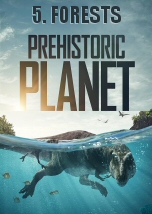
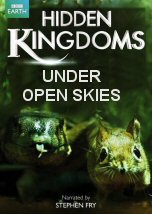
Journey to secret worlds where lives are wrapped in unexpected of ways. The fifth episode of the series takes viewers into the fascinating world of forests, revealing their hidden complexities and the intricate relationships within. Initially perceived as tranquil, forests are in fact bustling with life and intricate ecological interactions. The episode showcases various species, each with its unique lifestyle and survival strategies. Highlights include the Oriental pied hornbills in Borneo, whose extraordinary nesting rituals and partner dynamics are captivating. The Amazon rainforest is explored, introducing the peculiar treehoppers and their unique communication methods, vital for survival amidst numerous predators like ants and assassin bugs. The episode also delves into the intelligent and cooperative hunting techniques of dholes in the forests of India. The narrative takes a turn to China, focusing on the visually stunning courtship displays of Temminck's tragopans and golden pheasants. In the temperate rainforests of Western Canada, the rare spirit bear and its unique relationship with its habitat are examined. The episode concludes with an insightful look at the impact of human activity on forests and their inhabitants, particularly focusing on chimpanzees in Uganda, whose survival is increasingly intertwined with human expansion.
In episode 2, Ed explains that he has his fortress of friends, but his world is turned upside down by the death of a friend, Jamal Edwards, which comes to affect his music. We will also learn details of his relationship with his wife Cherry.
In Episode 4, you can witness a gripping journey through the hidden threads that connect Asia's most complex societies. From the snow leopards of the Himalayas to the elephants of Sri Lanka, and from the forests of Borneo to the bustling streets of Bangkok, this episode explores how nature, tradition, and modernity collide. It uncovers the silent role of animals in shaping cultural identity and the fragile balance between preservation and progress. With breathtaking imagery and powerful storytelling, it reveals how the destinies of creatures, cities, and civilizations are more intertwined than we ever imagined.
From ephemeral home video clips to voice messages never before heard, this film weaves together the intimate, fragile, and incandescent life of a musician who defied convention—and whose flame was extinguished far too soon. We are drawn into a world where every whispered lyric, every undone recording, and every memory shared by those who loved him becomes a portal. We hear his own voice recounting his doubts. We see raw behind-the-scenes moments, fragile family relationships, and the creative tensions that accompany genius. Through interviews with his mother, former lovers, bandmates, and collaborators, the story casts a luminous, unsettling light on the weight of legacy, the burden of expectations, and the search for identity in the shadow of a father whose name he both carried and sought to transcend. This is not just a chronicle of dates and albums—but a pulse, an echo, a lament and a celebration. It asks: when someone leaves too early, how do we piece together what remains? And what does it mean to live forever through music?
When Norwegian gamer Mats Steen died at age 25, his parents mourned what they thought was an isolated life. It was only once they had access to his blog that they discovered the deep friendships he created virtually before passing away from a degenerative muscular disease. They were unaware that Mats had long been leading a vibrant digital life that had left a profound impact on a community of fellow gamers. The film takes us on a journey through the breadth of Mats Steen's adventurous online life, introducing us to Ibelin, his charismatic World of Warcraft persona. Through reconstructed animated moments from Mats' gameplay, narrated entries from his blog and interviews with people who knew him as Ibelin, a picture of a remarkable young man emerges, one that underscores how community and soulful relationships can transcend the boundaries of the physical world.
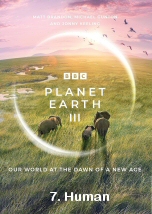
This featured episode of the documentary series takes viewers on a captivating journey around the world, showcasing the astonishing ways in which animals adapt to living alongside humans. In Sauraha, Nepal, a rhino navigates through human-inhabited areas in search of food. In Bali, long-tailed macaques have learned to trade stolen items for food, demonstrating their intelligence and adaptability. The bustling streets of New York City are home to pavement ants that thrive on human leftovers, while in India, revered cobras coexist with humans in a unique cultural relationship. Melbourne, Australia, features nocturnal frogmouths benefiting from urban lighting for hunting, and Lake Tahoe in North America sees black bears adapting to easy food sources in human settlements. The documentary also delves into the challenges faced by wildlife due to human expansion and climate change. It highlights the plight of African elephants in Kenya conflicting with farmers, the impact of overfishing on humpback whales in Vancouver Island, and the dramatic increase of desert locusts in northeastern Africa due to climate-induced conditions. The episode concludes by emphasizing the importance of reimagining our relationship with nature. It suggests a shift towards plant-based diets to reduce agricultural land use and the potential of vertical farming technologies, offering hope and solutions for a sustainable coexistence with wildlife.















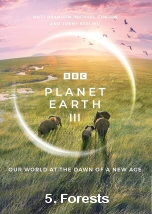










The Amazon rainforest is explored, introducing the peculiar treehoppers and their unique communication methods, vital for survival amidst numerous predators like ants and assassin bugs. The episode also delves into the intelligent and cooperative hunting techniques of dholes in the forests of India. The narrative takes a turn to China, focusing on the visually stunning courtship displays of Temminck's tragopans and golden pheasants. In the temperate rainforests of Western Canada, the rare spirit bear and its unique relationship with its habitat are examined.
The episode concludes with an insightful look at the impact of human activity on forests and their inhabitants, particularly focusing on chimpanzees in Uganda, whose survival is increasingly intertwined with human expansion.