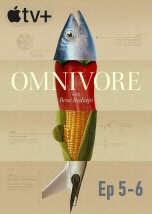
In episodes 5 and 6, you can see how two everyday foods open the door to something far bigger: Memory, survival, tradition and the uneasy bond between humans and the natural world. One journey takes you to La Alberca, in Spain, where the pig is not just an animal but part of a living ritual charged with history, pride and contradiction. The other leads into the rice fields of Kerala, India, where every grain carries the weight of climate, heritage and the fight to preserve ways of life that are slipping away. These chapters do far more than show food on a plate: they reveal beauty, tension and the hidden forces that sustain entire cultures, making each scene feel rich, intimate and impossible to forget.
Guided by Stanley Tucci, this documentary journeys into the heart of Italy to reveal the country as it truly is, complex, contradictory, and deeply rooted in its culinary traditions. Through food, Tucci uncovers stories of history, identity, and innovation, showing how every dish reflects centuries of culture, migration, and local pride. What emerges is not a postcard Italy, but a living, evolving nation where cuisine is a language spoken by everyone. In the first three episodes, Tucci immerses himself in Tuscany, savoring the artistry of its cuisine while exploring Florence and Siena, where Renaissance creativity still shapes the table. He then heads north to Italy’s industrial regions, discovering cutting-edge gastronomy and futuristic farming, from high-tech agricultural labs to unexpected gourmet food found at service stations. Finally, in the German-speaking Alpine north, he explores a dual cultural identity through mountain dishes, skiing traditions, and glacial river fishing, revealing how history, borders, and landscape have forged a cuisine unlike any other in Italy.
In the final episode of the series, the Civil War reaches its bloodiest and most decisive stage. After the Union victories at Gettysburg and Vicksburg, Abraham Lincoln becomes increasingly frustrated by generals who fail to destroy Robert E. Lee’s army and finally turns to Ulysses S. Grant, a commander willing to fight relentlessly until the Confederacy is defeated. At the same time, Lincoln pushes the nation beyond simply preserving the Union, supporting Black soldiers, confronting Frederick Douglass over their unequal treatment and making emancipation central to the meaning of the war. As casualties continue to mount, Lincoln faces the election of 1864, the fight to abolish slavery permanently through the 13th Amendment and the final collapse of the Confederacy. Lee’s surrender at Appomattox finally brings the long struggle toward its end, leaving Lincoln to consider how a divided nation can be reunited and what freedom will mean for millions of formerly enslaved people. But just as victory opens the possibility of a new beginning, his assassination transforms triumph into national tragedy and seals his place in American history.
Dementia is one of the fastest-growing health conditions in the UK, yet its earliest warning signs can be difficult to recognise. NHS GP Dr Claire Taylor meets people living with Alzheimer’s and other forms of dementia, explores how the disease changes the brain, and puts herself through innovative tests designed to detect subtle problems with memory, hearing and cognition before more obvious symptoms appear. Along the way, she investigates why some people develop dementia at a younger age, how lifestyle and social isolation may influence risk, and what the latest research says about prevention and treatment. With moving personal stories and access to scientists working at the cutting edge of dementia research, the documentary asks a question that concerns millions: how much can we really know about our own future brain health?
Snakes are among the most feared yet misunderstood predators on Earth. Across the Americas, Australia, Africa, Asia and Europe, more than 100 species reveal extraordinary adaptations that allow them to survive in rainforests, deserts, wetlands, mountains and oceans. Boas and pythons overpower prey with immense strength, while rattlesnakes, cobras, vipers, mambas, taipans and sea snakes deploy some of nature’s most sophisticated venoms, camouflage and sensory abilities. Far from being simple killers, they also play a vital role in controlling rodents and maintaining healthy ecosystems. From black mambas battling for mates and spitting cobras defending themselves with remarkable accuracy to the thousands of pit vipers inhabiting China’s extraordinary Shedao Island, the series reveals hunting techniques and behaviours rarely seen in such detail. Presented here with all three episodes combined into a single video, it offers a spectacular journey into the hidden lives of these highly specialised animals, showing how evolution has made snakes some of the planet’s most efficient and fascinating survivors.
In episodes 3 and 4, Phil continues his joyful culinary journey, discovering how history, culture, and immigration shape the flavors of remarkable destinations around the world. With his trademark humor and curiosity, he meets local chefs and passionate food lovers who reveal the traditions and stories behind their most beloved dishes. In these two adventures, Phil explores Boston’s multicultural food scene while following the historic Freedom Trail, tasting everything from classic South Boston diner fare and North End cannolis to vibrant Peruvian cuisine in nearby Cambridge. He then travels to Georgia, one of the world’s oldest wine regions, where he joins a traditional grape harvest, devours rich khachapuri like a local, and relaxes in an ancient sulfur bath, experiencing a country where food, hospitality, and centuries-old traditions go hand in hand.




















These chapters do far more than show food on a plate: they reveal beauty, tension and the hidden forces that sustain entire cultures, making each scene feel rich, intimate and impossible to forget.