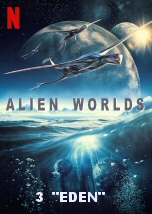
Planets beyond our solar system are known to astronomers as exoplanets. They are at trillions of miles from Earth and yet, it might be possible to detect a faint signature of life in them. From the light of the stars they orbit that passes through the atmosphere of an exoplanet, it is possible to capture the chemical fingerprint of the elements in that atmosphere. The fictional world Eden is orbiting not one star, but two. The light from its twin stars powers photosynthesis, pumping more oxygen into the atmosphere than in Earth, allowing life to thrive. Grazers are constantly alert to danger, because the canopy is home to predators perfectly evolved to live among the trees. In Episode 3, another topic are fungi and the role they could play on exoplanets. Ecologist Thomas Crowther talks about the role mycelial networks play in the Rothiemurchus forest in Scotland.
Stars helped create us, building and spreading the ingredients for life to develop. But there will definitely be a point in the future when, in the future when, you look up, you will no longer be able to see stars. For billions of years, stars brought life to the universe. Now, they're dying out in a star apocalypse. What's causing the die-off, and what happens to life when the lights go out?
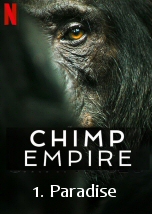
Dive into the heart of Uganda's Ngogo Forest, where a community of chimpanzees exhibits an intricate dance of politics, family ties, and territorial conflict. For a quarter-century, scientists and trackers have witnessed firsthand the chimps' evolving political dramas and familial bonds. Now, this series offers an unprecedented lens into this world, capturing the tribe's most defining moments: battles for dominance, growing offspring, budding romances, and the ever-shifting leadership. Join us for an intimate journey into the lives of the Ngogo chimps, where every day is a fight for survival and power. Don't miss this captivating look into the heart of the chimp empire. The first episode delves into the captivating world of chimpanzees, drawing parallels with human existence. As the narrative unfolds, viewers are taken on an enlightening journey into the lives of these primates, highlighting the profound similarities and unique stories they share with humans.
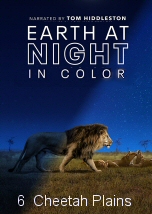
Sunset over the plains of Kenya's Maasai Mara, one of Africa's most protected wild spaces. And home to the fastest land animal on Earth, the cheetah. These agile cats have always been thought of as daylight hunters. They target prey from more than a kilometre away and chase it down at over 100 kilometres an hour. In one of these plains, two cheetah brothers attempt a high-speed night hunt with a gang of powerful hyenas on their trail.
Served crispy and sizzling in grease. When it comes to preparations, few could be as delightful and decadent as a good, old-fashioned deep fry. We dip the Mind of a Chef basket in hot oil on this episode, serving up everything from oyster poboys to pig’s head, from alligator filets to sardine spines.
Astronomers make an extraordinary discovery out in deep space when they uncover a cosmic mega-structure that's one billion light-years long. Now, investigators race to decode the hidden forces that shape the most massive and mysterious structure known in the Universe. We dive into this space great wall's fiery birth and hunt for the weird cosmic glue that holds it together to reveal how this megastructure rewrites our understanding of the universe on an epic scale.




















The fictional world Eden is orbiting not one star, but two. The light from its twin stars powers photosynthesis, pumping more oxygen into the atmosphere than in Earth, allowing life to thrive. Grazers are constantly alert to danger, because the canopy is home to predators perfectly evolved to live among the trees. In Episode 3, another topic are fungi and the role they could play on exoplanets. Ecologist Thomas Crowther talks about the role mycelial networks play in the Rothiemurchus forest in Scotland.