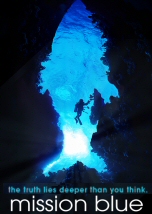
Legendary oceanographer and TED prize winner Dr. Sylvia Earle is on a mission to save our oceans. Mission Blue is part action-adventure, part expose of an Eco-disaster. More than 100 scientists, philanthropists and activists gather in the Galapagos Islands to help fulfill Dr. Earle's lifelong wish: build a global network of marine protected areas, like underwater national parks, to protect the natural systems that keep humans alive. As the expedition ends, the Deep water Horizon oil well explodes. With oil gushing into the Gulf of Mexico, Sylvia and an environmental dream team race around the world trying to defend her 'Hope Spots'.
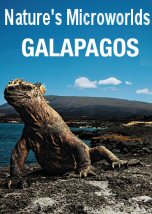
From flightless cormorants hunting underwater to giant tortoises courting on the rim of an active volcano, a look at the hidden side of Galapagos, revealing why it is such a fascinating showcase for evolution.
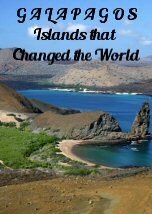
A visit to arguably the most famous archipelago on Earth, the Galapagos. It's home to a myriad of bizarre and unique creatures, endemic to these islands - but how did they get here and what is the key to these extraordinary islands that allows them to thrive? The programme reveals that this key holds not just the secret to life here, but also to how Darwin was able to leave with the ideas that would revolutionise biology.
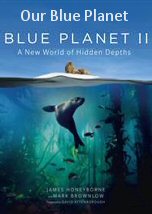
Blue Planet II explores parts of the ocean that nobody has ever visited, encountered extraordinary animals, and discovered new insights into life beneath the waves. In Our Blue Planet, Sir David Attenborough examines the impact of human life on life in the ocean. In this final episode, we uncover the impact that our modern lives are having on our best-loved characters from across the series, including devoted albatross parents unwittingly feeding their chicks discarded plastic and mother dolphins potentially exposing their new born calves to pollutants through their contaminated milk. Scientists have even discovered that increasing noise levels may stop baby clownfish finding their way home.
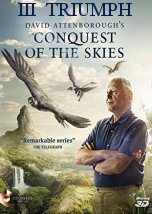
David Attenborough concludes his epic history of the evolution of flight with an exploration of the highly advanced fliers that dominate our skies today – the extraordinarily diverse skills of the birds, and the sonar-guided precision of the bats. He encounters some of our planet’s most remarkable fliers – from peregrine falcons dive-bombing starlings over Rome, to hummingbirds hovering in the cloud forests of Ecuador. In a spectacular finale, he visits Gomantong cave in Borneo to witness the mass exodus of a million bats.
In the fourth episode of the series, legendary nature and cultural photographer Art Wolfe captures the great brown bear with the stunning backdrop of Alaska’s mountains and glaciers, immigrating wildebeests in the plains East Africa, and the hard-to-find gorillas of Uganda.















As the expedition ends, the Deep water Horizon oil well explodes. With oil gushing into the Gulf of Mexico, Sylvia and an environmental dream team race around the world trying to defend her 'Hope Spots'.