A deep sea diver is stranded on the seabed with 5 minutes of oxygen and no hope of rescue. With access to amazing archive this is the story of one man's impossible fight for survival. Chris Lemons were carrying out repairs 100m below the surface of the North Sea, supported by the vessel Bibby Topaz. The vessel's dynamic positioning system failed, causing it to snap the umbilical tether that provided Lemons oxygen, as well as hot water to heat his suit, power for his light, and a radio link to the surface. He was left with only the few minutes of breathable gas contained in the cylinders he wore on his back. For reasons that are unclear, Lemons survived for around 30 minutes while he was located by a remote underwater vehicle and then by Yuasa, who was able to pull him back onboard the diving bell. The documentary uses genuine footage and audio recorded at the time of the accident on the divers' radios and body cameras, supplemented with interviews of several of the individuals involved, as well as some reconstructed footage, to tell the story of the accident.
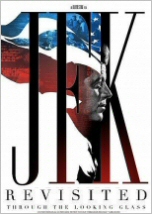
Thirty years after his film JFK, filmmaker Oliver Stone takes viewers on a journey though recently declassified evidence in the assassination of President Kennedy -- the most consequential American murder mystery of the twentieth century. Joined by Whoopi Goldberg and Donald Sutherland, as well as a distinguished team of forensics, medical and ballistics experts, historians, and witnesses, Stone presents compelling evidence that in the Kennedy case 'conspiracy theory' is now 'conspiracy fact.'
Sam Smith's book 'The Jordan Rules' exposes the darker side of Michael Jordan's competitiveness, and questions arise about whether he has a serious gambling problem, but he remains focused on winning a new title in 1993. Dealing with the pitfalls of fame and attempting to complete the first three-peat leave Jordan increasingly exhausted and isolated.
Michael Jordan's return in 1995 energizes the Chicago Bulls, the city and the NBA, and the playoff loss the previous season fuels him to work harder than ever to get back on top. In 1998, Phil Jackson was given one final season with his legendary squad and thus the last dance of the 90s.
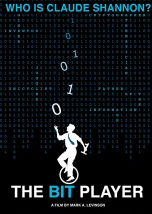
The film tells the story of an overlooked genius: Claude Shannon. In a blockbuster paper in 1948, Claude Shannon introduced the notion of a 'bit' and laid the foundation for the information age. His ideas ripple through nearly every aspect of modern life, influencing such diverse fields as communication, computing, cryptography, neuroscience, artificial intelligence, cosmology, linguistics, and genetics. But when interviewed in the 1980s, Shannon was more interested in showing off the gadgets he'd constructed -- juggling robots, a Rubik's Cube solving machine, a wearable computer to win at roulette, a unicycle without pedals, a flame-throwing trumpet -- than rehashing the past. Mixing contemporary interviews, archival film, animation and dialogue drawn from interviews conducted with Shannon himself, The Bit Player tells the story of an overlooked genius who revolutionized the world, but never lost his childlike curiosity.
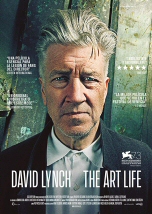
David Lynch takes us on an intimate journey through the formative years of his life. From his idyllic upbringing in small town America to the dark streets of Philadelphia, we follow Lynch as he traces the events that have helped to shape one of cinema's most enigmatic directors. David Lynch the Art Life infuses Lynch's own art, music and early films, shining a light into the dark corners of his unique world, giving audiences a better understanding of the man and the artist. As Lynch states 'I think every time you do something, like a painting or whatever, you go with ideas and sometimes the past can conjure those ideas and color them, even if they're new ideas, the past colors them.' Artist and filmmaker David Lynch discusses his early life and the events that shaped his outlook on art and the creative process.
















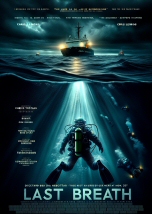







Chris Lemons were carrying out repairs 100m below the surface of the North Sea, supported by the vessel Bibby Topaz. The vessel's dynamic positioning system failed, causing it to snap the umbilical tether that provided Lemons oxygen, as well as hot water to heat his suit, power for his light, and a radio link to the surface. He was left with only the few minutes of breathable gas contained in the cylinders he wore on his back.
For reasons that are unclear, Lemons survived for around 30 minutes while he was located by a remote underwater vehicle and then by Yuasa, who was able to pull him back onboard the diving bell. The documentary uses genuine footage and audio recorded at the time of the accident on the divers' radios and body cameras, supplemented with interviews of several of the individuals involved, as well as some reconstructed footage, to tell the story of the accident.