















Last Watched

"Evolution"  Sort by

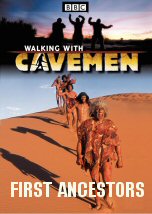
Walking with Cavemen: First Ancestors

   2003    History
It's 3.5 million years ago and in East Africa a remarkable species of ape roams the land. Australopithecus afarensis has taken the first tentative steps towards humanity by standing and walking on two legs. The rift valley was forming, and the rain forests dying as Africa dried out - turning the landscape into a mosaic of scattered trees and grass. In this new environment afarensis found it more efficient to move about on two legs rather than four.
Series: Walking with Cavemen
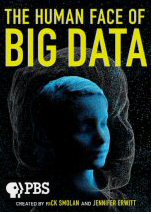
The Human Face of Big Data

   2016    Technology
With the rapid emergence of digital devices, an unstoppable, invisible force is changing human lives: Big Data, a word that was barely used a few years ago but now governs the day for many of us. The real time visualization of data streaming in from satellites, billions of sensors and GPS enabled cameras and smart phones is beginning to enable us to sense, measure and understand aspects of our existence in ways never possible before". This massive gathering and analysing of data in real time is also allowing us to address to some of humanity biggest challenges, including pollution, world hunger and illness, and it is also helping create a new kind of planetary nervous system. But as Edward Snowden and the release of the NSA documents have shown, the accessibility of all this data comes at a steep price. The Human Face of Big Data captures the promise and peril of this extraordinary knowledge revolution.

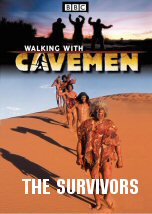
Walking with Cavemen: The Survivors

   2003    History
Nearly half a million years ago, the most advanced human yet roams Europe. Strong and powerful, Homo heidelbergensis are fierce hunters, use sophisticated tools and live in close-knit family groups. Over 200,000 years they become split into two populations by extremes of weather and environment and evolve separately into two very different species. In the North are the Neanderthals, whose physical power and resilience is the key to surviving in ice age Northern Europe. About 140,000 years ago, Africa is in the grip of a devastating drought, and something remarkable has happened to the descendants of heidelbergensis who live there. The combination of environment and chance has bred in them a unique ability that will change the course of human history. It will be this small band of southern survivors, perhaps numbering just a few tens of thousands, who will come to dominate the world and be known as Homo sapiens.
Series: Walking with Cavemen

Sex, Death And The Meaning Of Life

   2013    Culture
Richard Dawkins explores what science can tell us about death. It's a journey that takes him from Hindu funeral pyres in India to genetics labs in New York.Dawkins brings together the latest neuroscience, evolutionary and genetic theory to examine why we crave life after death, why we evolved to age and how the human genome is something like real immortality - traits inherited from our distant ancestors that we pass on to future generations.

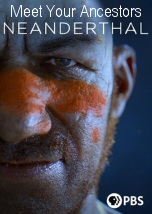
Neanderthals: Meet Your Ancestors

   2018    History
According to recent science the Neanderthals are not the knuckle-dragging apemen of popular imagination. The first part of the film investigates what Neanderthals looked like and how they lived in their Ice Age world. They were faster, smarter, better looking - and much more like us than we ever thought. Our guide is Ella Al-Shamahi, who enlists the skills of Andy Serkis, the master of performance capture, and a group of experts to investigate deeply Neanderthals appearance.
In the second part, Ella explores the fate of the Neanderthals - asking why they became extinct, and discovering how they live on inside of us today. About 2% of the DNA of most people is of Neanderthal origin - and it continues to affect us today. Neanderthals were a people who were supremely well adapted to their environment. But about 40,000 years ago they disappeared. Why?
Series: Neanderthals: Meet Your Ancestors

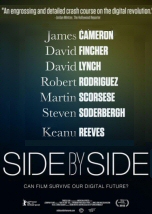
Side by Side

   2012    Art
Join Keanu Reeves on a tour of the past and the future of filmmaking. Since the invention of cinema, the standard format for recording moving images has been film. Over the past two decades, a new form of digital filmmaking has emerged, creating a groundbreaking evolution in the medium. The film investigates the history, process and workflow of both digital and photochemical film creation. We will explore it via in-depth interviews with directors, cinematographers, colorists, scientists, engineers and artists such as James Cameron, David Fincher, David Lynch, Martin Scorsese, Steven Soderbergh, and many more
Racism: A History

Racism: A History

2007  Culture
The Jinx

The Jinx

2015  History
Space

Space

2001  Science
The Cell

The Cell

  Science