



Last Watched

"Fur"  Sort by

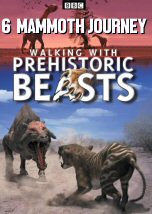
Mammoth Journey

       Science
Travelling forward in time to 30,000 years ago, it's the middle of an ice age. The landscape is dominated by mighty mammoths, living side-by-side with woolly rhinos, giant deer and two separate species of human. The programme follows the fate of a herd of mammoths in their annual struggle against the harsh ice-age conditions. Every summer they spend on the grassy plains of what will one day become the bottom of the North Sea, but every winter they are forced to head for the less exposed valleys further south. It is a journey fraught with danger: mammoths can get trapped in frozen bogs, and the herd must run the gauntlet of hunters like cave lions and the deadly Neanderthals.
Series: Walking with Prehistoric Beast
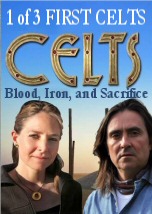
First Celts

   2015    History
The Celts - one of the world's most mysterious ancient people. In Britain and Ireland, we are never far from our Celtic past but in this series Prof. Alice Roberts and archaeologist Neil Oliver travel much further afield, discovering the origins and beliefs of these Iron Age people in artefacts and human remains right across Europe, from Turkey to Portugal. What emerges is not a wild people on the western fringes of Europe, but a highly sophisticated tribal culture that influenced vast areas of the ancient world - and even Rome". Rich with vivid drama reconstruction, we recreate this pivotal time and meet some of our most famous ancient leaders - from Queen Boudicca to Julius Caesar - and relive the battles they fought for the heart and soul of Europe. Alice and Neil discover that these key battles between the Celts and the Romans over the best part of 500 years constituted a fight for two very different forms of civilisation - a fight that came to define the world we live in today. In the first episode, we see the origins of the Celts in the Alps of central Europe and relive the moment of first contact with the Romans in a pitched battle just north of Rome - a battle that the Celts won and that left the imperial city devastated.
Series: The Celts: Blood, Iron, and Sacrifice

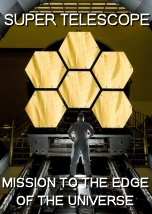
Super Telescope: Mission to the Edge of the Universe

   2022    Technology
As NASA releases the first images from the James Webb Space Telescope, this film tells the inside story of the telescope's construction and the astronomers taking its first picture of distant stars and galaxies. Will it be the deepest image of our universe ever taken? The successor to Hubble, and 100 times more powerful, the James Webb is the most technically advanced telescope ever built. It will look further back in time than Hubble to an era around 200 million years after the Big Bang, when the first stars and galaxies appeared. Webb's primary mission is to capture the faint light from these objects on the edge of our visible universe so that scientists can learn how they formed, but its instruments are so sensitive it could also be the first telescope to detect signs of life on a distant planet.
The James Webb Telescope is an £8 billion gamble on the skills of its engineering team. It’s the first telescope designed to unfold in space – a complicated two-week operation in which 178 release devices must all work - 107 of them on the telescope's sun shield alone. If just one fails, the expensive telescope could become a giant piece of space junk.
From its conception in the late 1980s, the construction of Webb has posed a huge technical challenge. The team must build a mirror six times larger than Hubble’s and construct a vast sun shield the size of a tennis court, fold them up so they fit into an Ariane 5 rocket, then find a way to unfold them in space. This film tells the inside story of the James Webb Space Telescope in the words of the engineers who built it and the astronomers who will use it.

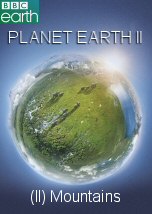
Planet Earth II Mountains

   2016    Nature    HD
The great mountain ranges are some of the planet's most spectacular landscapes, but they are unforgiving places to live in, and only a few animals have what it takes to live at extreme altitude. Mountain animals are amongst the most elusive in the world, and this film provides unique and intimate glimpses into their secretive lives. Witness the moment four snow leopards come together when a mother and cub become trapped between two rival males. Join grizzly bears as they dance against trees to rub off their winter fur and soar with golden eagles hunting amongst Europe's snow-capped peaks.
Series: Planet Earth II

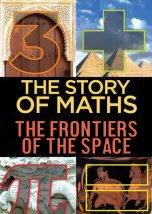
The Story of Maths The Frontiers of Space

   2008    Science
In the third episode we will see Europe by the 17th century taking over from the Middle East as the powerhouse of mathematical ideas. Great strides had been made in understanding the geometry of objects fixed in time and space. The race was on to discover the mathematics to describe objects in motion. This programme explores the work of Rene Descartes, Pierre Fermat, Isaac Newton, Leonard Euler and Carl Friedrich Gauss. Du Sautoy proceeds to describes René Descartes realisation that it was possible to describe curved lines as equations and thus link algebra and geometry. He talks with Henk J. M. Bos about Descartes. He shows how one of Pierre de Fermat’s theorems is now the basis for the codes that protect credit card transactions on the internet. He describes Isaac Newton’s development of math and physics crucial to understanding the behaviour of moving objects in engineering. He covers the Leibniz and Newton calculus controversy and the Bernoulli family. He further covers Leonhard Euler, the father of topology, and Gauss' invention of a new way of handling equations, modular arithmetic. The further contribution of Gauss to our understanding of how prime numbers are distributed is covered thus providing the platform for Bernhard Riemann's theories on prime numbers. In addition Riemann worked on the properties of objects, which he saw as manifolds that could exist in multi-dimensional space.
Series: The Story of Maths

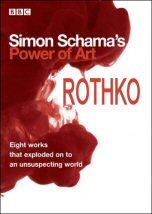
Rothko

   2006    Art
Rothko is known for his abstract expressionism paintings, but he moved through more traditional styles in his early career, including Surrealist paintings in the 1940s. In 1947 he embarked on the first of his large abstract 'colour-field' paintings, formalising their structure further in the 1950s. Rothko had huge success with largescale solo shows, but committed suicide in 1970.
Series: Power of Art