






Last Watched

"Nature"  Sort by

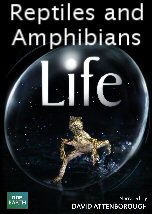
Life: Reptiles and Amphibians

   2009    Nature
Reptiles and amphibians look like hang-overs from the past. But they overcome their shortcomings through amazing innovation. The pebble toad turns into a rubber ball to roll and bounce from its enemies. Extreme slow-motion shows how a Jesus Christ lizard runs on water, and how a chameleon fires an extendible tongue at its prey with unfailing accuracy. The camera dives with a Niuean sea snake, which must breed on land but avoids predators by swimming to an air bubble at the end of an underwater tunnel. In a TV first, Komodo dragons hunt a huge water-buffalo, biting it to inject venom, then waiting for weeks until it dies. Ten dragons strip the carcass to the bone in four hours.
Series: Life
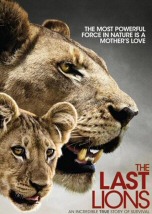
The Last Lions

   2011    Nature
Fifty years ago there were close to half-a-million lions in Africa. Today there are around 20,000. To make matters worse, lions, unlike elephants, which are far more numerous, have virtually no protection under government mandate or through international accords. This is the jumping-off point for a disturbing, well-researched and beautifully made cri de coeur from husband and wife team Dereck and Beverly Joubert, award-winning filmmakers from Botswana who have been Explorers-in-Residence at National Geographic for more than four years. Pointing to poaching as a primary threat while noting the lion's pride of place on the list for eco-tourists-an industry that brings in 200 billion dollars per year worldwide-the Jouberts build a solid case for both the moral duty we have to protect lions (as well as other threatened "big cats," tigers among them) and the economic sense such protection would make. And when one takes into account the fact that big cats are at the very top of the food chain-and that their elimination would wreak havoc on all species below them, causing a complete ecosystem collapse-the need takes on a supreme urgency.

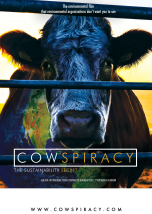
Cowspiracy: The Sustainability Secret

   2014    Nature    HD
Follow the shocking, yet humorous, journey of an aspiring environmentalist, as he daringly seeks to find the real solution to the most pressing environmental issues and true path to sustainability. Discover 'The Facts' http://www.cowspiracy.com/facts

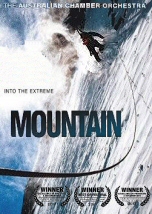
Mountain

   2018    Nature    HD
Jaw-dropping exploration of our obsessions with high places and how they have come to capture our imagination. Only three centuries ago, climbing a mountain would have been considered close to lunacy. The idea scarcely existed that wild landscapes might hold any sort of attraction. Peaks were places of peril, not beauty. Why, then, are we now drawn to mountains?
Filmed by the world's leading high-altitude cinematographers, narrated by William Dafoe and set to a specially curated musical performance by the Australian Chamber Orchestra, Mountain captures the fierce beauty of some of the world's most treacherous landscapes and the awe they inspire.

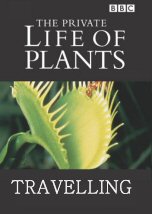
The Private Life of Plants: Travelling

   1994    Nature
Sir David Attenborough reveals plants as they have never been seen before - on the move and dangerously devious. About the major problems of life - growing, finding food, reproduction - and the varied ways plants have evolved to solve it. Filmed from the plant's point of view, using computer animations, fibre-optics and unique time-lapse photography. The first episode looks at how plants are able to move". The bramble is an aggressive example: it advances forcefully from side to side and, once settled on its course, there is little that can stand in its way. An altogether faster species is the birdcage plant, which inhabits Californian sand dunes. When its location becomes exposed, it shifts at great speed to another one with the assistance of wind — and it is this that allows many forms of vegetation to distribute their seeds. While not strictly a plant, the spores of fungi are also spread in a similar fashion. One of the most successful (and intricate) flowers to use the wind is the dandelion, whose seeds travel with the aid of 'parachutes'. They are needed to travel miles away from their parents, who are too densely packed to allow any new arrivals. Trees have the advantage of height to send their seeds further, and the cottonwood is shown as a specialist in this regard. The humidity of the tropical rainforest creates transportation problems, and the liana-species Alsomitra macrocarpa is one plant whose seeds are aerodynamic 'gliders'. Some, such as those of the sycamore, take the form of 'helicopters', while others, such as the squirting cucumber release their seeds by 'exploding'. Water is also a widely used method of propulsion. The tropical sea bean Entada gigas has one of the biggest fruits of all plants and is dispersed by water streams. However, most plants use living couriers, whether they be dogs, humans and other primates, ants or birds, etc., and to that end, they use colour and smell to signify when they are ripe for picking.
Series: The Private Life of Plants

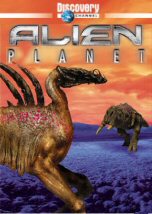
Alien Planet

   2005    Nature
The computer animated drama takes place on Darwin IV, a planet 6.5 light years from earth, with 2 suns and 60% of Earth's gravity. Earth sends a pilot mission with three probes. This robotic fleet is responsible for finding and assessing any life forms on Darwin IV. The probes soon find themselves in the middle of a developed ecosystem teeming with diversity of life of all sizes. "Alien Planet" is motivated by real science missions, such as the NASA Origins Program and the NASA / JPL Planet-Finder Mission, as well as the European Space Agency's Darwin Project. It is a cosmic expedition along side Stephen Hawking, Michio Kaku, Jack Horner, Craig Venter, and George Lucas, and NASA's Chief Scientist Jim Garvin. No longer just the domain of science fiction, "Alien Planet" dramatizes an exciting and possible answer to what alien life really looks like and when we'll find it.