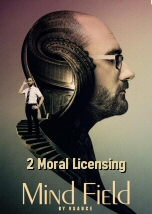
Moral psychology isn't always an easy thing to study. Experiments that actually puts people in what feels like a real scenario may get realistic results, but researchers must always balance the benefits of what we could learn with the safety and well-being of the people they study. Often what we learn from moral psychology experiments doesn't make humans look good. We are imperfect creatures. But the more we learn about why and how we make the moral choices that we do, the better we'll be able to tackle difficult questions in the future.
Human society is incredibly complex, and the duelling forces pushing us to conform and also to express our individuality are both necessary. Other people can influence us in good ways and in not-so-good ways. Michael Stevens takes a look into the human urge to conform and just how strong it is against our own beliefs and sense of selves.
Everyone always wants to be able to choose - but who really makes these choices? And do we really want to have more choices? Michael Stevens finds out as he explores decision-making.
Completely proving something can be difficult, if not impossible. So instead, we have the faith of the believer, the confidence interval of the scientist. What we think we know, we really only believe we know. On this episode of Mind Field, we are going to take a look at a kind of lie we tell ourselves. And we are going to use belief to turn a lie... into a truth.
Who are you? Do you even know who you are? Are you your memories? Are you the choices you make? Are you you? Or are you someone else, but manipulated to be you? If you can lose track of your past and your memories can be altered or implanted, in the end, who are you really? Michael Stevens finds out as he explores what makes you you.
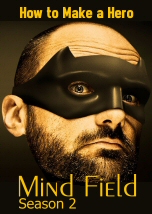
A hero is just someone who acts selflessly, out of concern for others, at personal risk and without the expectation of reward. In this episode, Michael Stevens asks employees to help him run a seemingly dangerous experiment, to see if they would blow the whistle to stop him.





















We are imperfect creatures. But the more we learn about why and how we make the moral choices that we do, the better we'll be able to tackle difficult questions in the future.