







Last Watched

"Science"  Sort by

The Clean Room

   2014    Science
This episode is centered around how science, in particular the work of Clair Patterson (voiced in animated sequences by Richard Gere[33]) in the middle of the 20th century, has been able to determine the age of the Earth. Tyson first describes how the Earth was formed from the coalescence of matter some millions of years after the formation of the Sun, and while scientists can examine the formations in rock stratum to date some geological events, these can only trace back millions of years. Instead, scientists have used the debris from meteor impacts, such as the Meteor Crater in Arizona, knowing that the material from such meteors coming from the asteroid belt would have been made at the same time as the Earth. Patterson also examined the levels of lead in the common environment and in deeper parts of the oceans and Antarctic ice, showing that lead had only been brought to the surface in recent times. He would discover that the higher levels of lead were from the use of tetraethyllead in leaded gasoline resulting in government-mandated restrictions on the use of lead.
Series: Cosmos: A Spacetime Odyssey
Charles Darwin and the Tree of Life

   2009    Science
David Attenborough asks three key questions: how and why did Darwin come up with his theory of evolution? Why do we think he was right? And why is it more important now than ever before? David starts his journey in Darwin's home at Down House in Kent, where Darwin worried and puzzled over the origins of life. David goes back to his roots in Leicestershire, where he hunted for fossils as a child, and where another schoolboy unearthed a significant find in the 1950s. And he revisits Cambridge University, where both he and Darwin studied, and where many years later the DNA double helix was discovered, providing the foundations for genetics. At the end of his journey in the Natural History Museum in London, David concludes that Darwin's great insight revolutionised the way in which we see the world. We now understand why there are so many different species, and why they are distributed in the way they are. But above all, Darwin has shown us that we are not set apart from the natural world, and do not have dominion over it. We are subject to its laws and processes, as are all other animals on earth to which, indeed, we are related.

Black Hole Apocalypse 1of2

   2018    Science    HD
Black holes are the most enigmatic and exotic objects in the universe. They’re also the most powerful; with gravity so strong it can trap light. And they’re destructive, swallowing entire planets, even giant stars. Anything that falls into them vanishes... gone forever. Now, astrophysicists are realizing that black holes may be essential to how our universe evolved—their influence possibly leading to life on Earth and, ultimately, us.
In this series, astrophysicist and author Janna Levin takes viewers on a journey to the frontiers of black hole science. Along the way, we meet leading astronomers and physicists on the verge of finding new answers to provocative questions about these shadowy monsters: Where do they come from? What’s inside? What happens if you fall into one? And what can they tell us about the nature of space, time, and gravity?
Series: Black Hole Apocalypse

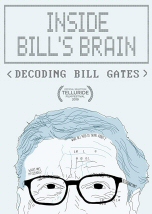
Inside Bill Brain: Decoding Bill Gates 1of3

   2019    History
The series about the man, myth and legend - founder of Microsoft and co-founder of the Bill and Melinda Gates Foundation - reflects on his trailblazing work with computer software, starting the largest private philanthropic foundation. Bill Gates opens up about his childhood, business career and passion for improving the lives of people in the developing world.
When Bill Gates stepped down from Microsoft in 2008, he was worth more than 58 billion dollars. He built that fortune thinking about computer software, operating systems, spreadsheets and the Internet. What was on his mind?
Series: Inside Bill Brain: Decoding Bill Gates

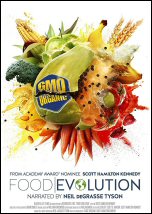
Food Evolution

   2016    Nature
The film looks at one of the most critical questions facing the world today-that of food security-and demonstrates the desperate need for common sense, solid information, and calm logical deliberation. Using the often angry and emotional controversy over genetically-modified foods as its entry point, Food Evolution shows how easily fear and misinformation can overwhelm objective, evidence-based analysis.
Food Evolution takes the position that science and scientists hold the key to solving the food crisis. But whose science? In the GMO debate, both sides claim science is on their side. Who's right? How do we figure this out? What does this mean for the larger issues of food security, sustainability, and environmental well-being? Food Evolution seeks to answer these critically important questions.

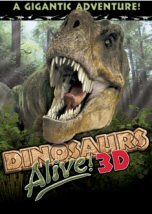
Dinosaurs Alive

   2009    Science    3D    HD
A global adventure of science and discovery--featuring the earliest dinosaurs of the Triassic Period to the monsters of the Cretaceous 'reincarnated' life-sized for the screen. Audiences will journey with some of the world's preeminent palaeontologists as they uncover evidence that the descendents of dinosaurs still walk (or fly) among us. From the exotic, trackless expanses and sand dunes of Mongolia's Gobi Desert to the dramatic sandstone buttes of New Mexico, the film will follow American Museum of Natural History palaeontologists as they explore some of the greatest dinosaur finds in history. Through the magic of scientifically accurate computer-generated animation, these newly discovered creatures, and some familiar favourites, will come alive... in a big way!
Cooked

Cooked

2016  Culture
Five Came Back

Five Came Back

2017  Art
Earthflight

Earthflight

2012  Nature
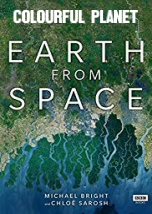
Earth from Space

Earth from Space

2019  Nature
Black Hole Apocalypse

Black Hole Apocalypse

2018  Science
Earth at Night in Color

Earth at Night in Color

2020  Nature