







Last Watched

"The Sun"  Sort by

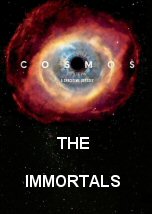
The Immortals

   2014    Science
This episode covers the nature of how life may have developed on Earth and the possibility of life on other planets. Tyson begins by explaining how the human development of writing systems enabled the transfer of information through generations, describing how Princess Enheduanna ca. 2280 BCE would be one of the first to sign her name to her works, and how Gilgamesh collected stories, including that of Utnapishtim documenting a great flood comparable to the story of Noah's Ark. Tyson explains how DNA similarly records information to propagate life, and postulates theories of how DNA originated on Earth, including evolution from a shallow tide pool, or from the ejecta of meteor collisions from other planets. In the latter case, Tyson explains how comparing the composition of the Nakhla meteorite in 1911 to results collected by the Viking program demonstrated that material from Mars could transit to Earth, and the ability of some microbes to survive the harsh conditions of space. With the motions of solar systems through the galaxy over billions of years, life could conceivably propagate from planet to planet in the same manner. Tyson then moves on to consider if life on other planets could exist. He explains how Project Diana performed in the 1960s showed that radio waves are able to travel in space, and that all of humanity's broadcast signals continue to radiate into space from our planet. Tyson notes that projects have since looked for similar signals potentially emanating from other solar systems. Tyson then explains that the development and lifespan of extraterrestrial civilizations must be considered for such detection to be realized. He notes that civilizations can be wiped out by cosmic events like supernovae, natural disasters such as the Toba disaster, or even self-destruct through war or other means, making probability estimates difficult. Tyson describes how elliptical galaxies, in which some of the oldest red dwarf stars exist, would offer the best chance of finding established civilizations. Tyson concludes that human intelligence properly applied should allow our species to avoid such disasters and enable us to migrate beyond the Earth before the Sun's eventual transformation into a red giant.
Series: Cosmos: A Spacetime Odyssey
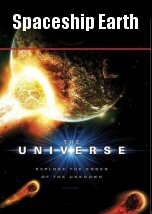
Spaceship...Earth

   2007    Science
Take a ride through the formation of the third planet from the Sun, Earth. A survivor of one of the most violent neighbourhoods in the universe, learn how earth was created and discover what creatures hold clues to how life began. What evil forces threaten the demise of Earth?
Series: The Universe

Journey from the Center of the Sun

   2014    Science
How does light escape from the sun? We take a journey from the center of the sun, following the path of light. We witness its fiery birth from in the core, its 430,000 mile battle against gravity and magnetism, and its escape from the solar surface.
Series: How the Universe Works

Black Sabbath: The End Of The End

   2017    Art
The film documents the English heavy metal band Black Sabbath's final show of their farewell concert tour, The End Tour. The performance was held at the Genting Arena in Birmingham, England, hometown of the band's founding members: vocalist Ozzy Osbourne, guitarist Tony Iommi, bassist Geezer Butler, and drummer Bill Ward. Osbourne, Iommi, and Butler performed this final concert with session drummer Tommy Clufetos in place of Ward, as well as Adam Wakeman on keyboards and guitar.
The concert opens with a performance of the song 'Black Sabbath'. The film goes on to show the band performing 'Fairies Wear Boots', 'Under the Sun/Every Day Comes and Goes', 'Into the Void', 'Snowblind', 'War Pigs', 'Hand of Doom', 'Iron Man', and 'Children of the Grave'; at the end of the setlist, the band performs the song 'Paranoid' as an encore.
Interspersed with the final concert are interviews with Osbourne, Iommi, and Butler, in which they talk about their careers and past drug addictions. Additionally, Iommi's 2012 lymphoma diagnosis, which impacted the band's 2012–14 reunion tour and the recording of their 2013 album 13, is discussed. The film also features footage of 'The Angelic Sessions'—the band's final studio recordings, which took place in the days following the final show. Of these recordings, the film shows Osbourne, Iommi, and Butler performing 'The Wizard', 'Wicked World', and 'Changes'.

Man-Eating Tigers of the Sundarbans

   2009    Nature
The Sundarbans mangrove forest, in Bangladesh near the Indian border, is a tidal jungle where Ganges and Brahmaputra enter the Indian Ocean. Its has some 400 Bengal tigers - the largest population in the world, and the only to be hardly scared of men. The downside is tigers kill up the 50 Bangladeshis a year, even from neighbouring villages, so keeping them inside the reserve is key to long-term survival.
A recent project tries to train local mongrels, not pets but fiercely self-reliant dogs, to spot and even scare off tigers from villages. An individual tiger can turn into a man-eater in order to survive - this process may occur due to an injury or old age (and so cannot hunt agile prey) or even accidentally tasting human flesh.
Series: Natural World

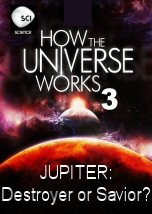
Jupiter: Destroyer or Savior

   2014    Science
Beneath Jupiter's swirling clouds lie our solar system's deepest secrets: from its violent youth, through the birth of life to the death of the sun. Now, scientists are unlocking these secrets and discovering that every living thing exists thanks to Jupiter.
Series: How the Universe Works
Get Gotti

Get Gotti

2023  History
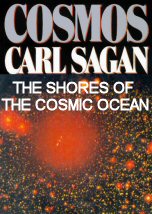
Cosmos

Cosmos

1980  Science
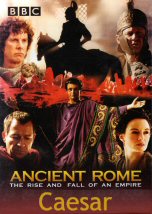
Ancient Rome

Ancient Rome

2006  History
Asia

Asia

2024  Nature