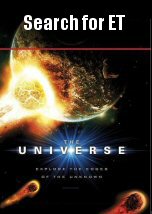
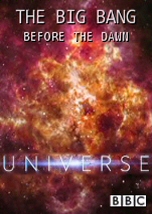
How did the universe come to be? Thanks to a series of discoveries, our most powerful space missions have unravelled 13.8 billion years of cosmic evolution and revealed the story of our universe from its birth all the way to the arrival of our nascent civilization. Our guide on this odyssey back to the dawn of time is light. Telescopes are time machines - by looking out into the distant universe, they open a window to the past. One telescope more than any other has helped us journey through the history of the universe: NASA’s Hubble Space Telescope. Remarkably, Hubble has even found one of the first galaxies ever to exist in the universe, which was born some 13.4 billion years ago. It's a discovery that hints at the beginnings of our own Milky Way. Vivid CGI brings this ancient galaxy to life, allowing us to witness for ourselves the first dawn. It was the beginning of a relationship between stars and planets that would, on a faraway world, lead to the origin of life - and ultimately to us. Hubble’s incredible discoveries have allowed scientists to piece together much of our cosmic story, but it cannot take us back to the most important moment in history: the Big Bang. For decades, the moment the universe began was the subject of pure speculation, but by combining astronomy and cosmology, scientists have finally found a way to put their theories to the test and study the momentous events that took place during the Big Bang. They can do this because the European Space Agency’s Planck space telescope has seen the afterglow of the Big Bang itself – something we call the Cosmic Microwave Background. The unparalleled detail Planck gave us has helped confirm something remarkable: the Big Bang may not be the beginning. There was a time before the dawn – a place beyond anything we can comprehend. Professor Brian Cox transports us back to the fraction of a second before the Big Bang, when the seeds of our universe were planted.
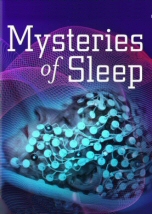
Why do we sleep? And what does sleep have to do with memory, trauma, and our emotions? From fruit flies to whales, virtually every animal sleeps. But why? Why do we need to spend nearly a third of our lives in such a defenseless state? Scientists are peering more deeply into the sleeping brain than ever before, discovering just how powerful sleep can be, playing a role in everything from memory retention and emotional regulation to removing waste from our brains. So why are we getting so little of it?
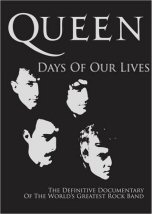
In 1971, four university students got together to form a band. Since then, that certain band called Queen has released 26 albums and sold over 300 million records worldwide. The popularity of Freddie Mercury, Brian May, Roger Taylor and John Deacon is stronger than ever. Their story is a remarkable one, a narrative that covers early struggles, huge obstacles, success, arguments, breakups, triumph, tragedy and an enduring legacy - all against a backdrop of brilliant music and stunning live performances from every corner of the globe. In this film, for the first time, it is the band that tells their story. Guiding us through an extensive archive full of hitherto unseen footage, the documentary reveals how four strong-minded individuals, all capable of writing massive hit songs, worked together so successfully for four decades. Queen never did anything by halves - meaning their highs were massive, but their lows catastrophic. It is a compelling story told with intelligence, wit, plenty of humour and painful honesty.
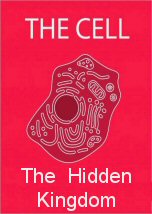
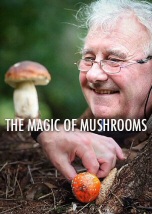
Professor Richard Fortey delves into the fascinating and normally-hidden kingdom of fungi. From their spectacular birth, through their secretive underground life to their final explosive death, Richard reveals a remarkable world that few of us understand or even realise exists - yet all life on Earth depends on it. In a specially-built mushroom lab, with the help of mycologist Dr Patrick Hickey and some state-of-the-art technology, Richard brings to life the secret world of mushrooms as never seen before and reveals the spectacular abilities of fungi to break down waste and sustain new plant life, keeping our planet alive. Beyond the lab, Richard travels across Britain and beyond to show us the biggest, fastest and most deadly organisms on the planet - all of them fungi. He reveals their almost magical powers that have world-changing potential - opening up new frontiers in science, medicine and technology.
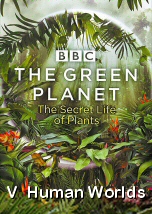
A guide to plants that thrive in human-dominated environments, including trees that grow across canyons in India, which have developed into living bridges. The programme examines the origins of growing crops and the ongoing influence on the world of wild plants, as well as efforts to preserve species, from snipers firing pesticide bullets from helicopters to fend off invasive plants to plants being painstakingly pollinated using a paintbrush.
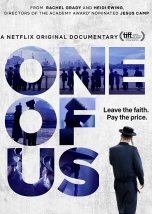
The film explores the opaque world of Hasidic Judaism through a cadre of fascinating characters. Through unique and intimate access over the span of three years, acclaimed observational filmmakers Heidi Ewing and Rachel Grady delve into the lives of three brave individuals who have recently made the decision to leave the insular ultra-orthodox community at the expense of all else, including relationships with their family members and--in one case--their personal safety. With a sensitive and compassionate eye, One of Us chronicles the achingly cinematic journey of people in search of a personal freedom that comes only at a very high cost.


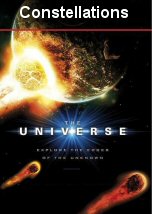
Hubble’s incredible discoveries have allowed scientists to piece together much of our cosmic story, but it cannot take us back to the most important moment in history: the Big Bang. For decades, the moment the universe began was the subject of pure speculation, but by combining astronomy and cosmology, scientists have finally found a way to put their theories to the test and study the momentous events that took place during the Big Bang. They can do this because the European Space Agency’s Planck space telescope has seen the afterglow of the Big Bang itself – something we call the Cosmic Microwave Background. The unparalleled detail Planck gave us has helped confirm something remarkable: the Big Bang may not be the beginning. There was a time before the dawn – a place beyond anything we can comprehend. Professor Brian Cox transports us back to the fraction of a second before the Big Bang, when the seeds of our universe were planted.