Professor Brian Cox fulfils a childhood dream by going behind the scenes at Nasa’s Jet Propulsion Laboratory (JPL), mission control for Mars 2020 – one of the most ambitious missions ever launched that may finally reveal if life ever existed on the red planet. In 1980, a young Brian Cox wrote to JPL asking for photos from some of their missions to the planets. The pictures they sent him from Voyager and the Viking mission to Mars were a source of inspiration that set him on the path to becoming a physicist. Now, over 40 years later, he has been granted privileged access to JPL, including key mission areas that are usually off-limits to film crews. Brian spends a week following the team who guide the Perseverance rover and the Ingenuity helicopter - the first powered aircraft ever sent to another planet - across the surface of Mars during a critical stage of the mission. Perseverance’s goal is to search for signs of long extinct life on the surface of Mars in an area called Jezero Crater, which, 3.8 billion years ago, was filled by a vast lake. If it finds evidence of that life, it could change everything we know about life in the universe - and even transform our understanding of our own origins.
Humans have long gazed up at the night sky, wondering whether other lifeforms and intelligences could be thriving on worlds far beyond our own. But over the last few decades, ultra-sensitive telescopes and dogged detective work have transformed alien planet-hunting from science fiction into hard fact. We expected to find worlds similar to the planets in our own solar system, but we instead discovered a riot of exotic worlds. Vivid animation based on data from the most successful planet hunter of them all, the Kepler space telescope, brings these worlds into view: puffy planets with the density of polystyrene, unstable worlds orbiting two suns and 1,000-degree, broiling gas giants with skies whipped into titanic winds. But perhaps the most startling discovery was the number of worlds that may be contenders for a second Earth, at the right distance from their sun to have that ingredient so crucial for life as we know it, liquid water. Amongst them, we witness the most tantalizing discovery of all: a so-called ‘super-Earth’, situated in the Goldilocks zone - the area just the right distance from a sun to potentially support life - and with the faint signal of water in its atmosphere.
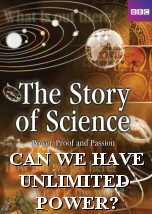
We are the most power-hungry generation that has ever lived. This film tells the story of how that power has been harnessed - from wind, steam and from inside the atom. In the early years the drive for new sources of power was led by practical men who wanted to make money. Their inventions and ideas created fortunes and changed the course of history, but it took centuries for science to catch up, to explain what power is, rather than simply what it does. This search revealed fundamental laws of nature which apply across the universe, including the most famous equation in all of science, e=mc2.
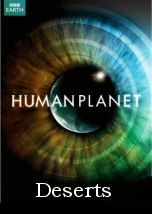
We can survive for weeks without food, but only days without water: it is the essential element of life. Yet many millions of us live in parched deserts around the world. In the second episode of Human Planet, we discover how the eternal quest for water brings huge challenges - and ingenious solutions - in the driest places on Earth. Battling through a sand storm in Mali, Mamadou must get his cows to a remote lake but desert elephants have arrived first. Can he find a safe way through the elephant blockade? Alone for weeks on end, Tubu women and children navigate the endless dunes of the Sahara. How does young Shede know where to find the last oasis, three days walk across the sea of sand? At the height of the drought we witness a spectacular frenzy: two thousand men rushing into Antogo Lake to catch the fish trapped by the evaporating water. When the rain finally arrives in the desert it's a time for flowering and jubilation - and love. The Wodaabe men of Niger put on make-up for an intoxicating courtship dance and beauty contest.
We love nature and all its glorious diversity. Some creatures we admire for their deadly beauty, others because they are cute, but for some it's hard to figure out exactly why we like them so much, perhaps it's a quirk. How do you decide nature's weirdest animal? Is it the sloth that hangs upside down and moves so slowly that moss grows in its fur? Is it a sea pen that sits rooted to the seabed in endless darkness and emitting its own glow? Could it be carnivorous snails that leave the ocean to digest dead creatures on the beach, finches that drink blood, or the tarantula that keeps a frog as it's pet. But with nature's endless variety, which is the weirdest? We can't decide. Can you?
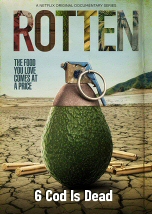
In the last 50 years, we have doubled the amount of fish we consume. Globally, billions of people rely on seafood as their primary source of protein. But the oceans can't keep up with so much demand. Around the world, fish stocks have plummeted and fisheries are crashing. People lost out. There was an industry just completely ravaged. As the global fish supply dwindles, the industry faces a crisis on all sides - including crooked moguls, dubious imports and divisive regulations.





















In 1980, a young Brian Cox wrote to JPL asking for photos from some of their missions to the planets. The pictures they sent him from Voyager and the Viking mission to Mars were a source of inspiration that set him on the path to becoming a physicist.
Now, over 40 years later, he has been granted privileged access to JPL, including key mission areas that are usually off-limits to film crews. Brian spends a week following the team who guide the Perseverance rover and the Ingenuity helicopter - the first powered aircraft ever sent to another planet - across the surface of Mars during a critical stage of the mission.
Perseverance’s goal is to search for signs of long extinct life on the surface of Mars in an area called Jezero Crater, which, 3.8 billion years ago, was filled by a vast lake. If it finds evidence of that life, it could change everything we know about life in the universe - and even transform our understanding of our own origins.