










Last Watched

"Nature"  Sort by

Surviving

   1995    Nature
the final episode deals with plants that live in hostile environments. Attenborough visits Ellesmere Island, north of the Arctic Circle, to demonstrate that even in a place that is unconducive to life, it can be found. Algae and lichens grow in or on rock, and during summer, when the ice melts, flowers are much more apparent. However, they must remain close to the ground to stay out of the chilling wind. In the Tasmanian mountains, plants conserve heat by growing into 'cushions' that act as solar panels, with as many as a million individual shoots grouped together as one. Others, such as the lobelia in Mount Kenya, have a 'fur coat' of dense hairs on their leaves. The saguaro cactus in the Sonoran Desert flourishes because of its ability to retain vast amounts of water, which can't be lost through leaves because it has none. Many desert dwellers benefit from an accelerated life cycle, blooming rapidly within weeks after rainfall. Conversely, Mount Roraima is one of the wettest places on Earth. It is a huge sandstone plateau with high waterfalls and nutrients are continuously washed away, so plants have to adapt their diet if they are to survive. A bladderwort is shown invading a bromeliad. Inhabitants of lakes have other problems to contend with: those that dominate the surface will proliferate, and the Amazon water lily provides an apt illustration. Attenborough ends the series with an entreaty for the conservation of plant species.
Series: The Private Life of Plants
Chased by Sea Monsters 2of3

   2003    Nature
You will feel a lot more comfortable about going out for a swim or an afternoon boat ride knowing that such behemoths are extinct today!The Dunkleosteus is school bus-sized armored fish with razor sharp bladed jaws for cutting through anything in its path. The mighty Liopleurodon is a true monster, largest and most powerful of the Pliosaurs. The deadly Mosasaurs where the real sea serpents of their day, and some where large enough to dispatch an adult tyrannosaur easily.
Series: Chased by Sea Monsters

Wilding

   2021    Nature
Jeremy Clarkson decides to become a naturalist. 'In just 30 years, insect numbers have dropped by 25% and they're still falling. Without insects, all life on Earth ends. Everywhere where insects like to live is disappearing and I've decided to do something about that. My plan is to make my hedgerows, my valleys, my woods, and my streams more attractive to creepy crawlies. In essence, I am going to leave chunks of the farm completely alone. I'm going to put Mother Nature in the driving seat. It's a process called wilding.'
Series: Clarkson Farm

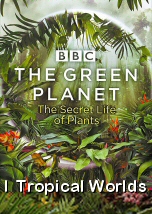
Tropical Worlds

   2022    Nature
Dive with David Attenborough into a world where a single life can last a thousand years. See things no eye has ever seen, and discover the dramatic, beautiful plant life of Earth. In the first episode, Sir David Attenborough shows how more kinds of plants are crammed together in the tropical rainforests than anywhere else on Earth. The result is astonishing beauty and intense competition - a plant battleground.
New filming techniques allow us to enter the plants’ world and see it from their perspective and on their timescale. From fast-growing trees to flowers that mimic dead animals, this is a journey into a magical world that operates on a different timescale to our own.
Series: The Green Planet

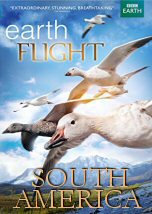
Earthflight South America

   2012    Nature
The documentary series gives a bird's-eye view of South America, as condors soar along the Andes, scarlet macaws explore the heart of the Amazon and hummingbirds and vultures see the continent's greatest sights. It is a journey that includes Machu Picchu, the Nasca Lines and the cities of Rio de Janeiro and Santiago. In Patagonia, giant petrels shadow killer whales as they hunt seals by stranding their huge bodies on the beach. At Iguassu Falls, dusky swifts dive through the cascades to huddle in communal roosts while hummingbirds bathe below. In a secret Andean location, condors soar in flocks over 40-strong and scavenge on casualties from herds of fighting guanacos. Elsewhere, a mother condor gently pushes her youngster to the edge of a 200-metre cliff, as flight school begins. Deep in the Amazon, macaws seek medicinal clay. They are joined by a host of secretive jungle animals, including spider monkeys and tapirs, all after the same remedy. In Peru, condors soar over fighting sea lions waiting for causalities and on a mass exodus north, birds converge on the Panama Canal. In Costa Rica, black vultures descend on turtles as they lay their eggs in the sand and pick off the eggs that ping-pong through the air.
Series: Earthflight

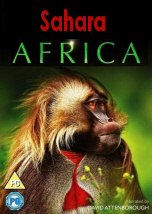
Sahara

   2012    Nature
Northern Africa is home to the greatest desert on Earth, the Sahara. On the fringes, huge zebras battle over dwindling resources and naked mole rats avoid the heat by living a bizarre underground existence. Within the desert, where the sand dunes 'sing', camels seek out water with the help of their herders and tiny swallows navigate across thousands of square miles to find a solitary oasis. This is a story of an apocalypse and how, when nature is overrun, some are forced to flee, some endure, but a few seize the opportunity to establish a new order.
Series: Africa with David Attenborough