It is the year 2546. Corporations rule the world, and an agent is on a secret mission to explore the untold stories of the past. His journey leads him into a secret virtual reality where one corporation has recreated the 1980s, an era that witnessed the birth of video game development, an event in which a politically and economically restricted small European country, Hungary, had a significant role. He discovers a strange but exciting world, where computers were smuggled through the Iron Curtain and serious engineers started developing games. This small country was still under Soviet pressure when a group of people managed to set up one of the first game development studios in the world, and western computer stores started clearing room on their shelves for Hungarian products. These developers really didn't know it was impossible, because they created games including amazing technical feats that even engineers at Commodore thought their machines weren't capable of.
The demands of a celebrity chef, especially one that runs three vibrant restaurants and a fried chicken franchise, are rigorous. The daily upkeep to ensure quality and consistency in his establishments keep him busy enough, but add to that the photo shoots, TV appearances, interviews and a constant online presence, and the tasks become herculean. When Ludo Lefebvre needs to escape the chaos, he heads to the lilting and poetic world of Paris in the spring, where the emphasis is placed on the joy and fun of life.
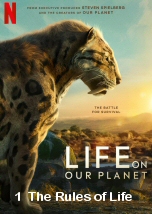
The series ‘Life on Our Planet’ brought to life by Steven Spielberg and narrated by Morgan Freeman, unfolds the remarkable and epic four-billion-year journey of life on Earth. Its captivating narrative explores the continuous battle of life to conquer and survive, delving into the history of the 20 million species that exist today. However, what we witness is merely a snapshot in time; 99% of Earth's inhabitants are buried in our deep past. This series weaves the tales of these dynasties, chronicling their rise and fall in a story that is as incredible as it is enlightening, sparking a profound interest in the history and resilience of life on Earth. The first episode traces the evolution of life on our planet and highlights the diversity of life, from ancient sharks to the reign of dinosaurs and the emergence of mammals. The episode showcases the constant struggle for survival and adaptation across different eras, illustrating the dynamic and often brutal nature of Earth's evolution.
The little known story of our quest to understand the origins of the Moon. Neil Armstrong's "giant leap for mankind" began a scientific journey of discovery that lead to one of the most startling conclusions in the history of astronomy. The Moon was born from Earth.
Spring has sprung at Diddly Squat Farm, and that heralds the release of cows and chickens from their winter captivity. Jeremy's restaurant plans are in tatters, but that's not the end of his dealings with the council, who are also sending letters raising issues about what's being sold in the shop itself. From here on in, Jeremy decides that he and all around him must operate in a world of loop-holes and just-within-the-law cunning wheezes. Pepper the prized heifer still isn't pregnant and her last chance saloon arrives in the shape of a bull called Break Heart Maestro. A chat with Alan the builder provides a Eureka Moment: the restaurant idea is not dead after all! There's much excitement as building work begins and Jeremy meets a chef called Pip. There's less excitement when he has to take his first steer to the abattoir.
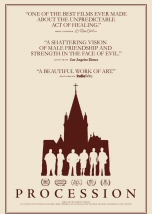
Six midwestern men all survivors of childhood sexual assault at the hands of Catholic priests and clergy come together to direct a drama therapy-inspired experiment designed to collectively work through their trauma. As part of a radically collaborative filmmaking process, they create fictional scenes based on memories, dreams and experiences, meant to explore the church rituals, culture and hierarchies that enabled silence around their abuse. In the face of a failed legal system, we watch these men reclaim the spaces that allowed their assault, revealing the possibility for catharsis and redemption through a new-found fraternity.

















He discovers a strange but exciting world, where computers were smuggled through the Iron Curtain and serious engineers started developing games. This small country was still under Soviet pressure when a group of people managed to set up one of the first game development studios in the world, and western computer stores started clearing room on their shelves for Hungarian products. These developers really didn't know it was impossible, because they created games including amazing technical feats that even engineers at Commodore thought their machines weren't capable of.