Planets beyond our solar system are known to astronomers as exoplanets. They are at trillions of miles from Earth and yet, it might be possible to detect a faint signature of life in them. From the light of the stars they orbit that passes through the atmosphere of an exoplanet, it is possible to capture the chemical fingerprint of the elements in that atmosphere. The fictional world Eden is orbiting not one star, but two. The light from its twin stars powers photosynthesis, pumping more oxygen into the atmosphere than in Earth, allowing life to thrive. Grazers are constantly alert to danger, because the canopy is home to predators perfectly evolved to live among the trees. In Episode 3, another topic are fungi and the role they could play on exoplanets. Ecologist Thomas Crowther talks about the role mycelial networks play in the Rothiemurchus forest in Scotland.
In Southeast Alaska, there's an ice-bound Eden that harbors possibly the richest temperate rainforests of all. Where the coastal mountains meet the Pacific, lays the Alexander Archipelago, a remote island chain running for almost 300 miles along the Alaskan Panhandle. This frozen frontier is one of the last great wildernesses of North America. And a stronghold for the country's highest diversity of megafauna, feasting on the abundance of fleeting summers to make it through relentless winters.
The cosmos, with its billions of galaxies and countless stars, isn't the only one. We share our lives with another universe: The world of the small, of the viruses, of the bacteria. We call this strange hidden kingdom the Microcosmos. We share our world with the microcosmos. Will we coexist in an uneasy peace, or will it destroy us? In 2020, A tiny virus caused a global pandemic, COVID-19. This pandemic makes people see the world completely differently, because there was an invisible universe, pretty much ignored for the most part. Very, very tiny things have a huge impact on our lives. The microcosmos is complex, while some parts kill us, others keep us alive. The microcosmos is responsible for the very oxygen that we breathe and the soil on which we live. And it will influence our future as we venture out into space.
The center of our galaxy is one of the most nightmarish places in the cosmos. It's the home to some of the most incredible forces the universe has to offer. Gas streaming everywhere, stars are being born and dying and exploding, radiation blasting out. And at the very heart is the super massive black hole, 4 million times the mass of the sun. But also the Milky Way, is our safe harbour, our island in this vast, cosmic ocean. And so to understand the heart of our galaxy, is to understand our home in this cosmic void.
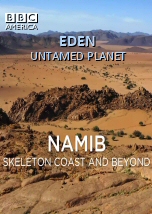
The Namib Desert is one of the oldest deserts and also one of the most diverse. With 50ºC (120ºF) temperatures and half a millimetre of rainfall annually, we see how this is possible. Half the size of Oklahoma, from its Skeleton Coast through the sea of sand to the haze of distant mountains this apparently forbidding desert hides secret water sources.
Stars helped create us, building and spreading the ingredients for life to develop. But there will definitely be a point in the future when, in the future when, you look up, you will no longer be able to see stars. For billions of years, stars brought life to the universe. Now, they're dying out in a star apocalypse. What's causing the die-off, and what happens to life when the lights go out?











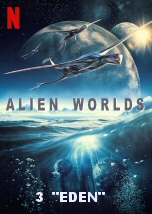





The fictional world Eden is orbiting not one star, but two. The light from its twin stars powers photosynthesis, pumping more oxygen into the atmosphere than in Earth, allowing life to thrive. Grazers are constantly alert to danger, because the canopy is home to predators perfectly evolved to live among the trees. In Episode 3, another topic are fungi and the role they could play on exoplanets. Ecologist Thomas Crowther talks about the role mycelial networks play in the Rothiemurchus forest in Scotland.