


Last Watched

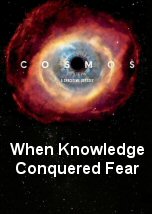
When Knowledge Conquered Fear

   2014    Science
The episode begins with Tyson describing how pattern recognition manifested in early civilization as using astronomy and astrology to predict the passing of the seasons, including how the passage of a comet was often taken as an omen. Tyson continues to explain that the origin of comets only became known in the 20th century due to the work of Jan Oort and his hypothesis of the Oort cloud. Tyson then continues to relate the collaboration between Edmond Halley and Isaac Newton in the last part of the 17th century in Cambridge. The collaboration would result in the publication of PhilosophiƦ Naturalis Principia Mathematica, the first major work to describe the laws of physics in mathematical terms, despite objections and claims of plagiarism from Robert Hooke and financial difficulties of the Royal Society of London. Tyson explains how this work challenged the prevailing notion that God had planned out the heavens, but would end up influencing many factors of modern life, including space flight. Tyson further describes Halley's contributions including determining Earth's distance to the sun, the motion of stars and predicting the orbit of then-unnamed Halley's Comet using Newton's laws. Tyson contrasts these scientific approaches to understanding the galaxy compared to what earlier civilizations had done, and considers this advancement as mankind's first steps into exploring the universe. The episode ends with an animation of the Milky Way and Andromeda galaxies' merging based on the principles of Newton's laws.
Series: Cosmos: A Spacetime Odyssey
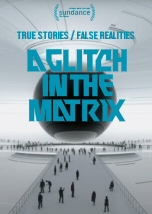
A Glitch in the Matrix

   2021    Culture
Are we in fact living in a simulation? This is the question postulated, wrestled with, and ultimately argued for in the latest provocation from acclaimed documentary stylist Rodney Ascher (Room 237, The Nightmare) through archival footage, compelling interviews with real people shrouded in digital avatars, and a collection of cases from some of our most iconoclastic figures in contemporary culture.

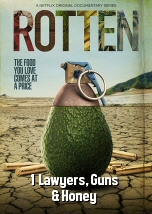
Lawyers, Guns and Honey

   2018    Nature
Honey has the greatest cachet in the marketplace, of all food items. A sweetener so natural, so exalted, that its value has held up for millennia. But honey is also perfect for savvy profiteers who are secretly cutting the world's honey with cheap substitutes. With demand for honey soaring just as bees are dying off in record numbers, hidden additives, hive thefts and other shady tactics are on the rise.
Series: Rotten

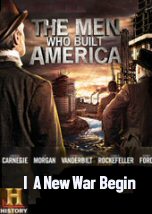
A New War Begins

   2012    History
This series shines a spotlight on the influential builders, dreamers and believers whose feats transformed the United States, a nation decaying from the inside after the Civil War, into the greatest economic and technological superpower the world had ever seen. The Men Who Built America is the story of a nation at the crossroads and of the people who catapulted it to prosperity. In the first episode, Cornelius Vanderbilt grows from a steamboat entrepreneur to the head of a railroad empire, and gets into a heated rivalry with Jim Fisk and Jay Gould; the up and coming John D. Rockefeller founds Standard Oil. Many business owners lay their own rail lines which leads to the Panic of 1873. Later, Rockefeller starts to expand his wealth by diverting his business from the railroads to a new innovation, oil pipelines.
Series: The Men Who Built America

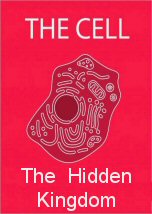
The Cell: The Hidden Kingdom

       Science
Dr Adam Rutherford tells the extraordinary story of the scientific quest to discover the secrets of the cell and of life itself. Every living thing is made of cells, microscopic building blocks of almost unimaginable power and complexity. The first part explores how centuries of scientific and religious dogma were overturned by the earliest discoveries of the existence of cells, and how scientists came to realize that there was, literally, more to life than meets the eye.
Series: The Cell

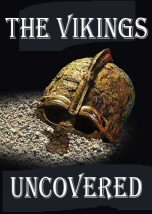
The Vikings Uncovered

   2016    History
Dan Snow uncovers the lost Vikings in America with space archaeologist Dr Sarah Parcak. Sarah uses satellites 383 miles above the earth to spot ruins as small as 30cm buried beneath the surface. As Sarah searches for Viking sites from Britain to America, Dan explores how they voyaged thousands of miles when most ships never left the shoreline. He also tracks their expansion west, first as raiders and then as settlers and traders throughout Britain and beyond to Iceland and Greenland. In North America they excavate what could be the most westerly Viking settlement ever discovered.
Absolute Zero

Absolute Zero

2007  Technology
The Super Models

The Super Models

2023  History
Generation Iron

Generation Iron

2018  History
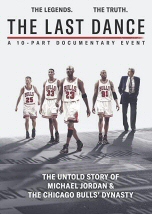
The Last Dance

The Last Dance

2020  Culture
Rafa

Rafa

2026  History
Leaving Neverland

Leaving Neverland

2019  Culture
History of the Eagles

History of the Eagles

2013  History