
Last Watched

"David Attenborough"  Sort by

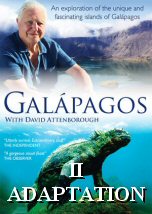
Adaptation

   2013    Nature    3D    HD
Once life arrived in the Galapagos, it exploded into unique and spectacular forms. David Attenborough investigates the driving forces behind such evolutionary innovations. We learn that life must be able to adapt quickly in these ever-changing volcanic landscapes. It has resulted in species found nowhere else in the world, such as giant whale sharks and marine iguanas that can spit sea-salt from their noses, dandelion seeds that grow into tree-sized plants and spiders that can blend perfectly into the darkness. Adaptation has been the key to survival in these islands so far, but the story of life in the Galapagos doesn’t end here. The catalyst that triggers these explosions of life remains in place.
Series: Galapagos with David Attenborough
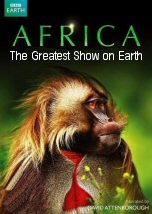
Africa the Greatest Show on Earth

   2013    Nature
Sir David Attenborough takes a breath-taking journey through the vast and diverse continent of Africa as it's never been seen before. From the richness of the Cape of Good Hope to blizzards in the high Atlas Mountains, from the brooding jungles of the Congo to the steaming swamps and misty savannahs, Africa explores the whole continent. An astonishing array of previously unknown places are revealed along with bizarre new creatures and extraordinary behaviours. Using the latest in filming technology including remote HD cameras, BBC One takes an animal's eye view of the action. The journey begins in the Kalahari, Africa's ancient southwest corner, where two extraordinary deserts sit side by side and even the most familiar of its creatures have developed ingenious survival techniques. Black rhinos reveal a lighter side to their character as they gather around a secret waterhole. Springbok celebrate the arrival of rains with a display of 'pronking'. Bull desert giraffes endure ferocious battles for territory in a dry river bed.
Series: Africa with David Attenborough

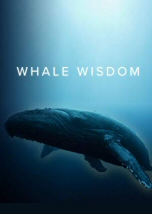
Whale Wisdom

   2019    Nature
Whales have long been a profound mystery to us. They live in a world so removed from our own that we can barely imagine their lives. Their environment is different, their senses are different, their relationships are different. How might such almost alien creatures see the world?, Narrated by David Attenborough.

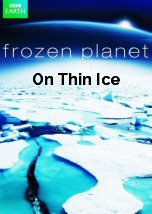
Frozen Planet: On Thin Ice

   2011    Science
Sir David Attenborough journeys to both Polar Regions to investigate what rising temperatures will mean for the people and wildlife that live there and for the rest of the planet. David starts out at the North Pole, standing on sea ice several metres thick, but which scientists predict could be Open Ocean within the next few decades. The Arctic has been warming at twice the global average, so David heads out with a Norwegian team to see what this means for polar bears. He comes face-to-face with a tranquilised female, and discovers that mothers and cubs are going hungry as the sea ice on which they hunt disappears. In Canada, Inuit hunters have seen with their own eyes what scientists have seen from space; the Arctic Ocean has lost 30% of its summer ice cover over the last 30 years. For some, the melting sea ice will allow access to trillions of dollars worth of oil, gas and minerals. For the rest of us, it means the planet will get warmer, as sea ice is important to reflect back the sun's energy. Next David travels to see what's happening to the ice on land: in Greenland, we follow intrepid ice scientists as they study giant waterfalls of meltwater, which are accelerating iceberg calving events, and ultimately leading to a rise in global sea level. Temperatures have also risen in the Antarctic - David returns to glaciers photographed by the Shackleton expedition and reveals a dramatic retreat over the past century. It's not just the ice that is changing - ice-loving adelie penguins are disappearing, and more temperate gentoo penguins are moving in. Finally, we see the first ever images of the largest recent natural event on our planet - the break up of the Wilkins Ice Shelf, an ice sheet the size of Jamaica, which shattered into hundreds of icebergs in 2009.
Series: Frozen Planet

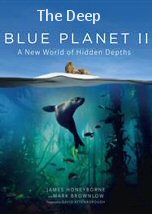
The Deep

   2017    Naturaleza    HD
The deep is perhaps the most hostile environment on earth, at least to us - a world of crushing pressure, brutal cold and utter darkness. We have barely begun to explore it, and yet it is the largest living space on the planet. Scientists already think that there is more life in the deep than anywhere else on earth. This episode takes us on an epic journey into the unknown, a realm that feels almost like science fiction. We discover alien worlds, bizarre creatures and extraordinary new behaviours never seen before. We encounter savage hordes of Humboldt squid hunting lanternfish in the depths and coral gardens flourishing in absolute darkness, with more species of coral to be found in the deep than on shallow tropical reefs. Narrated by David Attenborough.
Series: Blue Planet II

Rivals

   2015    Science    3D    HD
David Attenborough continues his search for the origins of flying animals, as he charts the rise of new, larger creatures – extinct reptiles that flew on wings of skin, dinosaurs that sprouted feathers to become the ancestors of birds, and gliding mammals that emerged from a life in the trees to dominate the night as bats. His journey spans the globe – from the rainforests of Borneo to see bizarre gliding animals, to China and its new discoveries of dinosaur fossils. Stunning CGI brings to life creatures that disappeared over 200 million years ago, and new filming techniques bring us closer than ever to the secrets of flight itself.
Series: Conquest of the Skies
Asia

Asia

2024  Nature
Planet Earth

Planet Earth

2007  Nature
The Story of God

The Story of God

2016  Culture
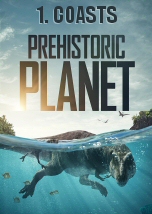
Prehistoric Planet

Prehistoric Planet

2022  Science
The Making of the Mob

The Making of the Mob

2016  History
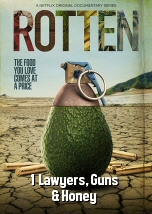
Rotten

Rotten

2018  Nature
Minimalism

Minimalism

2015  Culture