

Last Watched

"Drugs"  Sort by

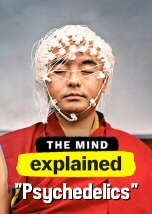
Psychedelics

   2019    Medicine
The final episode of this series looks at what happens to the brain when someone uses psychedelic drugs. It looks at how psychedelic drugs may be useful in dealing with anxiety in cancer survivors and serious depression. It explores the history of psychedelics and examines early medical experimentation with the drug. It also discussed why psychedelics were banned and examines how they affect the brain.
Series: The Mind Explained
Playing with Nuclear Fire

   2014    Technology
Playing with Nuclear Fire' - In March 2011, the Tohoku earthquake in Japan created a tsunami that killed some 16,000 people and crippled the Fukushima Daiichi nuclear power plant. In the aftermath, the government and TEPCO, the plant's operator, withheld information about the extent of the damage. Three years later, citizens and the international community are left wondering if Japan really does have the situation under control, as the government is insisting, or if the danger is far greater than anyone is willing to admit. 'No Man Left Behind' - It's estimated that over a quarter million vets from recent wars have sought treatment for PTSD. Despite these statistics, veterans often face an uphill battle to get treatment, receiving inadequate attention and, most dangerously, overprescribed narcotics and other pharmaceuticals. Ryan Duffy meets veterans struggling with mental illness and addiction.
Series: Vice

The Lost Pyramids of Caral

   2002    History
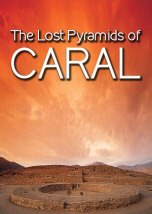
The magnificent ancient city of pyramids at Caral in Peru is a thousand years older than the earliest known civilisation in the Americas and, at 2,627 BC, is as old as the pyramids of Egypt. Many now believe it is the fabled missing link of archaeology - a 'mother city'. If so, then these extraordinary findings could finally answer one of the great questions of archaeology: why did humans become civilised?" For over a century, archaeologists have been searching for what they call a mother city. Civilisation began in only six areas of the world: Egypt, Mesopotamia, India, China, Peru and Central America. In each of these regions people moved from small family units to build cities of thousands of people. They crossed the historic divide, one of the great moments in human history. Why? To find the answer archaeologists needed to find a mother city - the first stage of city-building. Caral, is so much older than anything else in South America that it is a clear candidate to be the mother city. It also is in pristine condition. Nothing has been built on it at all. Instead laid out before the world is an elaborate complex of pyramids, temples, an amphitheatre and ordinary houses. Scientists developed a number of theories. Some said it was because of the development of trade, others that it was irrigation. Some even today believe it was all because of aliens. Gradually an uneasy consensus emerged. The key force common to all civilisations was warfare. Crucially, there is not the faintest trace of warfare at Caral; no battlements, no weapons, no mutilated bodies. Instead, Ruth's findings suggest it was a gentle society, built on commerce and pleasure. In one of the pyramids they uncovered beautiful flutes made from condor and pelican bones. They have also found evidence of a culture that took drugs and perhaps aphrodisiacs. Most stunning of all, they have found the remains of a baby, lovingly wrapped and buried with a precious necklace made of stone beads.

Pill Poppers

   2010    Medicine
Over a person's lifetime they are likely to be prescribed more than 14,000 pills. Antibiotics, cholesterol lowering tablets, anti-depressants, painkillers, even tablets to extend youth and improve performance in bed. These drugs perform minor miracles day after day, but how much is really known about them? Drug discovery often owes as much to serendipity as to science, and that means much is learnt about how medicines work, or even what they do, when they're taken. By investigating some of the most popular pills people pop, Horizon asks, how much can they be trusted to do what they are supposed to?

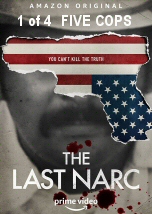
Five Cops

   2020    Culture
(Click CC for subtitles) The Last Narc tells the story of a fallen hero, the men who killed him, and the one man who risked everything to find out what really happened and why. Highly decorated special agent Hector Berellez, who was assigned to lead the DEA's investigation of Camarena's murder, peels back the layers of myth and propaganda to reveal the bone-chilling truth about a conspiracy that stretches from the killing fields of Mexico to the halls of power in Washington, D.C.
The first episode is set in the mid-1970s. The newly formed DEA recruits two Mexican-American street cops: Kiki Camarena and Hector Berrellez. Kiki is assigned to Guadalajara, home turf of the Guadalajara Cartel, while Hector targets cartel operations in Los Angeles. The Cartel is putting cops on its payroll, including three Jalisco state policemen. When Kiki is kidnapped it rocks both sides of the border
Series: The Last Narc

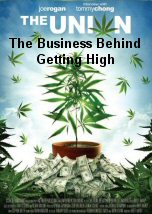
The Union The Business Behind Getting High

   2007    Culture
BC's illegal marijuana trade industry has evolved into a business giant, dubbed by some involved as 'The Union', Commanding upwards of $7 billion Canadian annually. With up to 85% of 'BC Bud' being exported to the United States, the trade has become an international issue. Follow filmmakers Adam Scorgie and Brett Harvey as they demystifies the underground market and brings to light how an industry can function while remaining illegal. Through growers, police officers, criminologists, economists, doctors, politicians and pop culture icons, Scorgie examines the cause and effect nature of the business - an industry that may be profiting more by being illegal.