

Last Watched

"Light"  Sort by

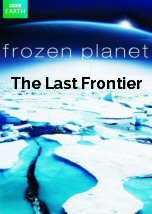
Frozen Planet: The Last Frontier

   2011    Culture
The documentary series reveals the extraordinary riches and wonders of the Polar Regions that have kept people visiting them for thousands of years. Today, their survival relies on a combination of ancient wisdom and cutting-edge science. Most Arctic people live in Siberia, either in cities like Norilsk - the coldest city on earth - or out on the tundra, where tribes like the Dogan survive by herding reindeer, using them to drag their homes behind them. On the coast, traditional people still hunt walrus from open boats - it is dangerous work, but one big walrus will feed a family for weeks. Settlers are drawn to the Arctic by its abundant minerals; the Danish Armed Forces maintain their claim to Greenland's mineral wealth with an epic dog sled patrol, covering 2,000 miles through the winter. Above, the spectacular northern lights can disrupt power supplies so scientists monitor it constantly, firing rockets into it to release a cloud of glowing smoke 100 kilometres high. In contrast, Antarctica is so remote and cold that it was only a century ago that the first people explored the continent. Captain Scott's hut still stands as a memorial to these men. Science is now the only significant human activity allowed; robot submarines are sent deep beneath the ice in search of new life-forms, which may also be found in a labyrinth of ice caves high up on an active volcano. Above, colossal balloons are launched into the purest air on earth to detect cosmic rays. At the South Pole there is a research base designed to withstand the world's most extreme winters. Cut off from the outside world for six months, the base is totally self-sufficient, even boasting a greenhouse.
Series: Frozen Planet
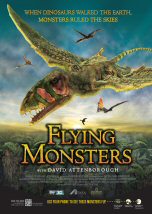
Flying Monsters

   2011    Science    3D    HD
For thousands of years, humans have believed that there were once flying monsters. But did they really exist beyond our nightmares? 220 million years ago dinosaurs were beginning their domination of Earth. But another group of reptiles was about to make an extraordinary leap: pterosaurs were taking control of the skies. The story of how and why these mysterious creatures took to the air is more fantastical than any fiction. In Flying Monsters 3D, David Attenborough the worlds leading naturalist, sets out to uncover the truth about the enigmatic pterosaurs, whose wingspans of up to 40 feet were equal to that of a modern day jet plane. Attenborough works with scientists to understand the incredible story of the evolution of the pterosaurs, a story that unfolds in such stunning locations as New Mexico, the Jurassic Coast of Lyme Regis in Britain, an ancient pterosaur landing site in Southern France and a fossil pit in Germany where near perfect pterosaur specimens have been found. The central question and one of the greatest mysteries in palaeontology is: how and why did pterosaurs fly? How did lizards the size of giraffes defy gravity and soar through prehistoric skies? Driven by the information he finds as he attempts to answer these questions, Attenborough starts to unravel one of sciences more enduring mysteries, discovering that the marvel of pterosaur flight has evolutionary echoes that resonate even today. Flying Monsters 3D is a groundbreaking film that uses cutting-edge 3D technology and CGI to bring the story of giant flying monsters and their prehistoric world to life. Audiences of all ages will be in awe as they enter the world and experience, as never before, REAL Flying Monsters in 3D.

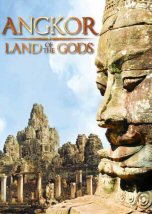
Angkor Land of the Gods

   2011    Art    HD
Buddhists, Hindus, and hundreds of thousands of travellers from around the globe flock to Cambodia every year to experience the grandeur of Angkor. Its famous temples were built over the span of five centuries by the rulers of the Khmer Empire, and endure today as one of Earth's greatest archaeological wonders. Join us as we shed light on one of the most enigmatic, mesmerizing civilizations in the history of mankind. We peel away the myth and legend to uncover the hidden story behind the creation of this ancient city.
Angkor Wat is the largest temple on the face of the Earth and is a symbol of one of the greatest empires in the history of Southeast Asia. And yet, for centuries, the sacred structure remained lost within the tropical forests of Cambodia, along with the history of the young king who built the temple. Discover the story of Suryavarman II and how he ushered in the golden age of the Khmer Empire. See how Angkor Wat was constructed over four backbreaking decades, and witness the monument in its true glory and splendour, as it appeared 900 years ago.

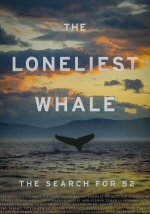
The Loneliest Whale

   2021    Nature
The film is a cinematic quest to find the '52 Hertz Whale,' which scientists believe has spent its entire life in solitude, calling out at a frequency that is different from any other whale. As we search for this elusive creature, we will explore the phenomenon of human reaction to its plight, while revealing its connection to the growing epidemic of loneliness in our interconnected world.

The Electric Boy

   2014    Science
This episode provides an overview of the nature of electromagnetism, as discovered through the work of Michael Faraday. Tyson explains how the idea of another force of nature, similar to gravitational forces, had been postulated by Isaac Newton before. Tyson continues on Faraday, coming from poor beginnings, would end up becoming interested in studying electricity after reading books and seeing lectures by Humphry Davy at the Royal Institution. Davy would hire Faraday after seeing extensive notes he had taken to act as his secretary and lab assistant. After Davy and chemist William Hyde Wollaston unsuccessfully tried to build on Hans Christian Ørsted's discovery of the electromagnetic phenomena to harness the ability to create motion from electricity, Faraday was able to create his own device to create the first electric motor by applying electricity aligned along a magnet. Davy, bitter over Faraday's breakthrough, put Faraday on the task of improving the quality of high-quality optical glass, preventing Faraday from continuing his research. Faraday, undeterred, continued to work in the Royal Institution, and created the Christmas Lectures designed to teach science to children. Following Davy's death, Faraday returned to full time efforts studying electromagnetism, creating the first electrical generator by inserting a magnet in a coil of wires. Tyson continues to note that despite losing some of his mental capacity, Faraday concluded that electricity and magnetism were connected by unseen fields, and postulated that light may also be tied to these forces. Using a sample of the optical glass that Davy had him make, Faraday discovered that an applied magnetic field could affect the polarization of light passing through the glass sample (a dielectric material), leading to what is called the Faraday effect and connecting these three forces. Faraday postulated that these fields existed across the planet, which would later by called Earth's magnetic field generated by the rotating molten iron inner core, as well as the phenomena that caused the planets to rotate around the sun. Faraday's work was initially rejected by the scientific community due to his lack of mathematical support, but James Clerk Maxwell would later come to rework Faraday's theories into the Maxwell's equations that validated Faraday's theories. Their combined efforts created the basis of science that drives the principles of modern communications today.
Series: Cosmos: A Spacetime Odyssey

When Knowledge Conquered Fear

   2014    Science
The episode begins with Tyson describing how pattern recognition manifested in early civilization as using astronomy and astrology to predict the passing of the seasons, including how the passage of a comet was often taken as an omen. Tyson continues to explain that the origin of comets only became known in the 20th century due to the work of Jan Oort and his hypothesis of the Oort cloud. Tyson then continues to relate the collaboration between Edmond Halley and Isaac Newton in the last part of the 17th century in Cambridge. The collaboration would result in the publication of Philosophiæ Naturalis Principia Mathematica, the first major work to describe the laws of physics in mathematical terms, despite objections and claims of plagiarism from Robert Hooke and financial difficulties of the Royal Society of London. Tyson explains how this work challenged the prevailing notion that God had planned out the heavens, but would end up influencing many factors of modern life, including space flight. Tyson further describes Halley's contributions including determining Earth's distance to the sun, the motion of stars and predicting the orbit of then-unnamed Halley's Comet using Newton's laws. Tyson contrasts these scientific approaches to understanding the galaxy compared to what earlier civilizations had done, and considers this advancement as mankind's first steps into exploring the universe. The episode ends with an animation of the Milky Way and Andromeda galaxies' merging based on the principles of Newton's laws.
Series: Cosmos: A Spacetime Odyssey