On Oct. 1, 2013, the elusive British street artist known as Banksy launched a self-proclaimed month-long residency in New York City, posting one unique exhibit a day in an unannounced location, sparking a 31-day scavenger hunt both online and on the streets for Banksy’s work. Capturing this month of madness, this featured film incorporates user-generated content, from YouTube videos to Instagram photos, from New Yorkers and Banksy hunters alike, whose responses became part of the work itself, for an exhilarating, detailed account of the uproar created by the mysterious artist. With installations spanning all five boroughs of New York City, and including a mix of stencil graffiti, sculpture, video and performance art, Banksy touched on such wide-ranging subjects as fast-food wages, animal cruelty in the meat industry, civilian casualties in Iraq and the hypocrisy of the modern art world.
Tyson begins the episode by explaining the nature of the speed of light and how much of what is seen of the observable universe is from light emanated from billions of years in the past. Tyson further explains how modern astronomy has used such analyzes via deep time to identify the Big Bang event and the age of the universe. Tyson proceeds to describe how the work of Isaac Newton, William Herschel, and James Clerk Maxwell contributed to understanding the nature of electromagnetic waves and gravitational force, and how this work led towards Albert Einstein's Theory of Relativity, that the speed of light is a fundamental constant of the universe and gravity can be seen as distortion of the fabric of space-time. Tyson describes the concept of dark stars as postulated by John Michell which are not visible but detectable by tracking other stars trapped within their gravity wells, an idea Herschel used to discover binary stars. Tyson then describes the nature of black holes, their enormous gravitational forces that can even capture light, and their discovery via X-ray sources such as Cygnus X-1. Tyson uses the Ship of Imagination to provide a postulate of the warping of spacetime and time dilation as one enters the event horizon of the black hole, and the possibility that these may lead to other points within our universe or others, or even time travel. Tyson ends on noting that Herschel's son, John would be inspired by his father to continue to document the known stars as well as contributions towards photography that play on the same nature of deep time used by astronomers.
Dr Hannah Fry explores a paradox at the heart of modern maths, discovered by Bertrand Russell, which undermines the very foundations of logic that all of maths is built on. These flaws suggest that maths isn't a true part of the universe but might just be a human language - fallible and imprecise. However, Hannah argues that Einstein's theoretical equations, such as E=mc2 and his theory of general relativity, are so good at predicting the universe that they must be reflecting some basic structure in it. This idea is supported by Kurt Godel, who proved that there are parts of maths that we have to take on faith. Hannah then explores what maths can reveal about the fundamental building blocks of the universe - the subatomic, quantum world. The maths tells us that particles can exist in two states at once, and yet quantum physics is at the core of photosynthesis and therefore fundamental to most of life on earth - more evidence of discovering mathematical rules in nature. But if we accept that maths is part of the structure of the universe, there are two main problems: firstly, the two main theories that predict and describe the universe - quantum physics and general relativity - are actually incompatible; and secondly, most of the maths behind them suggests the likelihood of something even stranger - multiple universes. We may just have to accept that the world really is weirder than we thought, and Hannah concludes that while we have invented the language of maths, the structure behind it all is something we discover. And beyond that, it is the debate about the origins of maths that has had the most profound consequences: it has truly transformed the human experience, giving us powerful new number systems and an understanding that now underpins the modern world.
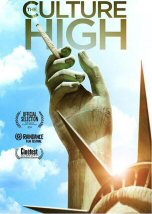
The Culture High is the riveting story that tears into the very fibre of modern day marijuana prohibition to reveal the truth behind the arguments and motives governing both those who support and those who oppose the existing pot laws. With budgets to fight the war reaching billions and arrests for simple possession skyrocketing to nearly a million annually, the debate over marijuana's legality has reached epic proportions. "The Culture High raises the stakes with some of today's biggest names, unprecedented access to footage previously unobtainable, and incredibly moving testimonials from both sides of the spectrum. Top celebrities, former undercover agents, university professors and a slew of unforgettable characters from all points of view come together for an amusing yet insightful portrait of cannabis prohibition and the grasp it has on society as a whole. "The Culture High" will strip search the oddity of human nature and dare to ask the question: What exactly is going on here?
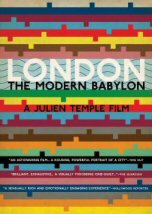
Julien Temple's epic time-travelling voyage to the heart of his hometown. From musicians, writers and artists to dangerous thinkers, political radicals and above all ordinary people, this is the story of London's immigrants, its bohemians and how together they changed the city forever. Reaching back to the dawn of film in London at the start of the 20th century, the story unfolds through film archive, voices of Londoners past and present and the flow of popular music across the century; a stream of urban consciousness, like the river which flows through its heart. It ends now, as London prepares to welcome the world to the 2012 Olympics.
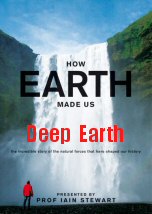
Our planet has amazing power, and yet that's rarely mentioned in our history books. This series tells the story of how the Earth has influenced human history, from the dawn of civilisation to the modern industrial age. It reveals how geology, geography and climate have been a far more powerful influence on the human story than has previously been acknowledged. A combination of epic story telling, visually stunning camerawork, extraordinary locations and passionate presenting combine to form a highly original version of human history" In the first episode professor Iain Stewart explores the relationship between the deep Earth and the development of human civilisation. He visits an extraordinary crystal cave in Mexico, drops down a hole in the Iranian desert and crawls through seven-thousand-year-old tunnels in Israel. His exploration reveals that throughout history, our ancestors were strangely drawn to fault lines, areas which connect the surface with the deep interior of the planet. These fault lines gave access to important resources, but also brought with them great danger.










With installations spanning all five boroughs of New York City, and including a mix of stencil graffiti, sculpture, video and performance art, Banksy touched on such wide-ranging subjects as fast-food wages, animal cruelty in the meat industry, civilian casualties in Iraq and the hypocrisy of the modern art world.