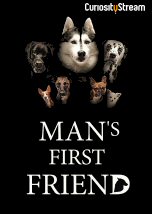
We call them 'man’s best friend', but their story is almost as old as man himself. Our very first friend in the world, they have walked by our side for over 20,000 years, helping us to hunt for food and offering us companionship and protection. Man’s First Friend is an epic new primetime documentary event that combines natural history, science and anthropology to explore the enduring relationship between humankind and dogs, how the two species have co-evolved together, where did they come from to take such a prominent position in our lives, and how did we learn to harness their unique talents. The film takes viewers on an extraordinary journey through some of the most remote locations in the world to answers these questions and more. It highlights what dogs are capable of: from the Pariah dog in India who protects her owner’s banana plantations from daily attacks by Black-headed Monkeys; to Kenyan Bloodhounds trained to track ivory poachers. Dogs comfort us, relieving loneliness and helping us cope with old age.
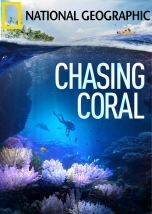
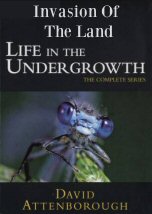
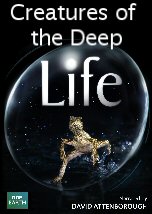
Marine invertebrates are some of the most bizarre and beautiful animals on the planet, and thrive in the toughest parts of the oceans. Divers swim into a shoal of predatory Humboldt squid as they emerge from the ocean depths to hunt in packs. When cuttlefish gather to mate, their bodies flash in stroboscopic colours. Time-lapse photography reveals thousands of starfish gathering under the Arctic ice to devour a seal carcass. A giant octopus commits suicide for her young. A camera follows her into a cave which she walls up, then she protects her eggs until she starves. The greatest living structures on earth, coral reefs, are created by tiny animals in some of the world's most inhospitable waters.
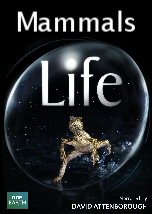
Mammals dominate the planet. They do it through having warm blood and by the care they lavish on their young. Weeks of filming in the bitter Antarctic winter reveal how a mother Weddell seal wears her teeth down keeping open a hole in the ice so she can catch fish for her pup.
A powered hot air balloon produces stunning images of millions of migrating bats as they converge on fruiting trees in Zambia, and slow-motion cameras reveal how a mother rufous sengi exhausts a chasing lizard. A gyroscopically stabilised camera moves alongside migrating caribou, and a diving team swim among the planet's biggest fight as male humpback whales battle for a female.
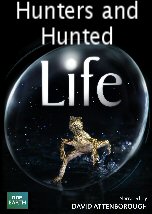
Mammals' ability to learn new tricks is the key to survival in the knife-edge world of hunters and hunted. In a TV first, a killer whale off the Falklands does something unique: it sneaks into a pool where elephant seal pups learn to swim and snatches them, saving itself the trouble of hunting in the open sea. Slow-motion cameras reveal the star-nosed mole's newly-discovered technique for smelling prey underwater: it exhales then inhales a bubble of air ten times per second. Young ibex soon learn the only way to escape a fox - run up an almost vertical cliff face - and young stoats fight mock battles, learning the skills that make them one of the world's most efficient predators.
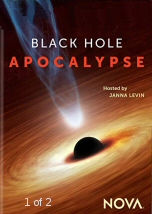
Black holes are the most enigmatic and exotic objects in the universe. They’re also the most powerful; with gravity so strong it can trap light. And they’re destructive, swallowing entire planets, even giant stars. Anything that falls into them vanishes... gone forever. Now, astrophysicists are realizing that black holes may be essential to how our universe evolved—their influence possibly leading to life on Earth and, ultimately, us. In this series, astrophysicist and author Janna Levin takes viewers on a journey to the frontiers of black hole science. Along the way, we meet leading astronomers and physicists on the verge of finding new answers to provocative questions about these shadowy monsters: Where do they come from? What’s inside? What happens if you fall into one? And what can they tell us about the nature of space, time, and gravity?
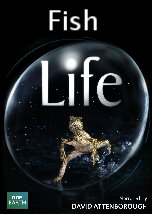
Fish dominate the planet's waters through their astonishing variety of shape and behaviour. The beautiful weedy sea dragon looks like a creature from a fairytale, and the male protects their eggs by carrying them on his tail for months. The sarcastic fringehead, meanwhile, appears to turn its head inside out when it fights. Slow-motion cameras show the flying fish gliding through the air like a flock of birds and capture the world's fastest swimmer, the sailfish, plucking sardines from a shoal at 70 mph. And the tiny Hawaiian goby undertakes one of nature's most daunting journeys, climbing a massive waterfall to find safe pools for breeding.

















The film takes viewers on an extraordinary journey through some of the most remote locations in the world to answers these questions and more. It highlights what dogs are capable of: from the Pariah dog in India who protects her owner’s banana plantations from daily attacks by Black-headed Monkeys; to Kenyan Bloodhounds trained to track ivory poachers. Dogs comfort us, relieving loneliness and helping us cope with old age.