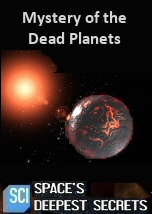
The season 8 of Space Deepest Secrets shares the stories of deep-space explorers who are risking their careers, and even their lives, to lead humanity to worlds yet to be seen. In the first episode, astronomers are laying the groundwork to locate a new planet for the human race to inhabit, and the more alien worlds they discover and encounter, the more they unmask the mysterious and truly destructive nature of the cosmos.
Humans have long gazed up at the night sky, wondering whether other lifeforms and intelligences could be thriving on worlds far beyond our own. But over the last few decades, ultra-sensitive telescopes and dogged detective work have transformed alien planet-hunting from science fiction into hard fact. We expected to find worlds similar to the planets in our own solar system, but we instead discovered a riot of exotic worlds. Vivid animation based on data from the most successful planet hunter of them all, the Kepler space telescope, brings these worlds into view: puffy planets with the density of polystyrene, unstable worlds orbiting two suns and 1,000-degree, broiling gas giants with skies whipped into titanic winds. But perhaps the most startling discovery was the number of worlds that may be contenders for a second Earth, at the right distance from their sun to have that ingredient so crucial for life as we know it, liquid water. Amongst them, we witness the most tantalizing discovery of all: a so-called ‘super-Earth’, situated in the Goldilocks zone - the area just the right distance from a sun to potentially support life - and with the faint signal of water in its atmosphere.
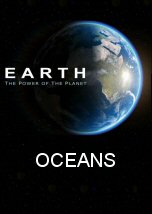
Earth’s oceans help make our planet different from every other planet in the solar system. As far as we know, no other place is the right temp for liquid water, the most essential ingredient for life to exist. The oceans are Earth’s primary stabilizing force, and their immense power helps to shape the appearance and behavior of the entire planet and everything living on it. And they are also the planet's great unknown - their deepest points have been visited less than the surface of the moon.
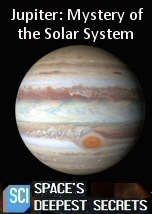
Jupiter is a turbulent world of monster magnetic fields and endless mega storms. Generations of astronomers have attempted to solve the mysteries of Jupiter, the most fierce and extreme planet in the Solar System. And now, NASA's Juno probe is revealing new evidence that could unlock the secrets of why this planet is so strange. With Juno, we're able to see Jupiter from the inside out and reach deep into its core to reveal how it grew.
There is a hellish planet in our solar system; covered in thick dense clouds and roasted by colossal temperatures. It will be inevitable
that the Earth will someday not only be like Venus, but actually put it to shame. A billion years from now, Earth's oceans will boil off, triggering a runaway greenhouse effect, and the temperature will be so high, its all surface will melt. In the distance future, Earth could be the evil twin of Venus. To understand how our world will be destroyed we need to look at what happened to Venus.
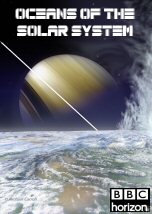
The oceans define the earth. They are crucial to life and we used to think that they were unique to our blue planet. But we were wrong. It has recently been discovered that there are oceans all over our solar system, and they are very similar to our own. And now scientists are going on an epic journey in search of new life in places that never seemed possible. Nasa is even planning to dive to the depths of a strange, distant ocean in a remarkable submarine. Discover that the hunt for oceans in space is marking the dawn of a new era in the search for alien life.

























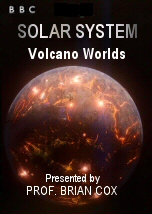


In the first episode, astronomers are laying the groundwork to locate a new planet for the human race to inhabit, and the more alien worlds they discover and encounter, the more they unmask the mysterious and truly destructive nature of the cosmos.