Professor Brian Cox continues his epic exploration of the cosmos by looking at the faint band of light that sweeps across the night sky - our own galaxy, the Milky Way. The Sun is just one of almost 400 billion stars that form this vast, majestic disk of light, our own home in the universe. Thanks to a cutting-edge space we’re finally able to reveal the Milky Way’s dramatic history and predict its cataclysmic future. Our galaxy started out a fraction of the size it is today, and Gaia telescope has revealed how it grew over the eons. Beautifully rendered VFX based on the very latest Gaia data has uncovered the remarkable story of our galaxy’s evolution. As our young galaxy encountered rival galaxies, it experienced a series of violent growth spurts and intense periods of cataclysmic change while battling to survive. Each time our galaxy feeds, a new era of star formation begins, fuelled by incoming torrents of fresh gas and energy. And there is another collision to come. Another, larger galaxy is coming our way. Andromeda is heading straight for us at a quarter of a million miles per hour. The Milky Way’s long-term fate is in the balance.
Commander Stephen Hawking takes another journey in his space ship, the SS Hawking, this time to Venus, the Sun and out to the Eagle Nebula...but things don't always go according to the flight plan...
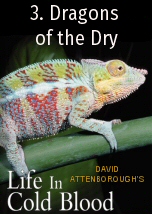
About 340 million years ago a brand new family of animals was evolving in the primeval swamps. They were to go one step further than the amphibians who had emerged onto dry and before them. For they would eventually completely cut their ties with water. They were the ancestors of todays lizards. They evolved scaly impermeable skins and moved up into the forests. They diversified into a multitude of different shapes and sizes. They developed signalling systems to communicate with one another. And they squabbled as animals do. For food they hunted insects that were already well established on the land in great numbers. And here without returning to water they produced their families. They powered their bodies not only with food but with the heat that they drew directly from the sun.
As they diversified so they spread into the harshest of the lands habitats. The baking waterless deserts which eventually they would come to dominate. Discover jacky lizards that wave, wrestling beaded lizards and the the world's smallest chameleon, which is no bigger than his thumbnail, and the biggest lizard in Australia.
A variety of cosmic events have both helpful and harmful effects on life on Earth. From the beauty of the Aurora Borealis and rainbows to the dangers of UV radiation and cosmic rays, from the miracle of photosynthesis to the thrill of a meteor shower, this episode explores how the effects generated by the sun and other extra-solar sources can literally get under our skin, scramble our technology, make life possible and threaten our existence all at the same time
Stonehenge was shaped over centuries, but to what purpose? Was it a temple to the sun, or the moon, an astronomical calendar, or a shrine to dead ancestors? Now Stonehenge may be about to give up some of its secrets. For the first time in nearly half a century a new archaeological dig the sacred stone circle. And the men who are leading the excavation are well aware of the significance of this moment. The film exposes an investigation into a radical theory that Stonehenge, far from being a place of burial as is commonly assumed, was in fact a place of healing. The investigation takes in forensic testing of bones excavated over the past decades and hard-won permission for the first dig in 50 years at the Henge, watched live online by millions of viewers around the world. Does the theory of the healing stones bear up to modern-day forensic science?
Professor Brian Cox takes on the story of the force that sculpts the entire universe - gravity. Gravity seems so familiar, and yet it is one of the strangest and most surprising forces in the universe. Starting with a zero gravity flight, Brian experiences the feeling of total weightlessness, and considers how much of an effect gravity has had on the world around us. But gravity also acts over much greater distances. It is the great orchestrator of the cosmos. It dictates our orbit around the sun, our relationship with the other planets in our solar system, and even the way in which our solar system orbits our galaxy. Yet the paradox of gravity is that it is actually a relatively weak force. Brian takes a face distorting trip in a centrifuge to explain how it is that gravity achieves its great power, before looking at the role it plays in one of the most extraordinary phenomena in the universe - a neutron star. Although it is just a few kilometres across, it is so dense that its gravity is 100, 000 million times as strong as on Earth. Over the centuries our quest to understand gravity has allowed us to understand some of the true wonders of the universe, and Brian reveals that it is scientists' continuing search for answers that inspires his own sense of wonder.









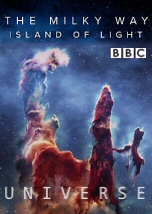



Our galaxy started out a fraction of the size it is today, and Gaia telescope has revealed how it grew over the eons. Beautifully rendered VFX based on the very latest Gaia data has uncovered the remarkable story of our galaxy’s evolution. As our young galaxy encountered rival galaxies, it experienced a series of violent growth spurts and intense periods of cataclysmic change while battling to survive. Each time our galaxy feeds, a new era of star formation begins, fuelled by incoming torrents of fresh gas and energy. And there is another collision to come. Another, larger galaxy is coming our way. Andromeda is heading straight for us at a quarter of a million miles per hour. The Milky Way’s long-term fate is in the balance.