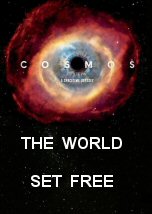
We inhabit a cosmos of undiscovered dimensions and paradoxical realities. We live on one level of perception, but there are others. Every once in a while, a searcher happens upon the doorway to one of these other levels. One of them discovered a paradox about reality that proved to be so profound, we have yet to understand how it could be possible. The universe, or perhaps we should say, universes have never been the same. In the counterintuitive realm of quantum mechanics, light can be two contradictory things, and somehow - no one knows how - an unseen observer can alter the nature of reality. The man who stumbled on this hole in reality and the still- unfolding technological revolution that it made possible.
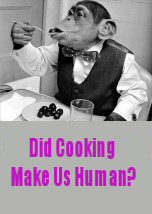
We are the only species on earth that cooks its food - and we are also the cleverest species on the planet. The question is: do we cook because we're clever and imaginative, or are we clever and imaginative because our ancestors discovered cooking? Horizon examines the evidence that our ancestors' changing diet and their mastery of fire prompted anatomical and neurological changes that resulted in taking us out of the trees and into the kitchen.
Explore how Artificial Intelligence will change your job as new research shows how much of what you do could be done by robots. From truckers to lawyers & doctors, we bring affected workers face to face with AI experts. How can we prepare for the coming changes to the world economy? We are on the precipice of another technological transformation. The last industrial revolution turned society upside down. It ultimately delivered greater prosperity and many more jobs, as well as the eight hour day and weekends.
But the transition was at times shocking and violent. The question is, can we do better this time? We don't realize that the future is not inevitable. The future is the result of the decisions we make today. These technologies are morally neutral, they can be used for good or for bad.
There's immense good things they can do, they can eliminate many disease,
they can help eliminate poverty, they can tackle climate change. Equally, the technology can be used for lots of bad. It can be used to increase inequality,it can be used to transform warfare. It can be used to make our lives much worse. We get to make those choices.
Psychopaths have long captured the public imagination. Painted as charismatic, violent predators lacking in all empathy, they provide intrigue and horror in equal measure. But what precisely is a psychopath? What is it that drives them to cause harm, even kill? And can they ever be cured? The film also features a series of candid interviews with prison inmates who not only describe their crimes but why they think they committed them. 'What Makes a Psychopath?' explores not only how each individual's crimes were shaped by their own life experiences, but also gives an insight into how these people think and behave. Working with the world's experts in the field, the film sheds light on the biological, psychological and environmental influences that shape a psychopath. And it looks to the future, with ground-breaking research that suggests a lifetime of incarceration is not the only option to manage violent and dangerous psychopaths.
The world of child influencers may seem playful and innocent, but beneath the surface lies a reality far more unsettling. The documentary uncovers the meteoric rise of social media star Piper Rockelle and her entourage known as The Squad, exposing troubling claims of exploitation, manipulation, and mistreatment under the guidance of her mother, Tiffany Smith. Through raw and emotional testimonies from former members and their families, it reveals the psychological toll of growing up online and the blurred lines between fame and childhood. This documentary is a powerful wake-up call that questions the limits of online stardom and the urgent need to safeguard young creators.
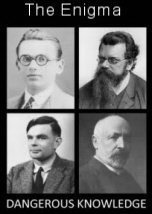
brilliant mathematicians whose genius has profoundly affected us, but which tragically drove them insane and eventually led to them all committing suicide. Kurt Gödel, the introverted confidant of Einstein, proved that there would always be problems which were outside human logic. His life ended in a sanatorium where he starved himself to death. Finally, Alan Turing, the great Bletchley Park code breaker, father of computer science and homosexual, died trying to prove that some things are fundamentally unprovable.










In the counterintuitive realm of quantum mechanics, light can be two contradictory things, and somehow - no one knows how - an unseen observer can alter the nature of reality. The man who stumbled on this hole in reality and the still- unfolding technological revolution that it made possible.