













Last Watched

"Life "  Sort by

David Attenborough Meets President Obama

   2015    Nature
In a far cry from the steamy jungles of Rwanda or the icy waters of the Arctic, British naturalist Sir David Attenborough has donned a necktie and met with US president Barack Obama to discuss climate change and the future of the planet. The two met at the White House — a place the naturalist had never yet explored — on Sir David's 89th birthday in May to film the interview". It was the first time the respected wildlife filmmaker had met an American president and he seemed a little awed by the experience. Mr Obama, who grew up watching Sir David's programs, seemed equally thrilled. The president has the environment and climate change on his radar and is anxious to see progress made as his presidency comes to a close. He faces stiff opposition from Republicans in Congress on his plans to tackle climate change, but remains determined to make changes before leaving office. "I don't have much patience for anyone who denies that this challenge is real," he said. "We don't have time for a meeting of the Flat Earth Society." Sir David, who has been called "the godfather of natural history TV" by the BBC, brought to the meeting six decades dedicated to sharing the wonders of the natural world with television audiences. After initially being rejected for television because his teeth were deemed "too big", Sir David went on to make his Life on Earth television series, which has been watched by more than 500 million people worldwide. His name is now synonymous with nature, conservation and wildlife. During the television interview, the men discussed global warming, renewable energy and how children and young people hold the key to reversing the damage.
The Spark of Life

       Science
The final part reveals how our knowledge of cells has brought us to the brink of one of the most important moments in history. Scientists are close to repeating what has happened only once in four billion years - the creation of a new life form.
Series: The Cell

Life Rocky Start

   2016    Science
Four and a half billion years ago, the young Earth was a hellish place, a seething chaos of meteorite impacts, volcanoes belching noxious gases, and lightning flashing through a thin, torrid atmosphere. Then, in a process that has puzzled scientists for decades, life emerged. But how? Join mineralogist Robert Hazen as he journeys around the globe. From an ancient Moroccan market to the Australian Outback, he advances a startling and counterintuitive idea—that the rocks beneath our feet were not only essential to jump-starting life, but that microbial life helped give birth to hundreds of minerals we know and depend on today. It's a theory of the co-evolution of Earth and life that is reshaping the grand-narrative of our planet’s story.

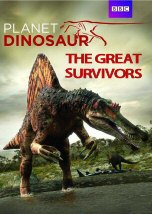
The Great Survivors

   2011    Science
The final episode explores dinosaurs' extraordinary ability to survive. Featured dinosaurs include the bizarre magyarosaurus, which lived in the shadow of the biggest flying animal - hatzegopteryx - and showed an amazing adaptation to island life; and the weird nothronychus, a carnivore that gave up meat eating. This astonishing capacity to evolve into ever more diverse and bizarre forms meant that dinosaurs not only spread throughout the world, but also dominated life upon it for more than 160 million years. It was only an unprecedented extraterrestrial event that finally saw the end of planet dinosaur.
Series: Planet Dinosaur

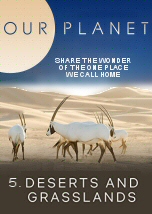
From Deserts to Grasslands

   2019    Nature    HD
A fifth of the land on our planet is covered by desert. Deserts may appear to be barren and empty, but they are of crucial importance to life. For those that can overcome their challenges they provide a vital refuge. The Grasslands are one of our planet's most productive landscapes. They support the greatest aggregations of large animals on Earth. Cameras follow desert elephants seeking sustenance, bison roaming North American grasslands and caterpillars living the good life underground.
Series: Our Planet

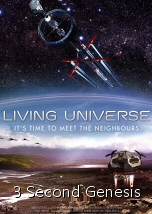
Second Genesis

   2018    Technology
In episode 3, Artemis arrives on the exoplanet Minerva B, but will she find evidence of life? This is a vision of our future, the fateful day in a far-flung corner of the universe, when a probe from Earth initiates the first descent onto an alien world, looking for proof of life beyond our solar system.
There are no witnesses, no cheering crowds in the control room. A decade or more will pass before news finally reaches us, back across the dark oceans of space. But the seeds of this mission are already being sowed today by the first generation of scientists bold enough to believe it could be possible.
Series: Living Universe
Conquest of the Skies

Conquest of the Skies

2015  Nature
Prehistoric America

Prehistoric America

2003  Nature
Our Planet Season 2

Our Planet Season 2

2023  Nature
First Life

First Life

2010  Science
The Jinx

The Jinx

2015  History
The Art of Germany

The Art of Germany

2010  Art
Ancient Apocalypse

Ancient Apocalypse

2022  History