New discoveries have rewritten the history of our solar system, revealing a complex and violent story that begins with the birth of our Sun from the debris of a massive galactic collision, to its eventual fate as a lone zombie star. It is a dramatic history of elegant beauty and extreme violence. The inner solar system was like a congested highway. Planets crossing lanes, frequent collisions. There were a lot of planets that could have made it but didn't, and we just happen to be one of the lucky ones that did. The players in our solar system's story are more tangled up than we ever imagined. Without all of these things interplaying, the Earth wouldn't have the stable environment that we have today, and life wouldn't be able to exist.
In 2011, a Social Security lawyer named Eric C. Conn and a judge named David Daugherty were investigated for committing massive fraud over many years. Conn figured out that he would get paid a hefty retainer for every Social Security disability payment he managed to get approved, so he and Daugherty (who need quick cash to pay for his daughter’s upcoming narcotics trial – which presumably meant bribing an awful lot of people) came to an arrangement. In the second episode, Investigators starts to collect evidence against Eric and Judge Daugherty. The whistle-blowers are pressured.
The Caribbean is home to a notorious band of British pirates called the Flying Gang. They plunder merchant ships, sailing from the Americas to Europe and Africa. England's King George I has had enough, so he comes up with a shock tactic to end piracy. It's an offer from the King, a pardon, clemency for those who turn their backs on piracy. Those who refuse will be hunted down and hanged. Two pirates, Blackbeard and Charles Vane stand the King's man, Woodes Rogers. Who will win the final battle?
In the first episode, Sir David Attenborough reveals the unexpected wildlife riches of the British Isles, showcasing the dramatic and spectacular habitats that rival any across the globe. This journey uncovers the diversity of life in the UK's unique landscapes, from the intricate world of bumblebees to the swift lives of kingfishers. The episode captures extraordinary scenes of nature, including killer whales preying on seals, golden eagles in the Scottish mountains, the cunning tactics of woodland plants, and the perilous life of puffins evading gulls. It highlights Britain's geological diversity as a cornerstone of its natural wealth, contributing to an array of habitats and supporting a wide range of life. Britain's importance extends to being a haven for migratory birds, with our seas feeding 65% of the world's gannets and supporting the largest colony of northern gannets on Scotland's Bass Rock. The west coast of Scotland offers sanctuary to barnacle geese due to its abundant food and mild climate, though they remain vigilant against hunting sea eagles. Despite these natural treasures, Britain faces challenges as one of the most nature-depleted countries globally. Sir David Attenborough emphasizes the need to conserve and restore these wild isles for the enjoyment and benefit of future generations.
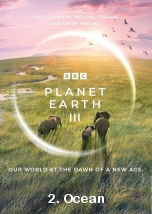
This second episode is a captivating exploration of the ocean's wonders and mysteries. It reveals how a significant part of our planet remains unexplored, primarily due to its vast water coverage. The film emphasizes the extraordinary discoveries awaiting every journey below the water's surface, with over a thousand new species identified annually. Home to 80% of all animal life on Earth, the ocean's diverse habitats host a range of surprising behaviors and life-and-death struggles, often hidden beneath a serene exterior. The shallow tropical seas, appearing as paradises, are actually arenas of intense survival battles. Predatory lionfish, with their patient hunting tactics, and clown frogfish, using a unique fishing rod-like dorsal fin as a lure, demonstrate the ocean's complex food web. The documentary also explores the kelp forests off the North American coast, revealing their role as nurseries for young horn sharks. Amidst these underwater forests lurk giant sea bass, wolf-eels, and various sharks like houndsharks and broadnose sevengills, posing significant threats to the smaller inhabitants. The episode takes viewers to the twilight and midnight zones of the ocean, unveiling alien-like creatures such as the siphonophore, glass squid, and gulper eel, adapted to the extreme conditions of deep waters. The journey concludes with the moving story of the pearl octopus, whose devotion to her eggs in the challenging deep-sea environment is both heartwarming and heartbreaking. This episode is not only a showcase of the ocean's diverse inhabitants but also a reminder of the urgent need to understand and protect this vast, mysterious, and vital part of our planet.
Chef Ludo Lefebvre began his US career cooking at Los Angeles restaurant Bastide, but after it closed for renovations he opted not to return and instead chose to do things his way. Borrowing a friend’s bakery space, which was closed in the evenings, Ludo created a unique dining experience in the form of small, reservations-only, “chef’s choice” dinners. These dinners became known as LudoBites, a pop-up deemed by Pulitzer Prize-winning food critic Jonathan Gold as "a transforming moment” for the LA dining scene.



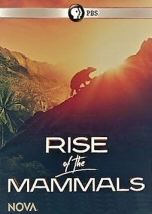












It is a dramatic history of elegant beauty and extreme violence. The inner solar system was like a congested highway. Planets crossing lanes, frequent collisions. There were a lot of planets that could have made it but didn't, and we just happen to be one of the lucky ones that did. The players in our solar system's story are more tangled up than we ever imagined. Without all of these things interplaying, the Earth wouldn't have the stable environment that we have today, and life wouldn't be able to exist.