


Last Watched

"Nature"  Sort by

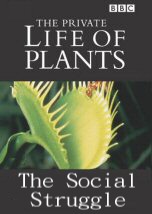
The Social Struggle

   1995    Nature
Fourth episode examines how plants either share environments harmoniously or compete for dominance within them. Attenborough highlights the 1987 hurricane and the devastation it caused. However, for some species, it was that opportunity for which they had lain dormant for many years. The space left by uprooted trees is soon filled by others who move relatively swiftly towards the light. The oak is one of the strongest and longest-lived, and other, lesser plants nearby must wait until the spring to flourish before the light above is extinguished by leaves. Tropical forests are green throughout the year, so brute force is needed for a successful climb to the top of the canopy: the rattan is an example that has the longest stem of any plant. As its name suggests, the strangler fig 'throttles' its host by growing around it and cutting off essential water and light. Some can take advantage of a fallen tree by setting down roots on the now horizontal trunk and getting nutriment from the surrounding moss and the fungi on the dead bark. The mountain ash (eucalyptus regnans) grows so tall, that regeneration becomes a considerable problem. It is easily flammable, so its solution is to shed its seeds during a forest fire and sacrifice itself. It therefore relies on the periodic near-destruction of its surroundings in order to survive. Attenborough observes that catastrophes such as fire and drought, while initially detrimental to wildlife, eventually allow for deserted habitats to be reborn.
Series: The Private Life of Plants
Descent Into Darkness

   2021    Nature
In the second episode, Will Smith descends 3,300 feet to the bottom of the ocean in a deep-water submersible, where even fewer people have gone than outer space. Along the way down, Will and explorer Diva Amon investigate how colour is used in the natural world and the role of bioluminescence. In the oceans, nearly 80 percent of animals use bioluminescence in some way, possibly the most common form of communication on the planet.
Series: Welcome to Earth

Deliver Us from Drought

   2014    Nature
'Deliver Us from Drought' - Over the past years, Texas has experienced the worst drought in its recorded history. 97% of the scientific community agrees that human activity has contributed to extreme weather patterns around the world. But many Texans--legislators, community leaders and citizens--don't attribute their drought to humans, and have taken few if any initiatives to limit the state's CO2 emissions, currently the highest in the country. "The Resource Curse" - As humanity's appetite for energy grows exponentially, the extraction industry scrambles to the most remote regions on Earth. In the undeveloped Melanesian country of Papua New Guinea, America's Exxon Mobil has staked its claim to a $19 billion liquid natural-gas project. While some see Exxon's mammoth presence as the catalyst that will usher the underdeveloped country into the 21st Century, others predict the initiative could plunge its people into civil war.
Series: Vice

The Death of the Oceans

   2010    Nature
Sir David Attenborough reveals the findings of one of the most ambitious scientific studies of our time - an investigation into what is happening to our oceans. He looks at whether it is too late to save their remarkable biodiversity. Attenborough explores some of the ways in which we are affecting marine life - from over-fishing to the acidification of sea water. The film also uncovers the disturbing story of how shipping noise is deafening whales and dolphins, affecting their survival in the future.

Land Invaders

   2008    Nature
From steamy jungles to dry deserts, amphibians have taken their first footsteps onto land using their bizarre life histories to break their ties with the water and invade the earth.
This episode delves into the extraordinary and intimate lives of the soft skinned amphibians. This includes the marsupial frogs, a peculiar species where the father carries his young in pouches and then gives birth. It also features warring giant salamanders over a metre long and show-off newts that offer displays just like underwater birds of paradise.
Series: Life In Cold Blood

The Age of Invention

   2014    Science
Just under 200 years ago scientists discovered something profound, that electricity is connected to another of nature's most fundamental forces - magnetism. In the second episode, Jim discovers how harnessing the link between magnetism and electricity would completely transform the world, allowing us to generate a seemingly limitless amount of electric power which we could utilise to drive machines, communicate across continents and light our homes. This is the story of how scientists and engineers unlocked the nature of electricity in an extraordinary century of innovation and invention.
Series: Shock and Awe: The Story of Electricity
The Crusades

The Crusades

2012  History
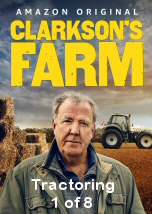
Clarkson Farm

Clarkson Farm

2021  Nature
The Last Narc

The Last Narc

2020  Culture
The Last Czars

The Last Czars

2019  History
Top Gear

Top Gear

2012  Technology
Walking with Dinosaurs

Walking with Dinosaurs

2025  Science