Drivers, managers and team owners live life in the fast lane — both on and off the track — during this cutthroat new season of Formula 1 racing. In the first episode, the 2021 Formula 1 season begins at the Bahrain Grand Prix, where drivers give it everything to take the first checkered flag of the year.
Follows Vice journalists Shane Smith, Ryan Duffy and Suroosh Alvi as they go to different parts of the world telling us surprising and shocking stories. In Afghanistan, the Taliban has ramped up its use of children in suicide bombing terrorist attacks. Ranging from teenagers to children as young as six years old, they are routinely manipulated and lied to as they are sent to blow up their targets. The Philippines are the most dangerous place in the world to run for office, as politicians are routinely killed by their rivals.
Jeremy Clarkson decides to get a flock of sheep. He thinks It's a genius business plan: Instead every year mowing the 300 acres without cropping, the sheep will do, keeping everything nice and tidy and fertilizing the soil. Moreover, he can sell their babies for profit. But he doesn't count with the added complications these high-maintenance animals will bring.
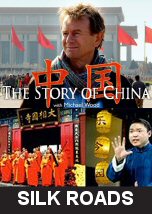
Michael Wood tells the tale of China's first great international age under the Tang Dynasty (618-907). From the picturesque old city of Luoyang, he travels along the Silk Road to the bazaars of central Asia and into India on the track of the Chinese monk who brought Buddhism back to China. This tale is still loved by the Chinese today and is brought to life by storytellers, films and shadow puppet plays. Then in the backstreets and markets of Xi'an, Michael meets descendants of the traders from central Asia and Persia who came into China on the Silk Road. He talks to Chinese Muslims in the Great Mosque and across town hears the amazing story of the first reception of Christianity in 635. Moving south, Michael sees the beginnings of China as an economic giant. On the Grand Canal, a lock built in 605 still handles 800 barges every day! The film tracks the rise of the silk industry and the world's favourite drink - tea. Michael looks too at the spread of Chinese script, language and culture across east Asia. 'China's influence on the East was as profound as Rome on the Latin West', he says, 'and still is today'. Finally, the film tells the intense drama of the fall of the Tang. Among the eyewitnesses were China's greatest poets. In a secondary school in a dusty village, where the Chinese Shakespeare - Du Fu - is buried in the grounds, the pupils take Michael through one famous poem about loss and longing as the dynasty falls. And in that ordinary classroom, there is a sense of the amazing drama and the deep-rooted continuities of Chinese culture.
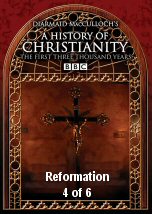
In the fourth part of the series, Diarmaid MacCulloch makes sense of the Reformation, and of how a faith based on obedience and authority gave birth to one based on individual conscience. He shows how Martin Luther wrote hymns to teach people the message of the Bible, and how a tasty sausage became the rallying cry for Swiss Reformer Ulrich Zwingli to tear down statues of saints, allow married clergy and deny that communion bread and wine were the body and blood of Christ.
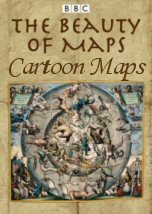
The series concludes by delving into the world of satirical maps. How did maps take on a new form, not as geographical tools, but as devices for humour, satire or storytelling? Graphic Artist Fred Rose perfectly captured the public mood in 1880 with his General Election maps featuring Gladstone and Disraeli, using the maps to comment upon crucial election issues still familiar to us today. Technology was on the satirist's side with the advent of high-speed printing allowing for larger runs at lower cost. In 1877, when Rose produced his 'Serio Comic Map of Europe at War', maps began to take on a new direction and form, reflecting a changing world. Rose's map exploited these possibilities to the full using a combination of creatures and human figures to represent each European nation. The personification of Russia as a grotesque-looking octopus, extending its tentacles around the surrounding nations, perfectly symbolised the threat the country posed to its neighbours.

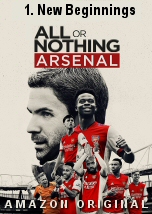


In the first episode, the 2021 Formula 1 season begins at the Bahrain Grand Prix, where drivers give it everything to take the first checkered flag of the year.