




Last Watched

"ELE"  Sort by

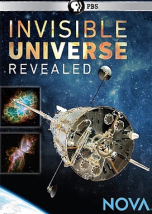
Invisible Universe Revealed 25 years of Hubble

   2015    Technology
25 years ago, NASA launched one of the most ambitious experiments in the history of astronomy: the Hubble Space Telescope. In honor of Hubble's landmark anniversary, know the remarkable story of the telescope that forever changed our understanding of the cosmos and our place in it". But amazingly, when the telescope first sent images back to earth, it seemed that the entire project was a massive failure; a one-millimeter engineering blunder had turned the billion-dollar telescope into an object of ridicule. It fell to five heroic astronauts in a daring mission to return Hubble to the cutting edge of science. Hear from the scientists and engineers on the front line who tell the amazing Hubble story as never before. This single telescope has helped astronomers pinpoint the age of the universe, revealed the birthplace of stars and planets, advanced our understanding of dark energy and cosmic expansion, and uncovered black holes lurking at the heart of galaxies. For more than a generation, Hubble's stunning images have brought the beauty of the heavens to millions, revealing a cosmos richer and more wondrous than we ever imagined. Join us for the story of this magnificent machine and its astonishing discoveries.
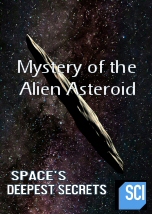
Mystery of the Alien Asteroid

   2018    Science    HD
When a mysterious cigar-shaped object is spotted tumbling through our solar system, experts race to uncover it's true nature. The object, nicknamed Oumuamua, meaning 'a messenger that reaches out from the distant past' in Hawaiian, was discovered by the Pan-STARRS 1 telescope in Hawaii. Since its discovery, scientists have been at odds to explain its unusual features and precise origins, with researchers first calling it a comet and then an asteroid before finally deeming it the first of its kind: a new class of 'interstellar objects.'
A recent paper by researchers at the Harvard Smithsonian Center for Astrophysics raises the possibility that the elongated dark-red object, which is 10 times as long as it is wide and travelling at speeds of 196,000 mph, might have an 'artificial origin.' The theory is based on the object's 'excess acceleration,' or its unexpected boost in speed as it travelled through and ultimately out of our solar system.
Series: Space Deepest Secrets

Last Man Standing

   2016    History
Tony Accardo receives a phone call from Joseph P. Kennedy, asking the mob kingpins to use their pull with the Illinois union vote to help his son, John F. Kennedy, win the upcoming presidential election. In return, he offers to put an end to his son Robert F. Kennedy's investigation into Giancana and the Outfit. As election day nears, Kennedy's fight against Richard Nixon tightens, turning Illinois into a key battleground. Giancana delivers the union votes. After a close race, Kennedy is declared the victor. Just weeks after Kennedy takes office, his brother Robert is named Attorney General. To the Chicago mob's surprise, when Robert takes office as the new U.S. Attorney General in 1961, he makes his top priority going after organized crime ó and one of his primary targets is the Outfit. Weeks after, John F. Kennedy is shot and killed in Dallas. After his brother is assassinated, Robert steps down from his post as Attorney General and the investigation into organized crime is virtually dropped. The government begins an investigation into the assassination, with rumors already circulating that the mafia could have been involved.
Series: The Making of the Mob

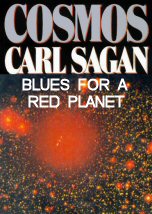
Blues for a Red Planet

   1980    Science
The episode, devoted to the planet Mars, begins with scientific and fictional speculation about the Red Planet during the late nineteenth and early twentieth centuries (H. G. Wells' The War of the Worlds, Edgar Rice Burroughs' science fiction books, and Percival Lowell's false vision of canals on Mars). It then moves to Robert Goddard's early experiments in rocket-building, inspired by reading science fiction, and the work by Mars probes, including the Viking, searching for life on Mars. The episode ends with the possibility of the terraforming and colonization of Mars and a Cosmos Update on the relevance of Mars' environment to Earth's and the possibility of a manned mission to Mars.
Series: Cosmos

Exploring The Universe

   2020    Science
This remarkable science-history series investigates the blistering pace of human endeavour in space exploration, computing, energy, resources, Earth science and our understanding of the evolution of life itself. Across the last 50 years, humans have set a blistering pace and scientific discovery. We've crossed the boundaries of our solar system, made machines that can learn harnessed the power of the sun and built life from scratch. It's a period like no other in history, where human endeavour is changing everything: this is The Great Acceleration. As we race toward the future, we must examine the journey.
In the first episode, Dr Shalin Naik explores the ambitious space shuttle mission that began in the '70s plus the future colonization of Mars. Over the past 50 years, space has become central to everything, from communications to entertainment to climate modelling. And as private enterprise enters space exploration, our understanding of the universe will only continue to expand. We will know if we can survive on other objects - the moon, maybe Mars, maybe even some of the moons of Jupiter and Saturn. Deep space is the last and infinite frontier. That's what we do as human beings. We explore, we learn, we make discoveries, from the moment we're born to the moment we die.
Series: The Great Acceleration

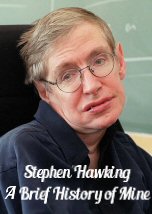
Stephen Hawking: A Brief History of Mine

   2013    History
This new feature-length biographical film tells the extraordinary and dramatic story of the planet's most famous living scientist, told for the first time in his own words and by those closest to him. Made with unique access to his private life, this is an intimate and moving journey into Stephen Hawking's past and present. Interviewees include Stephen Hawking's sister Mary, his ex-wife Jane, carers and students, as well as colleagues such as Roger Penrose, plus Apollo astronaut Buzz Aldrin, actors Benedict Cumberbatch and Jim Carrey, and Sir Richard Branson This inspirational portrait of an iconic figure relates Hawking's incredible personal journey from boyhood underachiever to scientific genius and multi-million-selling author. And it charts how he overcame being diagnosed with motor neurone disease - and being given just two years to live - to make amazing scientific discoveries and become a symbol of triumph over adversity. Born exactly 300 years after the death of Galileo, Hawking grew up in a family some regarded as eccentric. Always asking questions, he was nicknamed 'Einstein' at school. Hawking blossomed at Oxford, although he only spent an hour a day studying. He noticed that he was becoming clumsy and fell over for no apparent reason. He was diagnosed with motor neurone disease, but nevertheless started a family and embarked on his academic career, finding himself at the heart of a searing scientific debate about the origins of the universe. And as he lost the use of his body, Hawking had to find new ways to think. He went on to write the huge bestseller A Brief History of Time, and the film reveals the high and lows of his resulting fame and fortune.
Leaving Neverland

Leaving Neverland

2019  Culture
Art of Eternity

Art of Eternity

2007  Art
All or Nothing: Arsenal

All or Nothing: Arsenal

2022  Culture
Dark Net

Dark Net

2016  Technology
Untold

Untold

2021  Culture