He's the deadliest weapon on the battlefield, but behind enemy lines, what happens when the tables are turned and the hunter becomes the hunted? From the treacherous jungles of Vietnam and the bloody war zones of Iraq, to danger high in the skies of the Alaskan wilderness, this two-hour special puts you behind the scope with the men who pulled the trigger on some of the deadliest missions in military and law enforcement history. Gripping firsthand accounts, 3-D graphics and jaw-dropping shooting demonstrations take you inside the shadowy world of top snipers and the missions that made them living legends. Outmanned and out-gunned - will the next shot be his last?
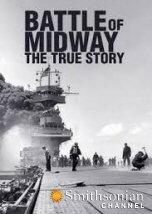
It's June 1942 and the world's fate is about to be decided by a handful of pilots and their untested aircraft. Experience an inside look at the Battle of Midway, captured through rarely seen battle footage and first-hand accounts from its hero dive-bombing pilot, "Dusty" Kleiss. This is an hour-by-hour recount of one of the most pivotal conflicts of the 20th century. Take a closer look at how this desperately needed victory came about through the design of U.S. air planes, the skill of the pilots, the element of surprise, and a stroke of luck.
Bitcoin is the most disruptive invention since the Internet, and now an ideological battle is underway between fringe utopists and mainstream capitalism. "Banking on Bitcoin" shows the players who are defining how this technology will shape our lives. Bitcoin's early pioneers sought to blur the lines of sovereignty and the financial status quo. After years of underground development Bitcoin grabbed the attention of a curious public, and the ire of the regulators the technology had subverted. After landmark arrests of prominent cyber criminals Bitcoin faces its most severe adversary yet, the very banks it was built to destroy.
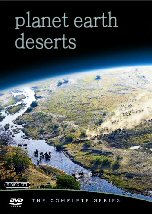
Around 30% of the land's surface is desert, the most varied of our ecosystems despite the lack of rain. Unravel the secrets of desert survival and experience the ephemeral nature of this dynamic environment. Watch Saharan sandstorms nearly a mile high and desert rivers that run for a single day. In the Gobi Desert, rare Bactrian camels get moisture from the snow. In the Atacama, guanacos survive by licking dew off cactus spines. In the USA, the brief blooming of Death Valley triggers a plague of locusts 65km wide and 160km long. A unique aerial voyage over the Namibian desert reveals elephants on a long trek for food and desert lions searching for wandering oryx.
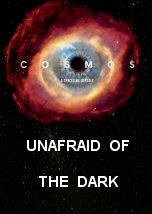
Tyson describes the discovery of cosmic rays by Victor Hess through high-altitude balloon trips. Swiss Astronomer Fritz Zwicky, in studying supernovae, postulated that these cosmic rays originated from these events instead of electromagnetic radiation. Also tells how Vera Rubin observed that the rotation of stars at the edges of observable galaxies did not follow expected rotational behavior leading to consider the existence of dark matter. This further led to the discovery of dark energy to account for the increasing rate of expansion of the universe. Tyson then describes the interstellar travel of the two Voyager probes. Tyson tells the Carl Sagan's role in the Voyager program, including creating the Voyager Golden Record to encapsulate humanity and Earth's position in the universe. Tyson concludes the series by emphasizing Sagan's message on the human condition in the vastness of the cosmos, and to encourage viewers to continue to explore and discover what else the universe has to offer.
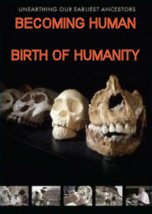
We will nvestigate the first skeleton that really looks like us –Turkana Boy– an astonishingly complete specimen of Homo erectus found by the famous Leakey team in Kenya. These early humans are thought to have developed key innovations that helped them thrive, including hunting large prey, the use of fire, and extensive social bonds. The program examines an intriguing theory that long-distance running –our ability to jog– was crucial for the survival of these early hominids. Not only did running help them escape from vicious predators roaming the grasslands, but it also gave them a unique hunting strategy: chasing down prey animals such as deer and antelope to the point of exhaustion. Birth of Humanity also probes how, why, and when humans' uniquely long period of childhood and parenting began.
















Gripping firsthand accounts, 3-D graphics and jaw-dropping shooting demonstrations take you inside the shadowy world of top snipers and the missions that made them living legends. Outmanned and out-gunned - will the next shot be his last?