



Last Watched

"Life "  Sort by

The Lives of the Stars

   1980    Science
The simple act of making an apple pie is extrapolated into the atoms and subatomic particles (electrons, protons, and neutrons) necessary. Many of the ingredients necessary are formed of chemical elements formed in the life and deaths of stars (such as our own Sun), resulting in massive red giants and supernovae or collapsing into white dwarfs, neutron stars, pulsars, and even black holes. These produce all sorts of phenomena, such as radioactivity, cosmic rays, and even the curving of spacetime by gravity. Cosmos Update mentions the supernova SN 1987A and neutrino astronomy.
Series: Cosmos
Are Aliens Inside Us

   2015    Culture
Odds are excellent that extraterrestrial life exists. So why haven’t we found aliens out in the galaxy? Are we looking in the wrong places? New research shows we should look closer to home, even inside our bodies. It turns out that a lot of our DNA is from a mysterious, nonhuman source. Theoretically, alien microbial life can make the journey to Earth from distant worlds, and scientists are finding some unearthly microbes in our upper atmosphere. Could it be from outer space? Could we be part alien? It’s even possible alien life is already here as digital life forms, hiding inside our technology.
Series: Through the Wormhole Season 6

God in the Dock

   2011    Culture
Diarmaid MacCulloch's own life story makes him a symbol of a distinctive feature about Western Christianity - scepticism, a tendency to doubt which has transformed both Western culture and Christianity. In the final programme in the series, he asks where that change came from. He challenges the simplistic notion that faith in Christianity has steadily ebbed away before the relentless advance of science, reason and progress, and shows instead how the tide of faith perversely flows back in. Despite the attacks of Newton, Voltaire, the French Revolutionaries and Darwin, Christianity has shown a remarkable resilience. The greatest damage to Christianity was actually inflicted to its moral credibility by the two great wars of the 20th century and by its entanglement with Fascism and Nazism. And yet it is during crisis that the Church has rediscovered deep and enduring truths about itself, which may even be a clue to its future.
Series: A History of Christianity

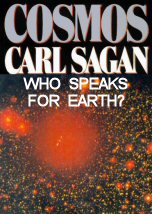
Who Speaks for Earth

   1980    Culture
Sagan reflects on the future of humanity and the question of 'who speaks for Earth?' when meeting extraterrestrials. He discusses the very different meetings of the Tlingit people and explorer Jean-François de La Perouse with the destruction of the Aztecs by Spanish conquistadors, the looming threat of nuclear warfare, and the threats shown by destruction of the Library of Alexandria and the murder of Hypatia. The episode ends with an overview of the beginning of the universe, the evolution of life, and the accomplishments of humanity and makes a plea to mankind to cherish life and continue its journey in the cosmos. The Cosmos Update notes the preliminary reconnaissance of planets with spacecraft, the fall of the Berlin Wall and the end of apartheid in South Africa, and measures towards the reduction of nuclear weapons.
Series: Cosmos

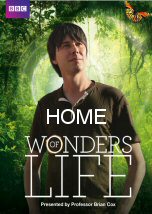
Wonders of Life: Home

   2013    Nature
Brian considers what it is about our world that makes it a home for life and asks what ingredients were necessary to transform this once barren planet into the Earth we know today? He reveals that it was a rare chain of events combined with the power of life itself that have made Earth unique amongst the cosmos.
Series: Wonders of Life

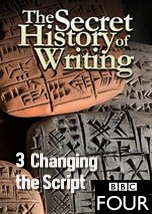
Changing the Script

   2020    History
The written word is so important in everyday life that there can be few more radical acts than forcing an entire nation to learn a new script. Yet that is what happened in Turkey in 1928 when Mustafa Kemal decreed that the Arabic script would be replaced by the letters of the Latin alphabet. Communication with computers using human language is usually made with Latin letters. This is how most Chinese people interact with their computers and smart phones, using a Latin-based phonetic script called Pinyin. As a result, even highly educated Chinese are losing the ability to write using Chinese characters. Could what is happening in China be the future of writing everywhere?
Series: The Secret History of Writing
The Last Dance

The Last Dance

2020  Culture
Latino Americans

Latino Americans

2013  History
Walking with Cavemen

Walking with Cavemen

2003  History
The Sky at Night

The Sky at Night

2023  Science
Dinosaur Planet

Dinosaur Planet

2003  Science