







Last Watched

The Age of Aging

   2015    Medicine
In recent years, close study of the aging process has opened up new ways that could help us all live healthier for longer. Can we move beyond treating individual diseases, and instead treat the aging process itself? But would a longer life necessarily be a better life? A loose-knit group of researchers believe the real breakthrough is extending our health span - the period of life spent free of disease". Hear from Laura Deming, who dropped out of M.I.T. at the age of 14 and committed herself to finding and funding projects that can expand the human health span, and Dr. Brian Kennedy, whose work in the basic biology of aging has been crucial to the development of countless other researchers' work.

National Gallery

   2014    Art
The National Gallery in London is one of the great museums of the world with 2400 paintings from the 13th to the end of the 19th century. Almost every human experience is represented in one or the other of the paintings. The sequences of the film show the public in various galleries; the education programs, and the scholars, scientists and curators, studying, restoring and planning the exhibitions. The relation between painting and storytelling is explored.

The Many Worlds of Quantum Mechanics

   2019    Science
The idea that there is a possibility of many worlds or multi universal theory is very new even though you may have learned about it in movies and comic books. Explore how this thinking was developed in the world of quantum mechanics and philosophy.

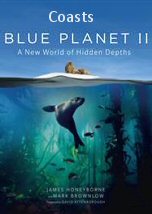
Blue Planet II Coasts

   2017    Nature
On the coast, two worlds collide. Coasts are the most dynamic and challenging habitats in the ocean - that brings great rewards but also great danger. The extraordinary animals that live here must find ingenious ways to cope with two very different worlds. This episode is a rollercoaster ride of heart-stopping action and epic drama, peopled with characters from the beautiful to the bizarre. We meet fish that live on dry land and puffins that must travel 60 miles or more for a single meal, and witness a life-and-death struggle in a technicolour rock pool. In a secluded cove in the Galapagos, sea lions feast on 60kg tuna. It should be impossible - tuna are usually far too fast for sea lions to catch. But here the sea lions club together to herd their prey inshore. Once trapped in the shallows, these huge fish are easy pickings. As the tide recedes in Brazil, lightfoot crabs leap from rock to rock, desperately avoiding the water - their lives depend on it. Moray eels launch themselves from rock pools, jaw gaping. Then octopuses, too. Both crawl across dry rock to set their ambush. Elsewhere, the ever-changing tides create rock pools. But these temporary worlds are a battleground. Predatory starfish turn a magical garden into the stuff of nightmares.
Series: Blue Planet II

Prehistoric Worlds

   2020    Science    HD
Five times, the Earth has faced apocalyptic events. Cataclysms that have swept away all life forms, or almost. Each time, a handful of species has survived, establishing a new world. What did these prehistoric worlds look like? What catastrophes led to their disappearance? How did our distant ancestors manage to survive the five mass extinctions that the Earth has suffered, finally giving rise to the world we know today?
Combining CGI of ancient animal and plant life, VFX and filming, 'Prehistoric Worlds' looks back at the five mass extinctions of life on Earth that allowed the advent of the human race. On the brink of a sixth mass extinction that the scientific community considers imminent – this time caused by mankind – this film gives us an interesting and powerful look at Man's existence on the scale of the history of our planet.

Neanderthal Apocalypse

   2015    History
40,000 years ago the steppes of Eurasia were home to our closest human relative, the Neanderthals. Recent genetic and archaeological discoveries have proven that they were not the dim-witted cave dwellers we long thought they were. In fact, they were cultured, technologically savvy and more like us than we ever imagined! So why did they disappear? We accompany scientists on an exciting search for an answer to this question and come to a startling conclusion... A climate change due to a cataclysmic event.