Recently, the Event Horizon Telescope project captured the first image ever of a black hole. Now, new discoveries might finally reveal how supermassive black holes are made, and using the latest technology, experts are on the verge of understanding how these monsters grow and how they affect life on our planet. Supermassive black holes: Gargantuan monsters that lurk at the center of galaxies. Right now you are travelling at half a million miles an hour around a giant black hole four million times the mass of the sun. But there's a mystery about these colossal beasts. We have no idea where they came from. How did they get so big so quickly?
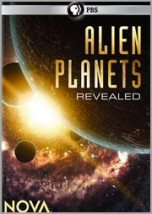
It's a golden age for planet hunters: recently, they've discovered more than 750 planets orbiting stars beyond our sun. Some of them, like a planet called Kepler-22b, might even be able to harbor life. What would that life look like? Combining startling animation with input from expert astrobiologists, Alien Planets Revealed takes viewers on a journey of the imagination as we 'build' aliens from the ground up. What chemical building blocks will make up their genetic code? How will life get started and how will the exotic environment on a planet like Kepler-22b drive evolution? Bringing the creative power of veteran animators together with the latest discoveries in astrobiology, Alien Planets Revealed provides a glimpse of the creatures we might one day encounter beyond our solar system.
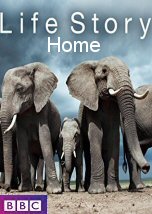
To survive, animals need somewhere to live, a place that provides the necessities of life, shelter from the elements and a refuge from enemies. Good homes are rare and competition can be intense – finding a home is one thing, but defending it is quite another.
This edition features a spectacular journey along the Andes, the world's longest mountain range, stretching from the equator almost to Antarctica. In this harsh and unforgiving landscape, wildlife such as bears, pumas, condors and flamingos fight for survival in the numbing cold, ferocious winds and thin air.
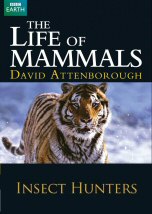
Mammals from tiny shrews, giant anteaters, armoured armadillo to bats have specialised in eating insects. Some have evolved into complex and effective hunters, even pursued their prey into the skies
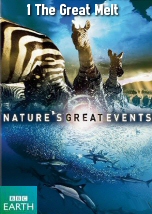
Every year, around the world, seasonal changes transform entire landscapes and draw in millions of creatures as these great events unfold. This fantastic series combines the epic scale of Planet Earth and the intimate, emotional stories of charismatic animals as they struggle to survive. Using state of the art technology, these programmes capture the Earth's most dramatic and epic wildlife spectacles and the intimate stories of the animals caught up in them. The Great Melt: The summer melt of Arctic ice, opening up nearly three million square miles of ocean and land, provides opportunities for millions of animals, including beluga whales, families of Arctic foxes, vast colonies of seabirds, and the fabled Arctic unicorn, the narwhal. For polar bears, however, it is the toughest time of year. Why? How will they survive? A mother polar bear and her cub make their first journey together onto the sea ice. They are looking for ringed seals, their favourite prey. It is a serious business but the cub just wants to play. The melting ice makes it harder for them to hunt and threatens their survival. In a unique aerial sequence, the migration of narwhal with their distinctive unicorn-like tusks is filmed for the first time. The whales' journey is risky as they travel along giant cracks in the ice. If the ice were to close above them, they would drown. Hundreds of beluga whales gather in the river shallows. They rub themselves on smooth pebbles in one of the most bizarre summer spectacles. Guillemot chicks take their first flights from precipitous sea cliff nests to the sea 300 metres below. They attempt to glide to safety but many miss their target. Their loss is a bonus for the hungry Arctic fox family waiting below. As the melt comes to an end the bears gather, waiting for the sea to freeze again. Two 400kg males square up to each other to spar.











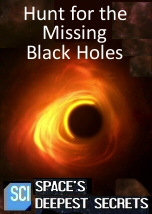





Supermassive black holes: Gargantuan monsters that lurk at the center of galaxies. Right now you are travelling at half a million miles an hour around a giant black hole four million times the mass of the sun. But there's a mystery about these colossal beasts. We have no idea where they came from. How did they get so big so quickly?