Using cutting-edge research, a dedicated team of archaeologists has compiled the evidence to fill in a 400-year gap in man's knowledge of the bluestones of Stonehenge. By combining innovative 3D scanning techniques, traditional field archaeology and novel laboratory analysis, the team has discovered where the stones were quarried and where they first stood. Professor Alice Roberts shows how the team made its discoveries and joins Professor Mike Parker Pearson to piece together the final parts of the puzzle, solving one of the toughest challenges ever faced by archaeologists.
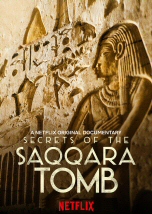
Join a team of local archaeologists as they excavate never before explored passageways, shafts, and tombs, while piecing together the secrets of one of the most jaw-dropping, exciting, and important Ancient Egyptian discoveries in decades. News of the tomb discovery has gone around the world and it has been heralded as the most significant find in almost fifty years. The condition of the tomb is remarkable - but the real excitement lies in what is to come. The archaeologists hope they are going to unearth the possessions, grave goods, and mummies of the high-priest and his family - and with that information hoping to transform our understanding of this period of Old Kingdom history.
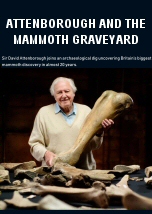
David Attenborough joins an archaeological dig uncovering Britain’s biggest mammoth discovery in almost 20 years. In 2017, in a gravel quarry near Swindon, two amateur fossil hunters found an extraordinary cache of Ice Age mammoth remains and a stone hand-axe made by a Neanderthal. Professor Ben Garrod joins the team at DigVentures during the excavation as they try to discover why the mammoths were here and how they died. Could the Neanderthals have killed these Ice Age giants?
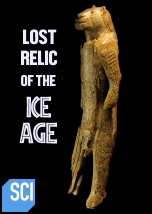
An Ice Age relic found in a mysterious cave is evidence of prehistoric humans' connection to the supernatural. Using cutting-edge tech, experts investigate this 40,000-year-old treasure to reveal why it was made and the long-lost myths it represents. In the summer of 1939, a team of explorers unearthed hundred of mammoth ivory fragments within a cave in Germany. Due to the start of World War II, the explorers were forced to abandon their findings, and the fragments laid forgotten in a museum. Decades later, as archeologists began piecing the fragments together, an extraordinary artifact emerged -- a figure with both animal and human features, now known as the 'Lion man.'
Can we find the Garden of Eden? Bible scholar Dr Francesca Stavrakopoulou thinks so. In the final episode of her series re-examining conventional readings of the Bible, she argues that the Garden of Eden has nothing to do with the origins of humanity, but is rather a story concealing dramatic events about a particular figure in a particular place, two and half thousand years ago. Marshalling compelling evidence from archaeology, Islam and the Bible text itself, she identifies and visits the exact site of Eden. It's a revolutionary theory which challenges some of the most cherished preconceptions about Eden in both Christianity and western culture.
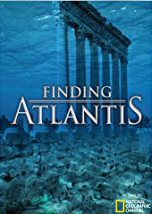
Could the fabled lost city of Atlantis have been located? Professor Freund explained how he led a pursuit to find the lost civilisation, believed by many to be an ancient Greek myth, by using deep-ground radar, digital mapping and satellite imagery. He contends that Atlantis, described by Plato in 360BC, in Spain's Donaña National Park, north of Cadiz, and was wiped out by a giant tsunami. Plato wrote it had been destroyed by a natural disaster in 9,000BC. Experts are now surveying marshlands in Spain to look for proof of the ancient city.















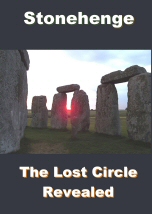






Professor Alice Roberts shows how the team made its discoveries and joins Professor Mike Parker Pearson to piece together the final parts of the puzzle, solving one of the toughest challenges ever faced by archaeologists.