









Last Watched

"Climate"  Sort by

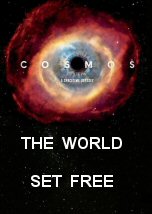
The World Set Free

   2014    Nature
This episode explores the nature of the greenhouse effect (discovered by Joseph Fourier and Svante Arrhenius), and the evidence demonstrating the existence of global warming from humanity's influence. Tyson begins by describing the long-term history of the planet Venus; based on readings from the Venera series of probes to the planet, the planet had once had an ocean and an atmosphere, but due to the release of carbon dioxide from volcanic eruptions, the runaway greenhouse effect on Venus caused the surface temperatures to increase and boiled away the oceans. Tyson then notes the delicate nature of the amount of carbon dioxide in the atmosphere can influence Earth's climate due to the greenhouse effect, and that levels of carbon dioxide have been increasing since the start of the 20th century. Evidence has shown this to be from mankind's consumption of oil, coal, and gas instead of from volcanic eruptions due to the isotopic signature of the carbon dioxide. The increase in carbon dioxide has led to an increase in temperatures, in turn leading to positive feedback loops of the melting polar ice caps and dethawing of the permafrost to increase carbon dioxide levels. Tyson then notes that humans have discovered means of harvesting solar power, such as Augustin Mouchot's solar-driven motor in the 19th century, and Frank Shuman's solar-based steam generator in the 1910's. Tyson points out that in both cases, the economics and ease of using cheap coal and oil caused these inventions to be overlooked at the time. Today, solar and wind-power systems would be able to collect enough solar energy from the sun easily. Tyson then compares the motivation for switching to these cleaner forms of energy to the efforts of the Space race and emphasizes that it is not too late for humanity to correct its course.
Series: Cosmos: A Spacetime Odyssey
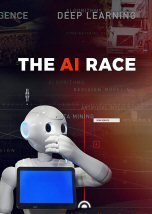

The A.I. Race

   2018    Technology
Explore how Artificial Intelligence will change your job as new research shows how much of what you do could be done by robots. From truckers to lawyers & doctors, we bring affected workers face to face with AI experts. How can we prepare for the coming changes to the world economy? We are on the precipice of another technological transformation. The last industrial revolution turned society upside down. It ultimately delivered greater prosperity and many more jobs, as well as the eight hour day and weekends. But the transition was at times shocking and violent.
The question is, can we do better this time? We don't realize that the future is not inevitable. The future is the result of the decisions we make today. These technologies are morally neutral, they can be used for good or for bad. There's immense good things they can do, they can eliminate many disease, they can help eliminate poverty, they can tackle climate change. Equally, the technology can be used for lots of bad. It can be used to increase inequality,it can be used to transform warfare. It can be used to make our lives much worse. We get to make those choices.

Edge of Existence

   2022    Technology
The risk of human extinction has never been higher. Recent years have seen a global pandemic, a renewed nuclear threat and runaway climate change. New research predicts a 1 in 6 chance that life as we know it won't make it to the end of this century. This compelling science documentary looks at the greatest risks to humanity and what we can do about it. Are we all doomed?

Inside Bill Brain: Decoding Bill Gates 3of3

   2019    History
The search for climate change solutions requires passion, resources and a sense of urgency -- three qualities Bill Gates clearly possesses. Bill has founded a start-up called TerraPower. After extensive computer modelling, the idea showed promise. Its new reactor greatly reduced the chance of human error. Fuelled by depleted uranium, the travelling wave reactor functions like a slow-burning candle and requires refuelling only once every decade. Bill and his team believed they had finally developed the ideal energy source, a reactor that was clean, efficient, and most importantly, safe.
Series: Inside Bill Brain: Decoding Bill Gates

Frozen Planet II: Frozen Worlds

   2022    Nature    HD
Journeying from pole to pole, The series 'Frozen Planet II' reveals surprising worlds that exist across the planet and the remarkable animals that make them their home. In a fragile world of beauty and hostility, nature finds a way to survive and thrive. David Attenborough explores a planet on the brink of major change.
In the first episode, we begin our journey in the far south, in the most hostile place on earth, the frozen continent of Antarctica. After being raised on the ice in winter, emperor penguin chicks find themselves abandoned by their parents in spring. To survive, they must find their own way across the treacherous sea ice to the rich waters of the Southern Ocean.
The waters surrounding Antarctica may be the richest of all, but they are also home to an exceptionally sophisticated predator, the killer whale. To reach their favored prey, Weddell seals, a family of killer whales have learnt to generate their own waves, washing the seals off their ice floes. It’s a technique that has been passed down over generations and is coordinated by the family matriarch, who can be over 100 years old.
Leaving Antarctica and travelling north, we discover frozen habitats that are created by altitude. The greatest of these is the Himalaya, the tallest mountain range on earth, which contains so much ice and snow it is known as the third pole. In the shadow of the Himalaya lies a vast frozen grassy plain that is home to the fluffiest cat in the world, Pallas’s cat. It may have extremely dense fur, but if it’s to survive the Mongolian winter, it needs to catch lots of gerbils and voles. Easier said than done when you only have short legs and paws that are sensitive to the cold.
North of the Great Steppe lies the boreal forest, which encircles the continents of North America, Europe and Asia, and remains frozen for six months of the year. Prowling these forests in the far east of Russia is the Siberian tiger, the largest cat in the world. In winter, it is on the lookout for black bears hibernating in caves, a high-risk strategy that only a cat of this size would attempt.
Above the boreal forest, we cross into the Arctic Circle, where conditions become so extreme that trees can no longer grow. This is the tundra. Living here are relics of the last ice age, musk ox. In spring, their calves face a far greater danger than the cold, grizzly bears. Encounters can be brutal, but if just a few calves survive the gauntlet, the herd’s future is secure.
To the north of the tundra is the Arctic Ocean, the only ocean that can completely freeze over. Living here is one of the most peculiar animals on earth, the hooded seal. Males have extraordinary inflatable noses, producing a bright red balloon out of their left nostrils. One male hopes this will make him irresistible.
All of the frozen habitats share one thing in common: the threat posed by today’s climate change. Travelling to the island of Greenland, home to the largest body of ice in the northern hemisphere, we witness how global warming is melting its ice cap at faster rates than ever before, with profound consequences for global sea levels. Lastly, we visit the Arctic’s most iconic resident, the polar bear, as a mother bear struggles to provide for her cubs in a world of shrinking sea ice.
Series: Frozen Planet II

Asia: Beneath the Waves

   2024    Nature    3D    HD
Sir David Attenborough presents Asia, an epic seven-part series that takes viewers on an extraordinary journey through the vast and diverse landscapes of the largest continent on Earth. From snow-capped mountain ranges and ancient forests to searing deserts and rich coastlines, this groundbreaking series reveals the astonishing wildlife and hidden natural wonders that define Asia’s breathtaking beauty and complexity.
The adventure begins in spectacular fashion beneath the surface of Asia’s oceans. In this visually stunning first episode, we dive into a world few have seen—an underwater realm filled with vibrant coral gardens, mysterious sunken ruins, and pristine marine habitats untouched by time. Alongside renowned marine scientists and local experts, we encounter majestic whale sharks, soaring manta rays, ancient sea turtles, glowing jellyfish, and otherworldly nudibranchs. But as we uncover the secrets of these magical ecosystems, we also face the urgent environmental challenges that threaten their survival. Awe-inspiring and thought-provoking, this opening episode sets the tone for a series that is as visually dazzling as it is vital to understanding the future of our natural world.
Series: Asia
Chased by Sea Monsters

Chased by Sea Monsters

2003  Science
Planet Earth III

Planet Earth III

2023  Nature
Life in the Undergrowth

Life in the Undergrowth

2005  Nature
Space Race

Space Race

2005  Technology
The Crime of the Century

The Crime of the Century

2021  Medicine
Wild Wild Country

Wild Wild Country

2018  Culture
The Virtual Revolution

The Virtual Revolution

2010  Technology