






Last Watched

"Fur"  Sort by

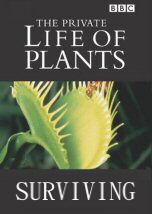
Surviving

   1995    Nature
the final episode deals with plants that live in hostile environments. Attenborough visits Ellesmere Island, north of the Arctic Circle, to demonstrate that even in a place that is unconducive to life, it can be found. Algae and lichens grow in or on rock, and during summer, when the ice melts, flowers are much more apparent. However, they must remain close to the ground to stay out of the chilling wind. In the Tasmanian mountains, plants conserve heat by growing into 'cushions' that act as solar panels, with as many as a million individual shoots grouped together as one. Others, such as the lobelia in Mount Kenya, have a 'fur coat' of dense hairs on their leaves. The saguaro cactus in the Sonoran Desert flourishes because of its ability to retain vast amounts of water, which can't be lost through leaves because it has none. Many desert dwellers benefit from an accelerated life cycle, blooming rapidly within weeks after rainfall. Conversely, Mount Roraima is one of the wettest places on Earth. It is a huge sandstone plateau with high waterfalls and nutrients are continuously washed away, so plants have to adapt their diet if they are to survive. A bladderwort is shown invading a bromeliad. Inhabitants of lakes have other problems to contend with: those that dominate the surface will proliferate, and the Amazon water lily provides an apt illustration. Attenborough ends the series with an entreaty for the conservation of plant species.
Series: The Private Life of Plants


Speed Sisters

   2015    Culture
The Speed Sisters are the first all-woman race car driving team in the Middle East. Grabbing headlines and turning heads at improvised tracks across the West Bank, these five women have sped their way into the heart of the gritty, male-dominated Palestinian street car-racing scene.
Weaving together their lives on and off the track, the film takes you on a surprising journey into the drive to go further and faster than anyone thought you could.

Transformers

   2018    Technology
In 1983 Hasbro bought the license of the Diaclone and Micro Change toys from Takara, then commissioned Marvel Comics to come up with a story-line and character names for the toys. The result: Transformers. Despite Tonka releasing the cheaper Gobots line six months earlier, Hasbro's Transformers took the toy market by storm in 1984, raking in US$150 million that year. At the peak of the toy line's popularity, The Transformers: The Movie hit theaters to further capitalize on its success, but the film polarized fans and collectors with the death of Optimus Prime and majority of the original characters. As Hasbro took full control of Transformers from Takara by the late 1980s, sales declined until the toy line was discontinued in 1991. After the failed Generation 2 reboot, Beast Wars rejuvenated the franchise in 1995.
In 2007, the live-action Transformers film solidified Transformers' position as Hasbro's flagship toy line.
Series: The Toys that Made Us

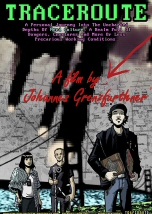
Traceroute

   2016    Culture
A Personal Journey Into The Uncharted Depths Of Nerd Culture, A Realm Full Of Dangers, Creatures And More Or Less Precarious Working Conditions.
Artist and life-long nerd Johannes Grenzfurthner is taking us on a personal road trip from the West Coast to the East Coast of the USA, to introduce us to places and people that shaped and inspired his art and politics. Traceroute wants to chase and question the ghosts of nerddom's past, present and future. An exhilarating tour de farce into the guts of trauma, obsession and cognitive capitalism.

Free for All

   2013    Art
Part 2 examines how the freewheeling modernism that had shocked audiences in the first two decades of the century came under state control. Initially, many practitioners thought the totalitarian regimes would be good for music and the arts. What followed in Germany was a ban on music written by Jews, African-Americans and communists, while in the Soviet Union there was a prohibition on music the workers were unable to hum. After the cataclysm of the 1940s, a new generation of composers - Boulez, Stockhausen, Xenakis, Nono, Ligeti - turned their back on what they saw as the discredited music of the past and tried to reinvent it from scratch. Or, at least, from serialism, which became as much of a straitjacket as totalitarianism's strictures had been. But from this period of avant-garde experimentation, which many listeners found baffling and terrifying, came some of the most influential and radical musical innovations of the century.
Series: The Sound and the Fury

Easy Listening

   2013    Art
Series concludes with the focus shifting to the United States in the post-war years of the 1950s and beyond. Beginning with arguably the most notorious work of 20th century classical music, John Cage's 'silent' composition 4'33", it looks at how a series of maverick Americans re-invented the sound of classical music into a more simple form, bringing back harmonies and rhythms that made it increasingly popular with audiences across the world. It also examines how this music found its way into a spiritual realm, with the strain of pared-down religious composition that came to be known as 'holy minimalism'. From the Maverick concert hall in Woodstock, New York to an Orthodox cathedral in Estonia to a car park in Peckham, south London, the story is told by a stellar line-up of contributors including Philip Glass, Steve Reich, John Adams, Arvo Pärt and John Tavener.
Series: The Sound and the Fury
Apocalypse: World War 1

Apocalypse: World War 1

2014  History
Living Universe

Living Universe

2018  Technology
Racism: A History

Racism: A History

2007  Culture
Sex Explained

Sex Explained

2020  Medicine
The Jinx

The Jinx

2015  History