











Last Watched

"Isis"  Sort by

Escape to Europe and Cycle of Terror

   2015    Culture
This episode covers the European refugee crisis, the largest refugee migration since World War II. Following the refugees on their journey, Vice sets out to cover not only the trials of those seeking asylum from the Syrian conflict, but the reactions from the Western world and the countries that have sought to take them in. Unfortunately, but perhaps not surprisingly, the response in many regions has been oppositional, especially in the aftermath of the Paris and Brussels ISIS attacks. In addressing this modern world crisis, Vice depicts the severe trials and tribulations faced by the desperate refugees, and the consequences, noticed or unnoticed, of turning them away.
Series: Vice
Why Islamic State expands so quickly

   2015    Culture
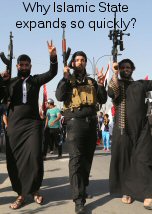
The self-proclaimed 'Islamic State' is a jihadi militia active in the north and east of Syria, and in the west of Iraq, which has shocked the world with its cinematic staging of horrific acts of violence and its unexpected advances towards statehood. But why could IS expand so rapidly?

Badlands

   2023    Science
Female Isisaurus traverse the Deccan Traps to reach their nesting site. A mixed herd of sauropods and Prenocephale navigate a maze of canyons, but are ambushed by a pack of Velociraptor and a trio of Tarbosaurus. A colony of male Corythoraptor protect their eggs from the scorching sun by day, and a female Kuru kulla at night, who has offpsring of her own.
Trudging through a scorching desert, two young Tarchia find relief at an oasis and encounter an adult twice their size, ready to lay claim. Several Isisaurus hatchlings fall prey to Rajasaurus in an attempt to reach their ancestral home.
Series: Prehistoric Planet II

Chapter 4: Mescaline

   2022    Medicine
The last episode explores Mescaline, the psychoactive molecule in San Pedro and peyote cacti, a sacred medicine that Native Americans have had to fight for the right to use. At the Indigenous practices there's always an elder, someone who knows the territory very well, who's presiding. There's usually a group, a community is involved, There's always an intention, a purpose to what you're doing, and you're treating it as sacred, in order to achieve altered states of consciousness, which contribute to worship in various ways, or celebration or healing.
But maybe all this is not so new to Western culture after all. In the old Greek histories of Eleusis, people who were initiated there got the drink, the kykeon, and then they had the illumination. The precise recipe is a mystery, but we know that the kykeon was a psychoactive brew that was used at the Eleusinian mysteries, a sacred annual ritual of enlightenment practiced by some of the world's greatest minds including Socrates, Plato, and Aristotle. So why did this ritual come to an end more than 1,000 years ago? Was the possibility of illumination or achieving a higher consciousness considered threatening to the powers that be? Have the drug wars been merely an extension of that fear?
Psychedelics has a major part in how we can heal as a community, how we can heal as a city, and how we can heal as a country. The current renaissance of psychedelics could not come at a better time as the world confronts a crisis in mental health. But psychedelics have much to offer. The psychedelic experience changes the mind in ways that will help scientists better understand how it works. All these altered states allow us to probe what is the greatest mystery in all of nature. The emergence from mere matter of something as miraculous as consciousness. But an even bigger question is whether psychedelics might help us address the environmental crisis of how we think about our place in nature. One of the greatest gifts of psychedelics is how they reanimate the natural world, allowing us to perceive the subject, the spirit of all species, not just our own. And to feel a deeper sense of interconnectedness with nature.
Series: How to Change Your Mind

Revolution

   2019    History
Rasputin is gone, but Nicholas II continues his catastrophic policies in war and at home. When Nicholas goes back to military headquarters, he is in fact leaving control of government, exactly when Russia needed to be held together by its Czar. The war by this time is deeply unpopular. It's not only unpopular, it's also arguably the engine that's causing enormous economic crisis, that's causing general unrest. Deprivation pushes the population from unrest to revolution.
Series: The Last Czars

The Whistleblower

   2022    Technology
In the third episode, during cleanup at the plant, insiders claim that cost-cutting measures and intimidation tactics create a danger war force than the accident itself.
Several state and federal government agencies mounted investigations into the crisis, the most prominent of which was the President's Commission on the Accident at Three Mile Island, headed by chairman John G. Kemeny. The investigation strongly criticized Babcock & Wilcox, Met Ed, Graphics processing unit, and the Nuclear Regulatory Commission for lapses in quality assurance and maintenance, inadequate operator training, lack of communication of important safety information, poor management, and complacency.
Kemeny said that the procedures and that the control room were greatly inadequate for managing an accident.
Series: Meltdown: Three Mile Island