




Last Watched

"Planet"  Sort by

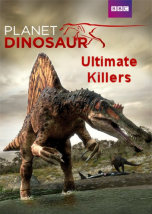
Planet Dinosaur Ultimate Killers

   2012    Science    3D    HD
This is one of the most ambitious animated programmes ever attempted for broadcast TV, recreating every detail of these extraordinary animals in an entirely digital production that stretches the boundaries of broadcast 3D with a scale and ambition normally reserved for Hollywood feature films. Planet Dinosaur 3D is a thrilling and immersive journey into a lost world. Pulling together cutting edge research from around the world this programme uses the latest, stunning fossil evidence to chart the rise and fall of the 'Ultimate Killers'; from the iconic Spinosaurus, the largest predator ever to walk the Earth, to Microraptor and the feathered, flying dinosaurs from China. At last, thanks to the advances in technology, and for the first time ever, these monsters can be experienced in all their full, magnificent wonder.
Series: Planet Dinosaur
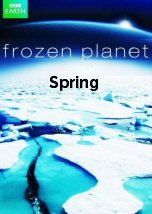
Frozen Planet: Spring

   2011    Nature
Spring arrives in the polar regions, and the sun appears after an absence of five months; warmth and life return to these magical ice worlds - the greatest seasonal transformation on our planet is underway. Male Adelie penguins arrive in Antarctica to build their nests - it takes a good property to attract the best mates and the males will stop at nothing to better their rivals! But these early birds face the fiercest storms on the planet. In the Arctic, a polar bear mother is hunting with her cubs. Inland, the frozen rivers start to break up and billions of tons of ice are swept downstream in the greatest of polar spectacles. This melt-water fertilizes the Arctic Ocean, feeding vast shoals of Arctic cod and narwhal. The influx of freshwater accelerates the breakup of the sea-ice - an area of ice the size of Australia will soon vanish from the Arctic. On land, a woolly bear caterpillar emerges from the snow having spent the winter frozen solid. Caterpillars normally become moths within months of hatching, but life is so harsh here that the woolly bear takes 14 years to reach adulthood. Once mature it has only days to find a mate before it dies! Alongside the caterpillars white Arctic wolves race to raise their adorable cubs before the cold returns.
Series: Frozen Planet

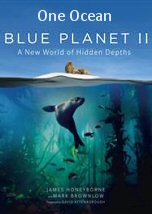
One Ocean

   2017    Nature    HD
Nearly a generation after the acclaimed Blue Planet documentary was released, David Attenborough returns to narrate this groundbreaking sequel/reboot. Blue Planet II focuses more heavily on mankind's influence on the world's oceans through both global pollution and climate change. This series features a variety of revolutionary segments never before seen in a video documentary. One Ocean Footage of marine life in different environments around the north, beginning with a tropical coral reef which has medicinal properties for dolphins, and is used as a tool by tusk fish. In Japan, a shipwreck is home to the Asian sheepshead wrasse, which can change gender, while in the polar north, walruses struggle to find ice floes for their pups to rest on as climate change takes its toll on the environment.
Series: Blue Planet II

The Electric Boy

   2014    Science
This episode provides an overview of the nature of electromagnetism, as discovered through the work of Michael Faraday. Tyson explains how the idea of another force of nature, similar to gravitational forces, had been postulated by Isaac Newton before. Tyson continues on Faraday, coming from poor beginnings, would end up becoming interested in studying electricity after reading books and seeing lectures by Humphry Davy at the Royal Institution. Davy would hire Faraday after seeing extensive notes he had taken to act as his secretary and lab assistant. After Davy and chemist William Hyde Wollaston unsuccessfully tried to build on Hans Christian Ørsted's discovery of the electromagnetic phenomena to harness the ability to create motion from electricity, Faraday was able to create his own device to create the first electric motor by applying electricity aligned along a magnet. Davy, bitter over Faraday's breakthrough, put Faraday on the task of improving the quality of high-quality optical glass, preventing Faraday from continuing his research. Faraday, undeterred, continued to work in the Royal Institution, and created the Christmas Lectures designed to teach science to children. Following Davy's death, Faraday returned to full time efforts studying electromagnetism, creating the first electrical generator by inserting a magnet in a coil of wires. Tyson continues to note that despite losing some of his mental capacity, Faraday concluded that electricity and magnetism were connected by unseen fields, and postulated that light may also be tied to these forces. Using a sample of the optical glass that Davy had him make, Faraday discovered that an applied magnetic field could affect the polarization of light passing through the glass sample (a dielectric material), leading to what is called the Faraday effect and connecting these three forces. Faraday postulated that these fields existed across the planet, which would later by called Earth's magnetic field generated by the rotating molten iron inner core, as well as the phenomena that caused the planets to rotate around the sun. Faraday's work was initially rejected by the scientific community due to his lack of mathematical support, but James Clerk Maxwell would later come to rework Faraday's theories into the Maxwell's equations that validated Faraday's theories. Their combined efforts created the basis of science that drives the principles of modern communications today.
Series: Cosmos: A Spacetime Odyssey

Seven Worlds One Planet Best Of

   2019    Nature
The most spectacular moments from the Seven Worlds, One Planet series that highlights the incredible rich and wonderful diversity of life found on our planet's seven unique continents. Millions of years ago incredible forces ripped apart the Earth's crust creating our seven continents - each with its own distinct climate, its own distinct terrain and its own unique animal life. Narrated by David Attenborough.

Apocalypse Cow

   2020    Nature
In a provocative documentary, environmental campaigner George Monbiot examines the disastrous impact that farming animals for meat has had on the planet. He argues that the biggest problem driving us towards global disaster is how we feed ourselves, particularly on meat
George looks at alternative food sources, including synthetic meat, and a process that produces protein from just bacteria and air, and also explores revolutionary ideas that could change agriculture as we know it.
The Last Dance

The Last Dance

2020  Culture
The Human Body

The Human Body

1998  Medicine
Asia

Asia

2024  Nature
Ancient Apocalypse

Ancient Apocalypse

2022  History
Secrets of the Dead

Secrets of the Dead

2017  History