The James Webb Space Telescope, a flagship observatory developed by NASA, the European Space Agency, and the Canadian Space Agency, is the largest space telescope ever built, with a deployable mirror measuring 21.3 feet (6.5 meters) in diameter and four scientific instruments to observe the universe in infrared wavelengths. The mission will study the formation of galaxies, stars, and planets. JWST was launched December 25, 2021 on an Ariane 5 ECA rocket. This is the story of the James Webb Space Telescope, told by the people who have devoted their lives to it. It is the world’s most advanced and most expensive telescope, and building it has been fraught with challenges. But it will all be worth it if the mission is successful.
Looking back on the major stories of the year - from the New Horizons mission to the most distant world we have ever visited to the release of the first-ever picture of a black hole. The team relive the highlights and uncover the latest developments.
Are we alone? SETI--the Search for Extraterrestrial Intelligence--is a privately funded project using radio telescopes and optical telescopes to scan the stars for signals.
In astronomy, we've been looking at different kinds of light and opening up the universe a little bit more of the time. But then in 2015, the roof came off. Something happened that changed everything, the ability to see waves in space and time itself. Gravitational waves help us roll back the clock to the dawn of time, discover epic cosmic collisions, on make Earth-shaking discoveries. Gravitational waves are the biggest game changer since the invention of the telescope. We have a completely new universe to view now. A new exploration of space is just beginning.
This is the story of two of the biggest scientific breakthroughs of the 21st century, told by the incredible scientists who made them happen. The first is LIGO’s measurement of gravitational waves coming from a black hole merger, and the second, the Event Horizon Telescope’s image of a black hole.
In just one generation, our ability to search for planets beyond our solar system has transformed. With modern techniques and telescopes, planetary scientists have found thousands of exoplanets in our universe, and many of them have the perfect conditions for life. Are we about to find Earth’s twin?
















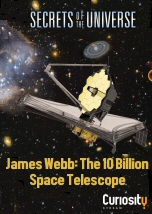





This is the story of the James Webb Space Telescope, told by the people who have devoted their lives to it. It is the world’s most advanced and most expensive telescope, and building it has been fraught with challenges. But it will all be worth it if the mission is successful.