When nine-year-old Maya Kowalski was admitted to Johns Hopkins All Children's Hospital in 2016, nothing could have prepared her or her family for what they were about to go through. As the medical team tried to understand her rare illness, they began to question the basic truths that bound the Kowalskis together. Suddenly, Maya was in state custody despite two parents who were desperate to bring their daughter home. The story of the Kowalski family as told in their own words will change the way you look at children's healthcare forever. 'Take Care of Maya' delves into the harrowing narrative of a family navigating the treacherous waters of the U.S. parental rights. The storyline underscores the agonizing journey of parents who find themselves battling against seemingly insurmountable odds to reclaim their child. As the story unfolds, it becomes evident that the issues they face are deeply entrenched in the ethical and moral dilemmas of the U.S. system. The narrative hints at potential flaws in the healthcare or judicial sectors that further complicate their fight for justice. Throughout, the audience is exposed to raw emotions, moments of despair, confrontation, and an unwavering spirit of resilience.
From fears about work and privacy to a rivalry between the U.S. and China, the series explores the promise and perils of AI. It traces a new industrial revolution that will reshape and disrupt our lives, our jobs and our world, and allow the emergence of the surveillance society. Today, China leads the world in e-commerce and is a society that bypassed credit cards. Now shops in stores are without cashiers, where the currency is facial recognition. No country has ever moved that fast. And in a short two-and-a-half years, China's A.I. implementation really went from minimal amount to probably about 17 or 18 unicorns, that is, billion-dollar companies. The progress was powered by a new generation of ambitious young techs pouring out of Chinese universities, competing with each other for new ideas, and financed by a new cadre of Chinese venture capitalists.
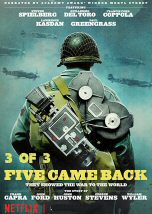
In the second episode, the directors learn their vision for the films is not always permissible by the U.S. government. Wyler is shocked by the racism he encounters against African American soldiers and refused to make a film recruiting black soldiers. Meanwhile, the films' racist depiction of the Japanese versus human depiction of the Germans causes worry for the War Department, which at that time planned to redistribute the Japanese-American population from internment camps into towns across the United States.
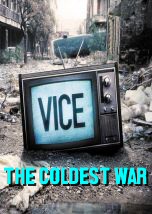
'The Coldest War': With the polar ice caps shrinking due to global warming, new trade routes are being exposed, along with billions of dollars' worth of natural-resource reserves. The five nations bordering the Arctic are readying themselves to fight for it. The problem is that there's one non-NATO country that already considers itself rightful owner of the region: Russia. With Vladimir Putin's recent military annexation of Crimea, there's a definite possibility its aggressions will boil over, returning the international community to precarious Cold War footing. We will head north to witness NATO forces participating in the largest polar military exercise in history. 'Heroin Warfare': Since the U.S. occupation of Afghanistan, heroin production in the region has skyrocketed, making the country the number-one producer by a large margin. Though Iran, Afghanistan's neighbor, is an ultraconservative country, Afghan heroin flowing across the border has actually caused Iran to have the worst heroin use problem in the world. Suroosh Alvi gets a rare look inside Iran to meet the suffering heroin addicts, and see how the country is coping with the illegal drug trade.
The five directors, John Ford, William Wyler, John Huston, Frank Capra, and George Stevens, return to Hollywood after the war but are forever haunted by what they saw. Ford goes on a drinking bender after filming the carnage at D-Day. Stevens is wholly unprepared for the horrors of Dachau and realizes he is not there to film propaganda but to capture evidence of crimes against humanity. Wyler, who lost his hearing during the war, fears his career is over. Huston chronicles soldiers suffering from postraumatic stress disorder in the film Let There Be Light, only to have it suppressed by the U.S. government.
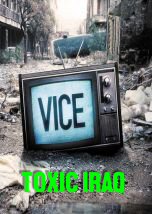
In 'Gun School' we visit the New Life Baptist Church & Academy in Albuquerque, NM, where Pastor Larry Allen preaches guns and teaches guns. In 'Toxic Iraq', after ravaging Iraq over the past decade, the U.S. is finally exiting the country, leaving behind a toxic cesspool of military waste.















'Take Care of Maya' delves into the harrowing narrative of a family navigating the treacherous waters of the U.S. parental rights. The storyline underscores the agonizing journey of parents who find themselves battling against seemingly insurmountable odds to reclaim their child. As the story unfolds, it becomes evident that the issues they face are deeply entrenched in the ethical and moral dilemmas of the U.S. system. The narrative hints at potential flaws in the healthcare or judicial sectors that further complicate their fight for justice. Throughout, the audience is exposed to raw emotions, moments of despair, confrontation, and an unwavering spirit of resilience.