Various eminent scientists explain the current knowledge of Black Holes and try to answer the question, do they really exist? New discoveries are challenging everything we know about black holes -- astronomers are beginning to question if they even exist. The latest science tries to explain how they work & what they look like, despite the fact we've never actually seen one. The two great theories of Einstein's General Relativity and Quantum Mechanics don't work together to explain Black Holes which is a big problem. Other theoretical constructs such as Gravastars and Planck stars have been postulated but proving their existence is just as difficult as that of Black Holes. So where next?
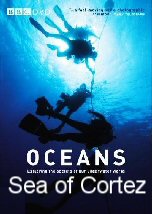
The Sea of Cortez, also known as the Gulf of California, is a unique corner of the Pacific Ocean. This remarkable young sea is thought to be around five million years old and home to nearly 900 species of fish and the widest variety of whales and dolphins found anywhere on Earth. Some of the greatest changes threatening the world's oceans today can be seen in this stretch of water.
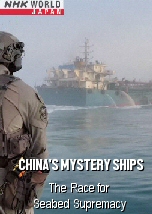
As the world enters a phase of aggressive competition over untapped ocean floor resources, countries are scrambling to stake their claims. The vast economic potential on offer has made the seabed the ultimate frontier in a new Age of Exploration. China's research vessels in particular have been active in waters right across the globe. Through our exhaustive analysis of huge volumes of Chinese ship tracking data, from sand dredgers to survey vessels, we piece together a puzzle that reveals a new hidden power struggle over increasingly critical submarine resources.
In the third programme of the series, Aleks gives the lowdown on how, for better and for worse, commerce has colonized the web - and reveals how web users are paying for what appear to be 'free' sites and services in hidden ways. Joined by some of the most influential business leaders of today's web, including Eric Schmidt (CEO of Google), Chad Hurley (CEO of YouTube), Bill Gates, Martha Lane Fox and Reed Hastings (CEO of Netflix), Aleks traces how business, with varying degrees of success, has attempted to make money on the web. She tells the inside story of the gold rush years of the dotcom bubble and reveals how retailers such as Amazon learned the lessons. She also charts how, out of the ashes, Google forged the business model that has come to dominate today's web, offering a plethora of highly attractive, overtly free web services, including search, maps and video, that are in fact funded through a sophisticated and highly lucrative advertising system which trades on what we users look for. Aleks explores how web advertising is evolving further to become more targeted and relevant to individual consumers. Recommendation engines, pioneered by retailers such as Amazon, are also breaking down the barriers between commerce and consumer by marketing future purchases to us based on our previous choices. On the surface, the web appears to have brought about a revolution in convenience. But, as companies start to build up databases on our online habits and preferences, Aleks questions what this may mean for our notions of privacy and personal space in the 21st century
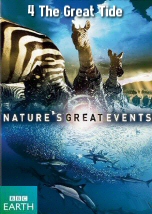
A mighty army of dolphins, sharks, whales, seals and gannets hunt down the billions of sardines along South Africa's east coast each winter. This is the Sardine Run: an underwater Armageddon, the greatest gathering of predators anywhere on the planet, and the most spectacular event in the world's oceans. From intimate moments of the creatures caught up in the run, to the dramatic finale of this spectacular event, The Great Tide is an action-packed feeding-frenzy, filmed underwater, on the ocean's surface, and in the air. However, in recent years the sardine run has become less predictable, perhaps due to the warming effects of climate change. If the sardine run does not happen, the lives of the animals caught up in the drama hang in the balance. Pioneering a unique boat stabilised camera mount for surface filming, Nature's Great Events crew capture all the high octane action as the predators compete for sardines, filmed with aerial, underwater and above water cameras. Super slow motion cameras also capture the very moment gannets plunge into the water, hitting it at sixty miles an hour. A violent winter storm is the trigger for the sardines to begin their desperate dash. They are followed by a super-pod of 5,000 dolphins and further up the coast more predators gather. A shoal of sardines 15 miles long is pushed into the shallows and aerial shots show thousands of sharks gathering to feed on them. The climax to the sardine run is a spectacular feeding frenzy as the dolphins round the sardines up into balls on which all the predators feast. Gannets rain down in their thousands, sharks pile in scattering the fish and a Bryde's whale lunges in taking great mouthfuls of sardines.
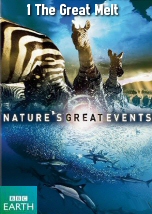
Every year, around the world, seasonal changes transform entire landscapes and draw in millions of creatures as these great events unfold. This fantastic series combines the epic scale of Planet Earth and the intimate, emotional stories of charismatic animals as they struggle to survive. Using state of the art technology, these programmes capture the Earth's most dramatic and epic wildlife spectacles and the intimate stories of the animals caught up in them. The Great Melt: The summer melt of Arctic ice, opening up nearly three million square miles of ocean and land, provides opportunities for millions of animals, including beluga whales, families of Arctic foxes, vast colonies of seabirds, and the fabled Arctic unicorn, the narwhal. For polar bears, however, it is the toughest time of year. Why? How will they survive? A mother polar bear and her cub make their first journey together onto the sea ice. They are looking for ringed seals, their favourite prey. It is a serious business but the cub just wants to play. The melting ice makes it harder for them to hunt and threatens their survival. In a unique aerial sequence, the migration of narwhal with their distinctive unicorn-like tusks is filmed for the first time. The whales' journey is risky as they travel along giant cracks in the ice. If the ice were to close above them, they would drown. Hundreds of beluga whales gather in the river shallows. They rub themselves on smooth pebbles in one of the most bizarre summer spectacles. Guillemot chicks take their first flights from precipitous sea cliff nests to the sea 300 metres below. They attempt to glide to safety but many miss their target. Their loss is a bonus for the hungry Arctic fox family waiting below. As the melt comes to an end the bears gather, waiting for the sea to freeze again. Two 400kg males square up to each other to spar.







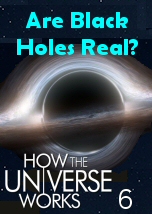





The two great theories of Einstein's General Relativity and Quantum Mechanics don't work together to explain Black Holes which is a big problem. Other theoretical constructs such as Gravastars and Planck stars have been postulated but proving their existence is just as difficult as that of Black Holes. So where next?