On Oct. 1, 2013, the elusive British street artist known as Banksy launched a self-proclaimed month-long residency in New York City, posting one unique exhibit a day in an unannounced location, sparking a 31-day scavenger hunt both online and on the streets for Banksy’s work. Capturing this month of madness, this featured film incorporates user-generated content, from YouTube videos to Instagram photos, from New Yorkers and Banksy hunters alike, whose responses became part of the work itself, for an exhilarating, detailed account of the uproar created by the mysterious artist. With installations spanning all five boroughs of New York City, and including a mix of stencil graffiti, sculpture, video and performance art, Banksy touched on such wide-ranging subjects as fast-food wages, animal cruelty in the meat industry, civilian casualties in Iraq and the hypocrisy of the modern art world.
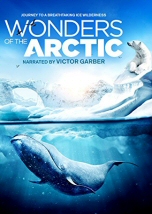
The film centers on our ongoing mission to explore and come to terms with the Arctic, and the compelling stories of our many forays into this captivating place will be interwoven to create a unifying message about the state of the Arctic today. Underlying all these tales is the crucial role that ice plays in the northern environment and the changes that are quickly overtaking the people and animals who have adapted to this land of ice and snow.
Fights within Eagles were common long before Hotel California. They started as four equal partners. Gradually the power shifted toward Henley and Frey, which Meisner and Leadon resented. Leadon left first because the band progressed from country to rock. He also wanted to live a healthy life in a band that lived extremely unhealthy. Even though they made many wonderful songs, things were far from smooth in the studio.
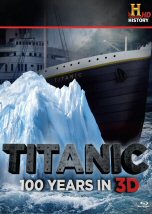
Titanic 100 Years combines stunning imagery of the wreck with powerful untold stories of passengers and crew, letting audiences experience the real life drama of Titanic in a way never before possible. In 2010, an unprecedented expedition by Woods Hole Oceanographic Institute and RMS Titanic, Inc. went on location to document the entire wreck site of Titanic, using high-resolution optical video, sonar, acoustic imaging, and 3D HD video and acoustic modeling. These incredible visuals are accompanied by the untold stories of people who were on the ship and linked with one or more recovered artifacts that connect to that passenger or crewmember. These haunting artifacts and unforgettable personal stories of average people take viewers back in time, making the history of Titanic as vivid as it was yesterday.
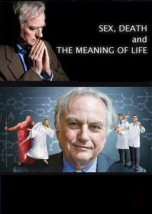
Richard Dawkins explores what science can tell us about death. It's a journey that takes him from Hindu funeral pyres in India to genetics labs in New York.Dawkins brings together the latest neuroscience, evolutionary and genetic theory to examine why we crave life after death, why we evolved to age and how the human genome is something like real immortality - traits inherited from our distant ancestors that we pass on to future generations.
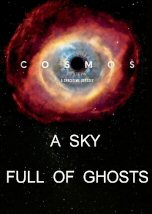
Tyson begins the episode by explaining the nature of the speed of light and how much of what is seen of the observable universe is from light emanated from billions of years in the past. Tyson further explains how modern astronomy has used such analyzes via deep time to identify the Big Bang event and the age of the universe. Tyson proceeds to describe how the work of Isaac Newton, William Herschel, and James Clerk Maxwell contributed to understanding the nature of electromagnetic waves and gravitational force, and how this work led towards Albert Einstein's Theory of Relativity, that the speed of light is a fundamental constant of the universe and gravity can be seen as distortion of the fabric of space-time. Tyson describes the concept of dark stars as postulated by John Michell which are not visible but detectable by tracking other stars trapped within their gravity wells, an idea Herschel used to discover binary stars. Tyson then describes the nature of black holes, their enormous gravitational forces that can even capture light, and their discovery via X-ray sources such as Cygnus X-1. Tyson uses the Ship of Imagination to provide a postulate of the warping of spacetime and time dilation as one enters the event horizon of the black hole, and the possibility that these may lead to other points within our universe or others, or even time travel. Tyson ends on noting that Herschel's son, John would be inspired by his father to continue to document the known stars as well as contributions towards photography that play on the same nature of deep time used by astronomers.











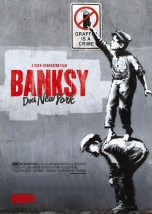


With installations spanning all five boroughs of New York City, and including a mix of stencil graffiti, sculpture, video and performance art, Banksy touched on such wide-ranging subjects as fast-food wages, animal cruelty in the meat industry, civilian casualties in Iraq and the hypocrisy of the modern art world.