










Last Watched

"Film"  Sort by

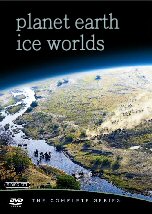
Ice Worlds

   2007    Nature
The Arctic and Antarctic experience the most extreme seasons on Earth. Time-lapse cameras watch a colony of emperor penguins, transforming them into a single organism. The film reveals new science about the dynamics of emperor penguin behaviour. In the north, unique aerial images show a polar bear swimming more than 100km. Diving for up to two minutes at a time. The exhausted polar bear later attacks a herd of walrus in a true clash of the Titans.
Series: Planet Earth


Praying for Armageddon

   2023    Culture    HD
Step into a gripping political thriller that uncovers the unsettling power of Christian fundamentalists in the United States. Backed by millions of dollars and direct ties to government corridors, this movement is not just preaching—they are mobilizing for what they call The Holy War, determined to bring about the prophesied Armageddon. The film takes viewers behind the scenes of their world, exposing the powerful megachurch leaders who rally their followers toward a "final battle" they believe will trigger the Second Coming of Christ.
With unprecedented access, Praying for Armageddon explores the alarming intersection of faith, power, and political influence. It reveals how ideology can shape decisions at the highest levels, raising urgent questions about the far-reaching consequences of religious extremism. This is not just a documentary—it’s a wake-up call to understand the forces shaping a precarious future.

Surprising Beginnings

   2005    History
This BBC six-episode documentary film series presents the story of Auschwitz and the Holocaust through interviews with former inmates and guards and re-enactments. The first episode explores the beginnings of Auschwitz, and how the camp was originally intended for a purpose very different from that of the genocide of the Jews.
Series: Auschwitz The Nazis and the Final Solution

Medina Azahara: The Lost Pearl of al-Andalus

   2022    History    HD
Madinat al-Zahra was given its Arabic name, which means "The Shining City," by the 10th century caliph Abd al-Rahman III, who had it built. Nicknamed the "Versailles of Andalusia", Medina Azahara, located in Cordoba, Spain, is today one of the most important Islamic archaeological sites. This unique capital city, built four centuries before the Alhambra in the mid-10th century, is the object of a new excavation campaign.
Five years ago, a team of European archaeologists began a new excavation project at this World Heritage site. For over 100 years, excavations here have concentrated inside the Caliph's palace. This new excavation project is focused outside the palace walls, in areas of the city never before studied. A massive new building came to light, its function unknown. Beyond the mystery of this building, the very location of this city is an enigma in itself. Why was a Muslim city of such importance built in a then primarily Christian area? The site is a complete urban complex including infrastructure, buildings, decoration, and objects of daily use. By following this mission and revealing the mysteries of this lost city, this film traces the history of the golden age of al-Andalus.

Super Telescope: Mission to the Edge of the Universe

   2022    Technology
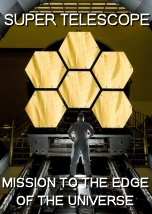
As NASA releases the first images from the James Webb Space Telescope, this film tells the inside story of the telescope's construction and the astronomers taking its first picture of distant stars and galaxies. Will it be the deepest image of our universe ever taken? The successor to Hubble, and 100 times more powerful, the James Webb is the most technically advanced telescope ever built. It will look further back in time than Hubble to an era around 200 million years after the Big Bang, when the first stars and galaxies appeared. Webb's primary mission is to capture the faint light from these objects on the edge of our visible universe so that scientists can learn how they formed, but its instruments are so sensitive it could also be the first telescope to detect signs of life on a distant planet.
The James Webb Telescope is an £8 billion gamble on the skills of its engineering team. It’s the first telescope designed to unfold in space – a complicated two-week operation in which 178 release devices must all work - 107 of them on the telescope's sun shield alone. If just one fails, the expensive telescope could become a giant piece of space junk.
From its conception in the late 1980s, the construction of Webb has posed a huge technical challenge. The team must build a mirror six times larger than Hubble’s and construct a vast sun shield the size of a tennis court, fold them up so they fit into an Ariane 5 rocket, then find a way to unfold them in space. This film tells the inside story of the James Webb Space Telescope in the words of the engineers who built it and the astronomers who will use it.

Why Do We Dream

   2009    Medicine
Horizon uncovers the secret world of our dreams. In a series of cutting-edge experiments and personal stories, we go in search of the science behind this most enduring mystery and ask: where do dreams come from? Do they have meaning? And ultimately, why do we dream? What the film reveals is that much of what we thought we knew no longer stands true. Dreams are not simply wild imaginings but play a significant part in all our lives as they have an impact on our memories, the ability to learn, and our mental health. Most surprisingly, we find nightmares, too, are beneficial and may even explain the survival of our species.