Our strange rock itself can also be lethal. We tend to think of Earth as our life support but it's not there to support us at all. It's a place that's violent, that's beautiful, that's crazy, that's intense. Mother Nature is a serial killer. We wouldn't be here without mass suicide and events so devastating it makes the extinction of the dinosaurs looks like a tea party. There have been 5 mass extinctions on the planet and 99.9 percent of all species that have ever lived are gone. Explore the story of how life on Earth has evolved, becoming lethal for life to thrive.
From the frozen poles to the searing deserts, this episode shows how animals have come up with strategies to survive the uneven amounts of sunlight that fall on our planet over the course of a year. The exception is on the equator, where the duration of day and night remain the same throughout the year. Here, this guaranteed sunlight drives the great diversity of life in the tropical jungles.
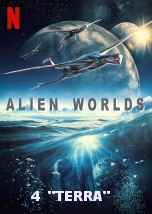
What sort of alien civilizations might exist in the vastness of space? Terra is the fictional world imagined in Episode 4, a planet nine billion years old, twice as old as Earth. Old enough that a truly advanced intelligence could evolve. It was once a fertile world, now it is barren. But life can still thrive here in artificial domes. Over time, they've evolved not to need their bodies. They exist only as neural tissue. They never age, they never die. They're monitored and maintained by robots. If alien civilizations are statistically so likely, why haven't astronomers found any sign of them? Where is everyone? Every time we look at an individual star, that's like dropping a bucket in the ocean. We're going to have to look at a lot of stars and to search through a lot of data until we find the clue that leads us to another civilization.
The Indians called the frozen peak of this great Alaskan mountain range Denali, or 'the high one.' Most know it as Mount McKinley. This preserved wilderness comes to life with the thaw of spring and wildlife abounds during the brief summer, only to succumb to the grip of the long winter. Watch as 5-week-old grizzly cubs play, a moose gives birth to her calf, and a wood frog survives the deep freeze of winter. Breath-taking shots of dazzling northern lights over vast and lush wilderness make this an unforgettable Eden.
When we look up into the sky it appears we live in a universe that is filled with light. But scientists are now certain there is far more matter in the dark portions of our universe that we can’t see or touch. There’s something hiding in the shadows. Cosmologists agree that 'dark matter' has helped shape our Universe, but now they need to figure out what dark matter is. What’s going on in this hidden world? Could it have formed its own dark stars, planets, and even life forms? Could this Shadow Universe threaten our world of light?












Explore the story of how life on Earth has evolved, becoming lethal for life to thrive.