


Last Watched

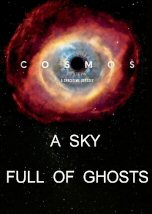
A Sky Full of Ghosts

   2014    Science
Tyson begins the episode by explaining the nature of the speed of light and how much of what is seen of the observable universe is from light emanated from billions of years in the past. Tyson further explains how modern astronomy has used such analyzes via deep time to identify the Big Bang event and the age of the universe. Tyson proceeds to describe how the work of Isaac Newton, William Herschel, and James Clerk Maxwell contributed to understanding the nature of electromagnetic waves and gravitational force, and how this work led towards Albert Einstein's Theory of Relativity, that the speed of light is a fundamental constant of the universe and gravity can be seen as distortion of the fabric of space-time. Tyson describes the concept of dark stars as postulated by John Michell which are not visible but detectable by tracking other stars trapped within their gravity wells, an idea Herschel used to discover binary stars. Tyson then describes the nature of black holes, their enormous gravitational forces that can even capture light, and their discovery via X-ray sources such as Cygnus X-1. Tyson uses the Ship of Imagination to provide a postulate of the warping of spacetime and time dilation as one enters the event horizon of the black hole, and the possibility that these may lead to other points within our universe or others, or even time travel. Tyson ends on noting that Herschel's son, John would be inspired by his father to continue to document the known stars as well as contributions towards photography that play on the same nature of deep time used by astronomers.
Series: Cosmos: A Spacetime Odyssey
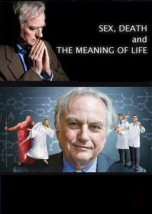
Sex, Death And The Meaning Of Life

   2013    Culture
Richard Dawkins explores what science can tell us about death. It's a journey that takes him from Hindu funeral pyres in India to genetics labs in New York.Dawkins brings together the latest neuroscience, evolutionary and genetic theory to examine why we crave life after death, why we evolved to age and how the human genome is something like real immortality - traits inherited from our distant ancestors that we pass on to future generations.

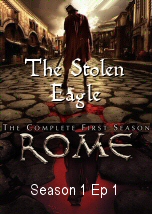
The Stolen Eagle

       History
In this historical drama, the turbulent transition from Roman republic to autocratic empire, which changed world history through civil war and wars of conquest, is sketched both from the aristocratic viewpoint of Julius Caesar, his family, his adopted successor Octavian Augustus, and their political allies and adversaries, and from the politically naive viewpoint of a few ordinary Romans, notably the soldiers Lucius Vorenus and Titus Pullo and their families.
'The Stolen Eagle.' In Gaul in 52 B.C., two Roman soldiers, Legionary Titus Pullo and Centurion Lucius Vorenus, are tasked with recovering Julius Caesar's personal Eagle, stolen from his camp in the dead of night. With his campaign in Gaul coming to a successful conclusion, Caesar's popularity is continuing to grow. He's saddened however when he receives news from his good friend Pompey Magnus that his daughter, Pompey's wife, has died in childbirth. In the Senate, Pompey must defend the prolonged absence of his friend and co-Consul Caesar against charges of corruption.
Series: Rome

Addiction

   2018    Medicine
Hear firsthand from individuals struggling with addiction and follow the cutting-edge work of doctors and scientists as they investigate why addiction is not a moral failing, but a chronic, treatable medical condition. Easy access to drugs like heroin, fentanyl, and even prescription medications like OxyContin has fueled an epidemic of addiction - the deadliest in US history. Now, science is revealing how addiction affects the brain, and top experts are gathering evidence about how we should address our drug problem, from embracing evidence-based treatments, to rethinking public policies.

Catching the Sun

   2016    Technology
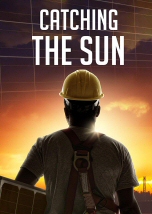
The film captures the global challenge to lead the clean energy future by profiling U.S. and Chinese workers and business leaders who are racing to make crucial breakthroughs in the field. Catching the Sun debunks a false dilemma that clean energy requires sacrificing economic prosperity.
Through the stories of an unemployed American worker, a Tea Party activist, and a Chinese solar entrepreneur, we will explore the global energy transition from the perspective of workers and entrepreneurs building solutions to income inequality and climate change with their own hands. Their successes and failures speak to one of the biggest questions of our time: will the countries actually be able to build a clean energy economy?

Spaceship Earth

   2020    Technology
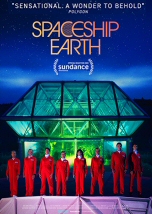
The true, stranger-than-fiction, adventure of eight visionaries who in 1991 spent two years quarantined inside of a self-engineered replica of Earth's ecosystem called Biosphere 2.
The experiment was a worldwide phenomenon, chronicling daily existence in the face of life threatening ecological disaster and a growing criticism that it was nothing more than a cult. The bizarre story is both a cautionary tale and a hopeful lesson of how a small group of dreamers can potentially re-imagine a new world.
Leaving Neverland

Leaving Neverland

2019  Culture
The Wehrmacht

The Wehrmacht

2007  History
Clarkson Farm 4

Clarkson Farm 4

2025  Nature
History of the Eagles

History of the Eagles

2013  History
Prehistoric Planet

Prehistoric Planet

2022  Science
Clarkson Farm

Clarkson Farm

2021  Nature
The Crime of the Century

The Crime of the Century

2021  Medicine