Dr Hannah Fry explores a paradox at the heart of modern maths, discovered by Bertrand Russell, which undermines the very foundations of logic that all of maths is built on. These flaws suggest that maths isn't a true part of the universe but might just be a human language - fallible and imprecise. However, Hannah argues that Einstein's theoretical equations, such as E=mc2 and his theory of general relativity, are so good at predicting the universe that they must be reflecting some basic structure in it. This idea is supported by Kurt Godel, who proved that there are parts of maths that we have to take on faith. Hannah then explores what maths can reveal about the fundamental building blocks of the universe - the subatomic, quantum world. The maths tells us that particles can exist in two states at once, and yet quantum physics is at the core of photosynthesis and therefore fundamental to most of life on earth - more evidence of discovering mathematical rules in nature. But if we accept that maths is part of the structure of the universe, there are two main problems: firstly, the two main theories that predict and describe the universe - quantum physics and general relativity - are actually incompatible; and secondly, most of the maths behind them suggests the likelihood of something even stranger - multiple universes. We may just have to accept that the world really is weirder than we thought, and Hannah concludes that while we have invented the language of maths, the structure behind it all is something we discover. And beyond that, it is the debate about the origins of maths that has had the most profound consequences: it has truly transformed the human experience, giving us powerful new number systems and an understanding that now underpins the modern world.
A look at public shaming in modern day culture. This original documentary film examines social behavior by embedding with individuals from across the U.S. who have been publicly shamed or cyber-harassed – while exploring the bullies, the bystanders, the media, psychologists, politicians and experts in between.
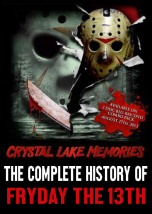
Corey Feldman (star of Friday the 13th: The Final Chapter) narrates Crystal Lake Memories, which features interviews with approximately 150 cast and crew members from all twelve Friday the 13th films and the syndicated television series, many of whom have never before appeared in on-camera interviews. Interview subjects include Kane Hodder, Robert Englund, Tom Savini, Danielle Panabaker, Sean S. Cunningham, Derek Mears, Betsy Palmer, Wes Craven, Robert Shaye, Alice Cooper and many more
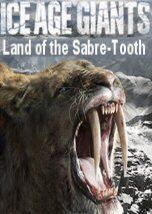
Professor Alice Roberts journeys 40,000 years back in time on the trail of the great beasts of the Ice Age. Drawing on the latest scientific detective work and a dash of graphic wizardry, we bring the Ice Age Giants back to life. The series begins in the 'land of the sabre-tooth'; North America, a continent that was half covered by ice that was up to two miles thick. Yet this frozen land also boasted the most impressive cast of Ice Age giants in the world. Across locations such as the Grand Canyon, the sands of Arizona and the coast of California, Alice traces the movements of Ice Age beasts like bear-sized sloths, vast mammoths and the strange beast known as the glyptodon. These leviathans all have one thing in common: they were stalked by the meanest big cat that ever prowled the Earth, armed with seven-inch teeth and hunting in packs - Smilodon fatalis, the sabre-toothed cat.
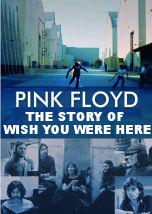
The film gives an extensive insight into the concept, the recording of the songs and the designing of the album cover. It includes exclusive interviews with almost every key person, who participated in producing the album. The band is represented by all three surviving members – David Gilmour, Nick Mason and Roger Waters. Other participating people include: Joe Boyd, Venetta Fields, Jill Furmanovsky, Roy Harper, Brian Humphries, Peter Jenner, Nick Kent, Aubrey Powell, Ronnie Rondell Jr. (who depicted the 'urning man' on the original cover), Gerald Scarfe, and Storm Thorgerson.
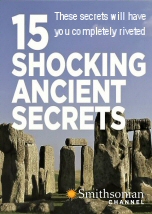
From a 2,400-year-old corpse in remarkable condition to how shrunken heads are made, these 15 ancient secrets will have you completely riveted. The Vesuvius eruption may have been a gradual process. It took a storm to lift the cover on this ancient Roman city. The people of Pompeii often resorted to vigilante justice. How the wealthy of Pompeii protected their valuables? Was this pre-Viking gathering a prelude to a massacre? The valuable commodity behind King Solomon's wealth. This valuable Viking grave is missing something important. Is this where humanity decided to settle down? This mysterious stone structure is older than Stonehenge. This 2,400 year old corpse is in remarkable condition. Here's exactly how shrunken heads are made. DNA analysis reveals troubling news about shrunken heads. This mass grave discovery could alter Roman history. Gladiator teeth reveal signs of infant malnourishment. Evidence suggests Stonehenge was an elite cemetery.









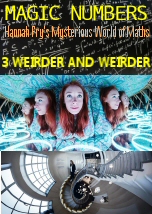



Hannah then explores what maths can reveal about the fundamental building blocks of the universe - the subatomic, quantum world. The maths tells us that particles can exist in two states at once, and yet quantum physics is at the core of photosynthesis and therefore fundamental to most of life on earth - more evidence of discovering mathematical rules in nature. But if we accept that maths is part of the structure of the universe, there are two main problems: firstly, the two main theories that predict and describe the universe - quantum physics and general relativity - are actually incompatible; and secondly, most of the maths behind them suggests the likelihood of something even stranger - multiple universes.
We may just have to accept that the world really is weirder than we thought, and Hannah concludes that while we have invented the language of maths, the structure behind it all is something we discover. And beyond that, it is the debate about the origins of maths that has had the most profound consequences: it has truly transformed the human experience, giving us powerful new number systems and an understanding that now underpins the modern world.