Global warming, and how to combat it, has provoked intense debate, changed the way we see the planet and created headlines around the world. But when and how did scientists first discover global warming, why has it led to such furious debate? In this three-part series geologist Dr Iain Stewart presents a definitive guide to the history of climate change. Battle Begins uncovers some of the great unsung heroes of climate change science, and introduces us to a secret organisation of American government scientists, known as Jason, who wrote the first official report on global warming as far back as 1979. By the late 1980s global warming had already become a serious political issue. It looked as if the world was uniting to take action. But it turned out to be a false dawn.
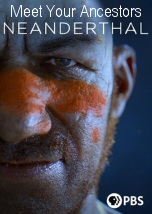
According to recent science the Neanderthals are not the knuckle-dragging apemen of popular imagination. The first part of the film investigates what Neanderthals looked like and how they lived in their Ice Age world. They were faster, smarter, better looking - and much more like us than we ever thought. Our guide is Ella Al-Shamahi, who enlists the skills of Andy Serkis, the master of performance capture, and a group of experts to investigate deeply Neanderthals appearance. In the second part, Ella explores the fate of the Neanderthals - asking why they became extinct, and discovering how they live on inside of us today. About 2% of the DNA of most people is of Neanderthal origin - and it continues to affect us today. Neanderthals were a people who were supremely well adapted to their environment. But about 40,000 years ago they disappeared. Why?
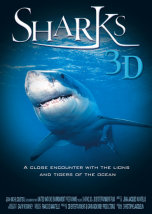
Jean-Michel Cousteau invites you to embark on a breathtaking underwater voyage to discover the ultimate predator: the shark. Experience an astonishing up-close encounter in 3D with the Lions and Tigers of the Ocean. Come face-to-face with a multitude of shark species, including the Great White, Hammerhead, and Whale Shark. Witness them as they really are: not wicked man-eating creatures, but wild, fascinating and endangered animals that have been in existence a million years before dinosaurs roamed the Earth. Join a team of ocean explorers on a round-the-globe expedition documenting the life of the ultimate predator.
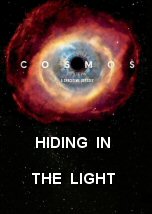
This episode explores the wave theory of light as studied by mankind, noting that light has played an important role in scientific progress, with such early experiments from over 2000 years ago involving the camera obscura by the Chinese philosopher Mozi. Tyson describes the work of the 11th century Arabic scientist Ibn al-Haytham, considered to be one of the first to postulate on the nature of light and optics leading to the concept of the telescope, as well as one of the first researchers to use the scientific method. Tyson proceeds to discuss the nature of light as discovered by mankind. Work by Isaac Newton using diffraction through prisms demonstrated that light was composed of the visible spectrum, while findings of William Herschel in the 19th century showed that light also consisted of infrared rays. Joseph von Fraunhofer would later come to discover that by magnifying the spectrum of visible light, gaps in the spectrum would be observed. These Fraunhofer lines would later be determined to be caused by the absorption of light by electrons in moving between atomic orbitals when it passed through atoms, with each atom having a characteristic signature due to the quantum nature of these orbitals. This since has led to the core of astronomical spectroscopy, allowing astronomers to make observations about the composition of stars, planets, and other stellar features through the spectral lines, as well as observing the motion and expansion of the universe, and the existence of dark matter.
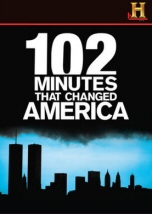
New York City, September 11, 2001. The morning everything changed.102 minutes passed between the first plane's impact into One World Trade Center, the second plane's attack on Two World Trade Center, and the eventual collapse of both buildings. In that time, people around New York experienced a range of emotions. Despite the horror and the incomprehensibility of what was happening, many knew, somehow, that they had a unique responsibility to record what they saw. They reached for their cameras. This unprecedented documentary special joins hundreds of pieces of their footage and audiotape into a single, seamless historical record. It is an intensely personal perspective of the tragedy, communicating for the first time that morning s events, as they were experienced by people around New York. It is an evocative, authentic and reverential memorial to one of the most cataclysmic events in world history.
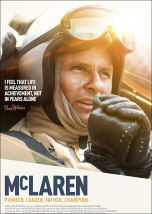
The inspirational documentary account of one man’s pioneering spirit, unswerving tenacity and endless passion, McLaren is the untold story of a motor racing icon. Born in New Zealand in 1937, Bruce McLaren’s determination to make it to the summit of global motor racing circles saw his name become synonymous with the sport; displaying an incomparable will to succeed and desire to better both himself and his burgeoning super brand. In following a singular dream, McLaren elicited the loyalty, determination and love of family, friends and colleagues to create a dynasty that lives on to this day. Revealing the challenges and adversities faced along the way, including a childhood illness which threatened to alter the path of his life, McLaren is the story of one man’s unfaltering commitment to his vision which will inspire generations of sporting fans.










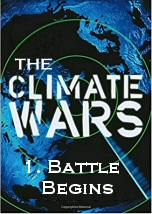

Battle Begins uncovers some of the great unsung heroes of climate change science, and introduces us to a secret organisation of American government scientists, known as Jason, who wrote the first official report on global warming as far back as 1979. By the late 1980s global warming had already become a serious political issue. It looked as if the world was uniting to take action. But it turned out to be a false dawn.