Every year grizzly bear families in North America depend for their survival on a spectacular natural event: the return of hundreds of millions of salmon from the Pacific Ocean to the mountain streams where they were born. The salmon travel thousands of miles to spawn and then die. The great run not only provides food for bears, but for killer whales, wolves, bald eagles, and even the forest itself. The question is: will the salmon return in time to keep hungry bears alive? A mother grizzly and her cubs emerge from their den high in snowy Alaskan mountains. Filming from the air the team capture a TV first, following the bears as they negotiate a near vertical slope on their journey to the coast where they await the return of the salmon. Meanwhile, the salmon are making their way to the to river mouths where they must swim upstream and against the current. The programme reveals how they tackle the torrents and leap over waterfalls, a feat equivalent to a human jumping over a house. Dozens of hungry bears eagerly await the salmon that make it up river. In another TV first, underwater cameras record the ingenuity and fancy footwork they use to collect dead salmon from the bottom of deep pools.
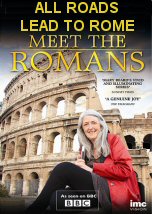
Professor Mary Beard looks beyond the stories of emperors, armies, guts and gore to meet the everyday people at the heart of Ancient Rome's vast empire. In this programme, Mary asks not what the Romans did for us, but what the empire did for Rome. She rides the Via Appia, climbs up to the top seats of the Colosseum, takes a boat to Rome's port Ostia and takes us into the bowels of Monte Testaccio. She also meets some extraordinary Romans: Eurysaces, an eccentric baker, who made a fortune out of the grain trade and built his tomb in the shape of a giant bread oven; Baricha, Zabda and Achiba, three prisoners of war who became Roman citizens; and Pupius Amicus, the purple dye seller making imperial dye from shellfish imported from Tunisia. This is Rome from the bottom up.
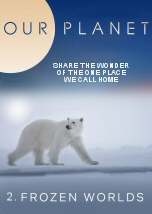
The polar regions of our planet may seem beyond the reach of most of us, but they are not beyond our influence. We, unintentionally, are changing these frozen worlds, and these changes will not just affect the poles but the whole planet. On the unforgiving frontier of climate change, polar bears, walruses, seals and penguins find their icy Edens in peril.
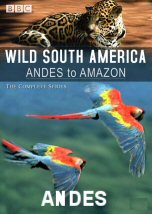
This edition features a spectacular journey along the Andes, the world's longest mountain range, stretching from the equator almost to Antarctica. In this harsh and unforgiving landscape, wildlife such as bears, pumas, condors and flamingos fight for survival in the numbing cold, ferocious winds and thin air.
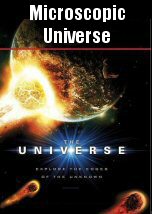
The key to understanding the universe seems to be understanding its smallest components. But the quantum realm bears little resemblance to the universe we know. Image a particle that can be many places at the same time and communicate changes instantly across vast distances, even to the other side of the Universe. Shrinking down billions of times, into the realm of atoms and sub-atomic particles, takes us into a bizarre world of paradoxes and multiverses. Explore with us quantum physics and the potential applications in computer science.
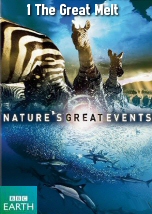
Every year, around the world, seasonal changes transform entire landscapes and draw in millions of creatures as these great events unfold. This fantastic series combines the epic scale of Planet Earth and the intimate, emotional stories of charismatic animals as they struggle to survive. Using state of the art technology, these programmes capture the Earth's most dramatic and epic wildlife spectacles and the intimate stories of the animals caught up in them. The Great Melt: The summer melt of Arctic ice, opening up nearly three million square miles of ocean and land, provides opportunities for millions of animals, including beluga whales, families of Arctic foxes, vast colonies of seabirds, and the fabled Arctic unicorn, the narwhal. For polar bears, however, it is the toughest time of year. Why? How will they survive? A mother polar bear and her cub make their first journey together onto the sea ice. They are looking for ringed seals, their favourite prey. It is a serious business but the cub just wants to play. The melting ice makes it harder for them to hunt and threatens their survival. In a unique aerial sequence, the migration of narwhal with their distinctive unicorn-like tusks is filmed for the first time. The whales' journey is risky as they travel along giant cracks in the ice. If the ice were to close above them, they would drown. Hundreds of beluga whales gather in the river shallows. They rub themselves on smooth pebbles in one of the most bizarre summer spectacles. Guillemot chicks take their first flights from precipitous sea cliff nests to the sea 300 metres below. They attempt to glide to safety but many miss their target. Their loss is a bonus for the hungry Arctic fox family waiting below. As the melt comes to an end the bears gather, waiting for the sea to freeze again. Two 400kg males square up to each other to spar.





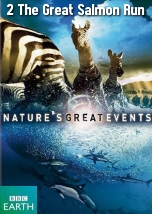




A mother grizzly and her cubs emerge from their den high in snowy Alaskan mountains. Filming from the air the team capture a TV first, following the bears as they negotiate a near vertical slope on their journey to the coast where they await the return of the salmon. Meanwhile, the salmon are making their way to the to river mouths where they must swim upstream and against the current. The programme reveals how they tackle the torrents and leap over waterfalls, a feat equivalent to a human jumping over a house. Dozens of hungry bears eagerly await the salmon that make it up river. In another TV first, underwater cameras record the ingenuity and fancy footwork they use to collect dead salmon from the bottom of deep pools.