

Last Watched

"Light"  Sort by

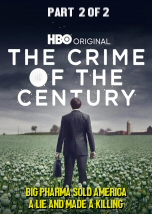
The Crime of the Century part 2of2

   2021    Medicine
In the second part and conclusion, a spotlight on the mass marketing of the synthetic opioid fentanyl examines the connections between drug manufacturers and government policy. Video of sales retreats and promotional material reveals a deep cynicism among company employees and a disregard for the widespread, nefarious corporate practices.
Series: The Crime of the Century
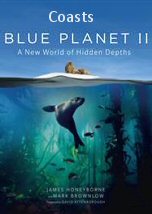
Blue Planet II Coasts

   2017    Nature
On the coast, two worlds collide. Coasts are the most dynamic and challenging habitats in the ocean - that brings great rewards but also great danger. The extraordinary animals that live here must find ingenious ways to cope with two very different worlds. This episode is a rollercoaster ride of heart-stopping action and epic drama, peopled with characters from the beautiful to the bizarre. We meet fish that live on dry land and puffins that must travel 60 miles or more for a single meal, and witness a life-and-death struggle in a technicolour rock pool. In a secluded cove in the Galapagos, sea lions feast on 60kg tuna. It should be impossible - tuna are usually far too fast for sea lions to catch. But here the sea lions club together to herd their prey inshore. Once trapped in the shallows, these huge fish are easy pickings. As the tide recedes in Brazil, lightfoot crabs leap from rock to rock, desperately avoiding the water - their lives depend on it. Moray eels launch themselves from rock pools, jaw gaping. Then octopuses, too. Both crawl across dry rock to set their ambush. Elsewhere, the ever-changing tides create rock pools. But these temporary worlds are a battleground. Predatory starfish turn a magical garden into the stuff of nightmares.
Series: Blue Planet II

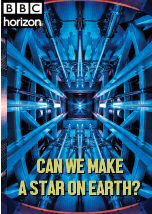
Can We Make a Star on Earth

   2009    Technology
Could nuclear fusion hold the answers to the energy crisis? It is the process that has forged all matter in the universe. It lights the stars and it is what transformed the lighter atoms that formed in the Big Bang into heavier atoms. In Can We Make a Star on Earth?, Brian Cox peers beyond the glare of our Sun to reveal the hidden forces that provide its power. He discovers how this fusion energy has kept our closest star burning for five billion years. Brian believes humanity must build a star on Earth to ensure survival. Will scientists be able to harness fusion power and achieve abundant, cheap, clean energy?

A Sky Full of Ghosts

   2014    Science
Tyson begins the episode by explaining the nature of the speed of light and how much of what is seen of the observable universe is from light emanated from billions of years in the past. Tyson further explains how modern astronomy has used such analyzes via deep time to identify the Big Bang event and the age of the universe. Tyson proceeds to describe how the work of Isaac Newton, William Herschel, and James Clerk Maxwell contributed to understanding the nature of electromagnetic waves and gravitational force, and how this work led towards Albert Einstein's Theory of Relativity, that the speed of light is a fundamental constant of the universe and gravity can be seen as distortion of the fabric of space-time. Tyson describes the concept of dark stars as postulated by John Michell which are not visible but detectable by tracking other stars trapped within their gravity wells, an idea Herschel used to discover binary stars. Tyson then describes the nature of black holes, their enormous gravitational forces that can even capture light, and their discovery via X-ray sources such as Cygnus X-1. Tyson uses the Ship of Imagination to provide a postulate of the warping of spacetime and time dilation as one enters the event horizon of the black hole, and the possibility that these may lead to other points within our universe or others, or even time travel. Tyson ends on noting that Herschel's son, John would be inspired by his father to continue to document the known stars as well as contributions towards photography that play on the same nature of deep time used by astronomers.
Series: Cosmos: A Spacetime Odyssey

Colourful Planet

   2019    Nature    HD
From space, Earth is a kaleidoscope. Turquoise plankton blooms trigger a feeding frenzy, China turns yellow with rapeseed flowers, and mysterious green lights appear in the ocean. Satellites give us a new perspective on its greatest and most beautiful spectacles allowing us to make new discoveries We can watch landscapes change through the seasons and marvel in the scale of their transformations.
Satellite cameras capture a kaleidoscope of extraordinary colours surprising and constantly changing, created by natural phenomena, by animals and by people. These colours are revealing new insight into the health of our fragile planet, transforming our understanding of our colourful home.
Series: Earth from Space

Showbiz Kids

   2020    Culture
A documentary about the highs and lows of children in show business, featuring interviews and examinations of the lives and careers of the most famous former child actors in the world. The film opens with a montage spotlighting most of those people, along with others who had better luck (like Ron Howard, Jodie Foster, and Daniel Radcliffe), finally landing on a photograph of the documentary’s director, Alex Winter, who was a child actor on and off Broadway.
The reality of child stardom is that an essential unreality is baked into it. That‘s why it’s so often about the wheels coming off at high speeds. Child stardom now feels like one of the last aspirations of a decadent, no-future America. And 'Showbiz Kids' is an invaluable primer of its risks and rewards.
Leaving Neverland

Leaving Neverland

2019  Culture
Worst Ex Ever

Worst Ex Ever

2024  Culture
Dynamic Genomes Series

Dynamic Genomes Series

2019  Medicine
Untold

Untold

2021  Culture
Solar System

Solar System

2024  Science
Arnold

Arnold

2023  History
Asia

Asia

2024  Nature